




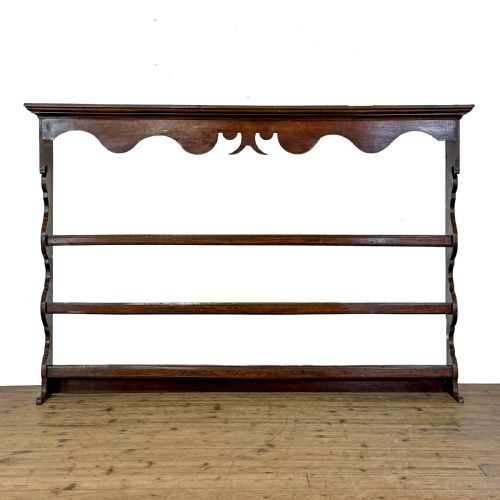


Country Kitchen Wall Rack
These country kitchen wall racks are practical domestic timbers from Georgian, Victorian and earlier centuries, chosen to display plates, spoons and game within reach.
Country Kitchen Wall Rack
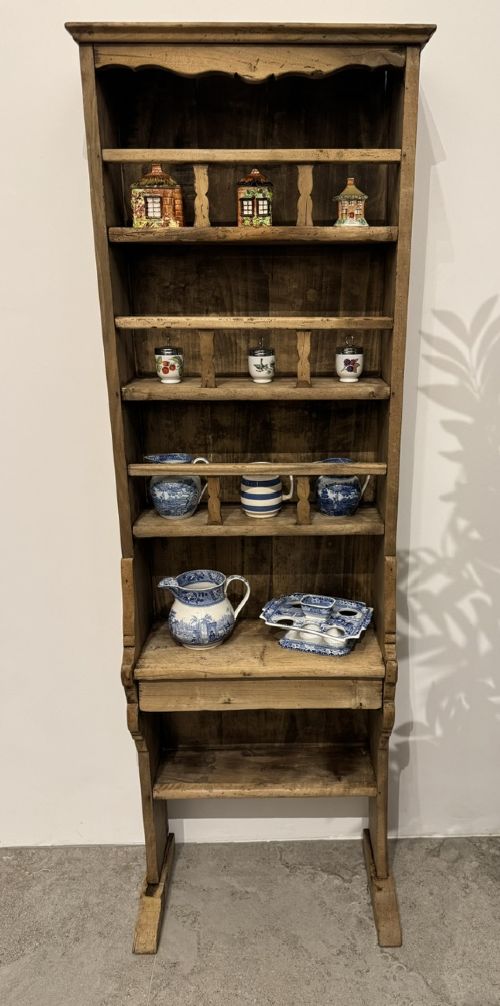
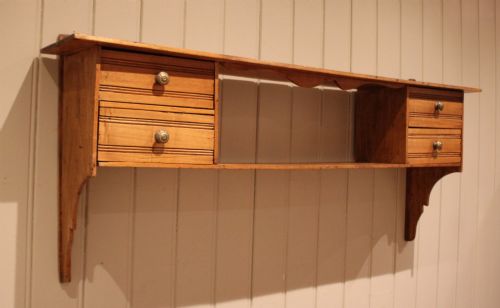
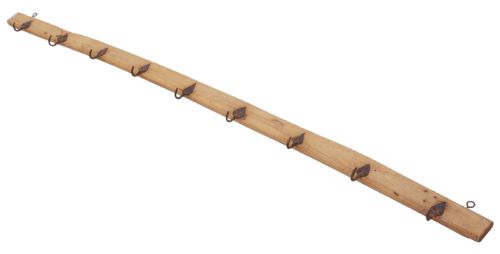
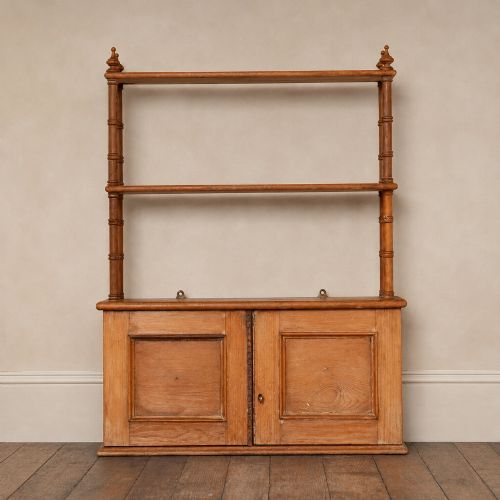
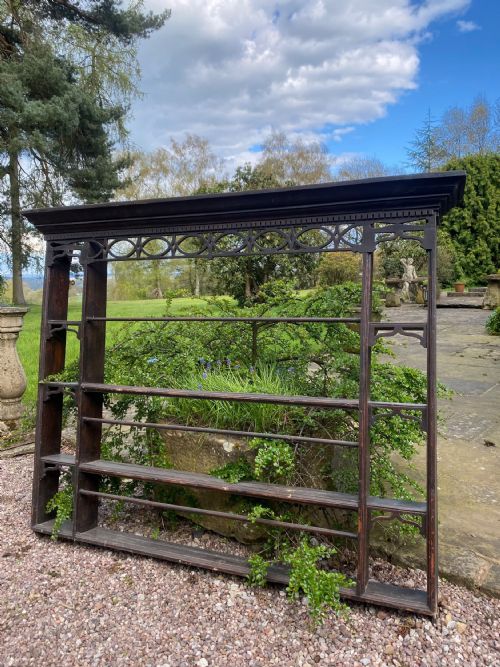
A country kitchen wall rack provides open storage and display for domestic wares, taking the form of plate racks, spoon racks, wall shelves and hanging game hooks. These pieces originate from the eighteenth and nineteenth centuries, spanning Georgian and Victorian periods with distinct regional iterations like Welsh country pieces.
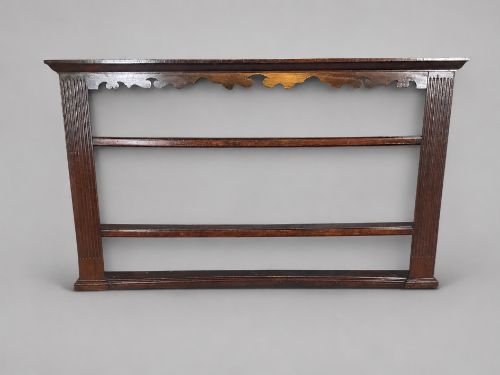
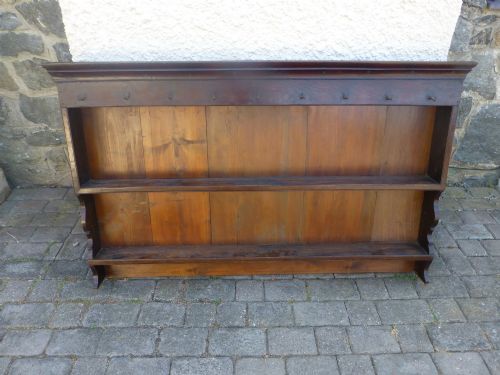
The version most commonly met on this page is the oak or pine plate rack intended to be hung on a kitchen wall, often originating in the eighteenth century or the Georgian era. Simpler rustic country examples and painted wood display shelves from later centuries also appear frequently alongside these earlier oak pieces.
How they were made
These racks are constructed primarily from solid oak and pine, utilising traditional timber joining methods suited to domestic utility. Painted wood surfaces also occur, occasionally finished in historical shades such as Pompeian Ash.
Metal elements appear on specific forms, most notably wrought iron or standard iron used for hanging game hooks and structural reinforcement.
Country Kitchen Wall Rack Retail Price Guide 2026
Typical asking prices for country kitchen wall rack among the pieces listed under this phrase on Sellingantiques today, from the lower quarter to the upper quarter. They describe what is for sale here now, not the wider market.
An eighteenth-century oak spoon rack comes complete with three pewter trefid spoons, preserving a matched set of dining utensils.
What varies in quality
The distinction between standard utility items and finer examples rests on timber selection and the presence of regional vernacular details, such as specialised spoon slots or integrated small cupboards. Early eighteenth-century oak and George III pieces generally demonstrate more considered proportions than later mass-market workshop output.
Original surface patination and honest signs of domestic use separate untouched examples from pieces that have undergone extensive timber replacement or aggressive modern stripping.
The Country Kitchen Wall Rack Glossary
- Delft rack
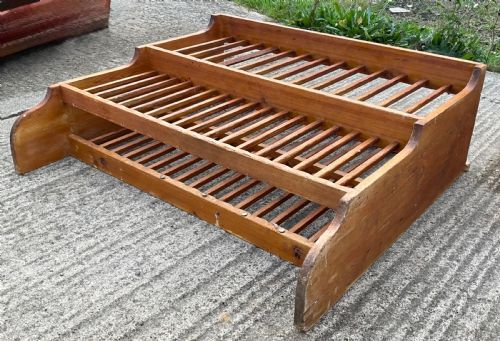
- A wall-mounted shelving unit specifically designed for displaying ceramic plates and platters upright. These racks typically feature thin wooden retaining laths across the front of the shelves.
- Spoon rack
- A narrow wall rack featuring notched rails or individual slots designed to hold table spoons vertically. They are frequently encountered in regional oak forms from the eighteenth century.
- Game hook
- A metal or iron hook system mounted to a wooden rack, historically utilised in kitchens and larders for hanging game birds and meats. Iron components are often hand-forged.
- George III
- The stylistic period spanning from seventeen sixty to eighteen twenty, known in country furniture for restrained classical influence combined with traditional craftsmanship. Pieces from this era often exhibit balanced proportions.
Country Kitchen Wall Rack: Frequently Asked Questions
Where were these wall racks placed?
These racks were historically mounted directly onto kitchen and larder walls to keep frequently used utensils, plates and game within easy reach of the hearth. Their open design allowed damp earthenware and wooden items to dry in the warmth of the room.
In modern interiors, they serve a similar function in dining spaces and kitchens, supporting everyday ceramics or decorative collections while utilising vertical wall space efficiently.
How do I date an oak plate rack?
Dating relies on examining the timber preparation methods, joinery techniques, and surface patination accumulated over centuries. Eighteenth-century examples often display hand-sawn board marks and pegged joints rather than modern mechanical fixings.
Comparing the moulding profiles and overall proportions to dated vernacular pieces helps narrow down whether a rack belongs to the Georgian era or later periods.
Can these racks hold heavy ceramic plates?
Most antique plate racks were built robustly from dense oak or sturdy pine to support heavy earthenware and pewter in working kitchens. The structural integrity depends entirely on the condition of the backboards and the stability of the shelf joints.
When hanging these pieces today, secure wall fixings into masonry or structural studs are essential to bear the combined weight of the timber and any displayed ceramics.
What is the difference between a dresser rack and a wall rack?
A dresser rack was originally constructed to sit atop a base sideboard or base dresser cabinet, though many survived independently as wall-mounted units. Standard wall racks were designed specifically from the outset to hang directly from wall fixings.
Both forms share similar open shelving and plate rails, but dresser racks often exhibit finished lower framing where they once met the base unit.