

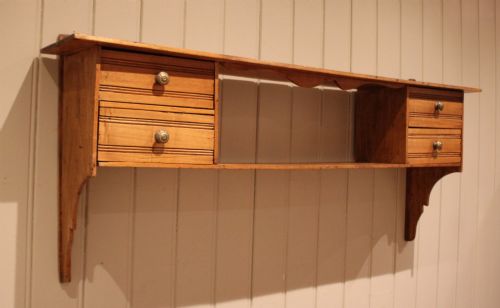
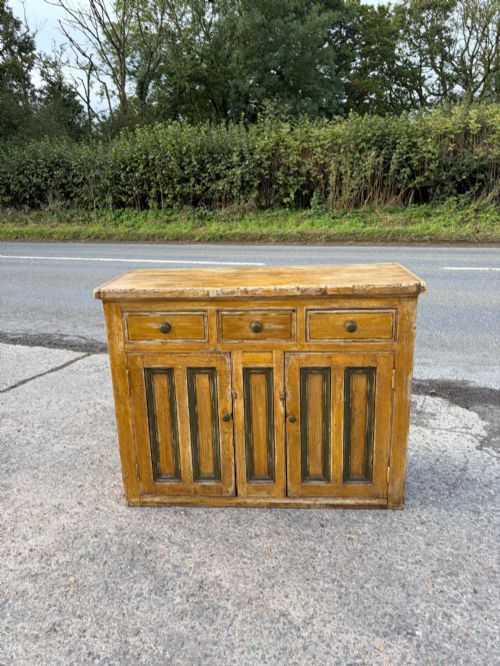
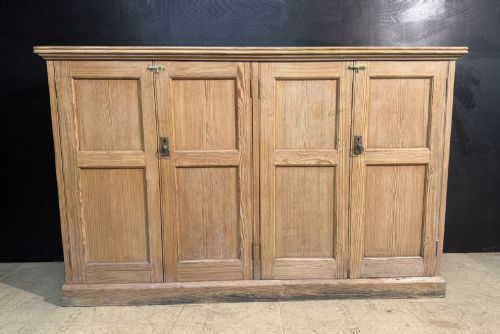


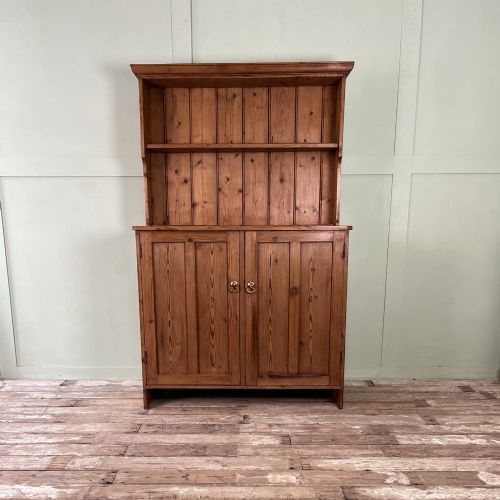

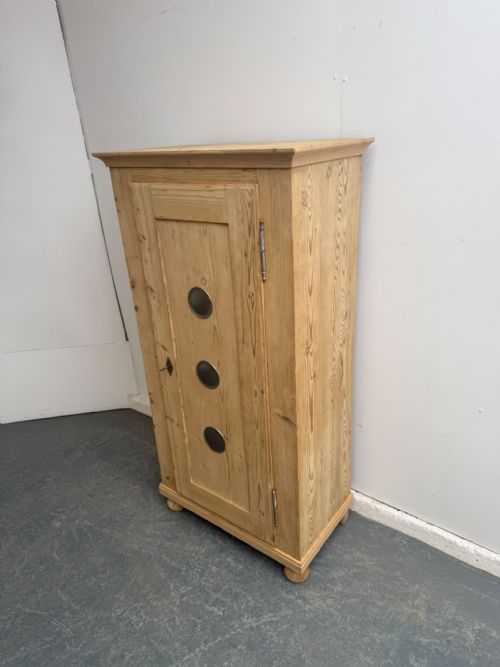


Country Kitchen Unit
A country kitchen unit brings working domestic history straight into daily life, offering sturdy storage fashioned from honest timbers.
Country Kitchen Unit
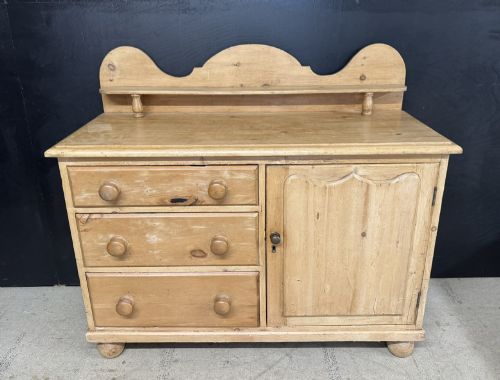
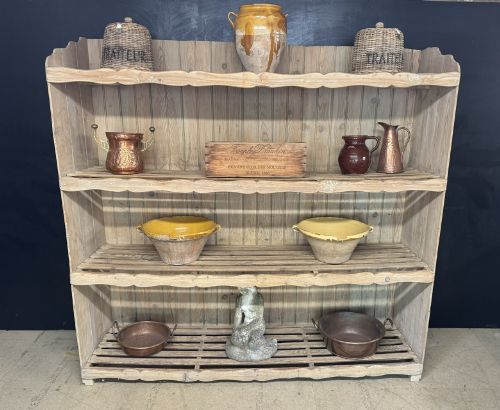
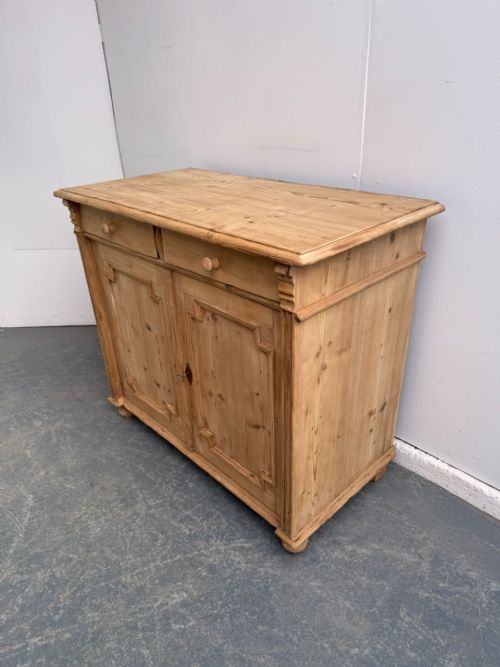
A country kitchen unit serves as the practical backbone of domestic spaces, encompassing large larder cupboards, housekeeper cupboards, dressers, and wall racks. These utilitarian forms emerge primarily in sturdy pine and oak, reflecting centuries of practical storage needs across English, French, and provincial households.
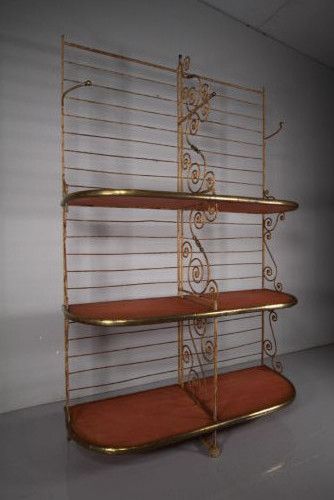
Buyers encountering this selection will most frequently find nineteenth-century and eighteenth-century pine dressers alongside painted storage cabinets and baker racks. These pieces range from substantial two-part cupboards down to smaller wall-hung shelves and plate racks designed for daily culinary use.
Materials and construction methods
Makers built these functional forms using solid pine, oak, and occasionally walnut, joining heavy timbers with traditional carpentry methods suited to heavy daily domestic use. Surfaces often show traces of historic paint finishes, such as Pompeian Ash, or remain stripped down to bare waxed timber.
Hardware details rely on brass and iron elements, including wrought iron on baker racks and functional metal hinges or latches on larder doors. Structural integrity depends on thick panel construction and solid board backs designed to bear heavy loads of crockery and provisions.
Country Kitchen Unit Retail Price Guide 2026
Typical asking prices for country kitchen unit among the pieces listed under this phrase on Sellingantiques today, from the lower quarter to the upper quarter. They describe what is for sale here now, not the wider market.
Listings span the eighteenth, nineteenth, and early twentieth centuries, constructed predominantly in solid pine and oak.
Distinguishing quality across pieces
Quality reveals itself in the proportion of the timber, the integrity of the original joints, and the survival of period hardware rather than surface perfection. Superior examples maintain their original configuration without heavy timber replacement, showing honest wear from decades of domestic service.
The sophistication of the mouldings and the balance between the upper display racks and lower cupboard bases separate standard utility furniture from finer provincial commissions. Untouched painted surfaces or desirable historic colour applications add distinct character to surviving cupboards.
The Country Kitchen Unit Glossary
- Dresser
- A dual-purpose furniture form featuring lower cupboards or drawers surmounted by open shelving or a plate rack for displaying tableware.
- Housekeeper Cupboard
- A large tall storage cabinet traditionally utilised for linens, dry goods, and provisions in large country houses.
- Larder Cupboard
- A tall storage unit often built with vented panels to encourage air circulation for preserving food before mechanical refrigeration.
- Baker Rack
- An open industrial shelving unit constructed from wrought iron or steel, originally utilised in commercial baking and food preparation.
- Plate Rack
- A wall-mounted or integrated wooden rack designed to hold ceramic plates upright for drying and display.
Country Kitchen Unit: Frequently Asked Questions
What defines a country kitchen unit?
A country kitchen unit is a utilitarian storage piece, such as a dresser, larder cupboard, or wall shelf, made primarily from pine or oak.
These items originated in domestic and provincial settings to store food, crockery, and household provisions.
How do I date an antique pine cupboard?
Dating relies on construction traits, timber thickness, tool marks, and historical context rather than a single maker's mark.
Nineteenth-century examples often display simpler machine-assisted joinery, whereas eighteenth-century pieces show hand-hewn boards and pegged joints.
Are these units suitable for modern kitchens?
These robust cupboards and dressers integrate smoothly into contemporary spaces by providing substantial freestanding storage and display.
Their utilitarian design accommodates modern kitchenware while introducing authentic period character.
What is the difference between a dresser and a sideboard?
A traditional dresser includes an upper tier of shelves or a plate rack mounted above the lower base cupboards or drawers.
By contrast, a sideboard consists solely of the lower furniture base without any superstructure attached above.