


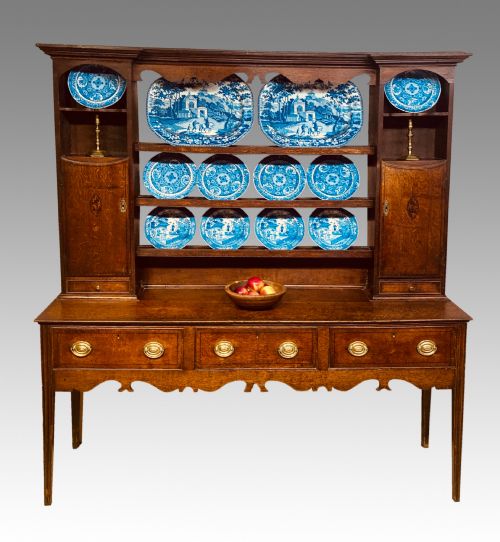


Country House Plate Rack
A country house plate rack organises your kitchen with centuries of utilitarian practicality, combining display space and sturdy timber construction.
Country House Plate Rack
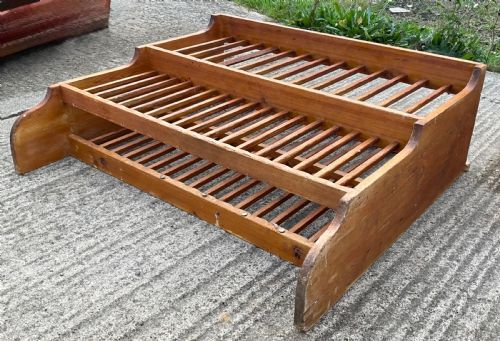
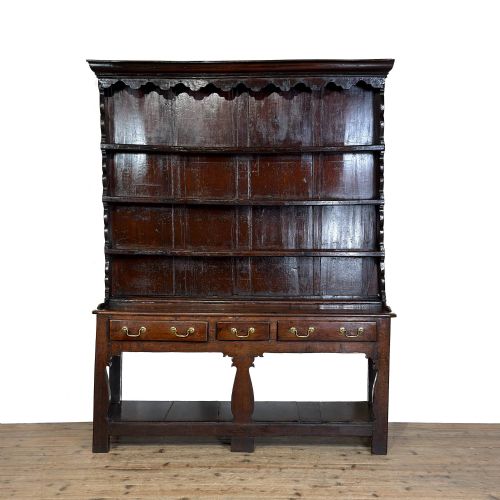
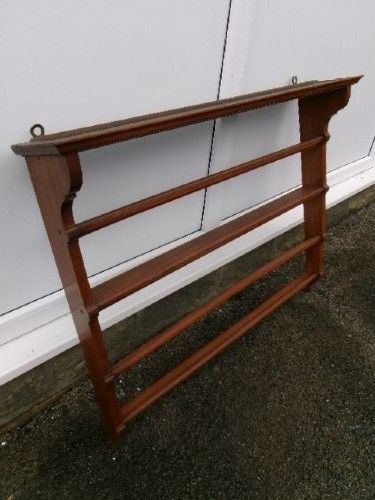
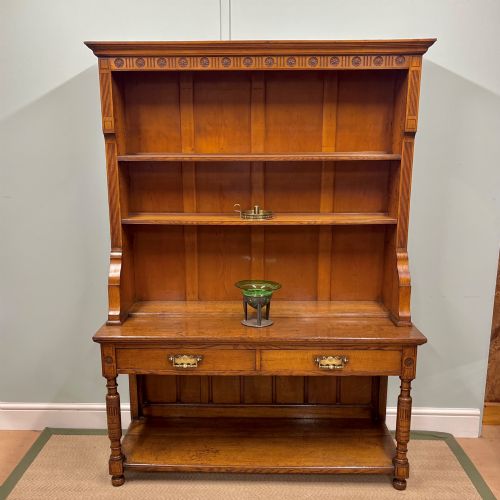
A country house plate rack typically forms part of a larger dresser or stands as a dedicated wall-hanging shelf unit designed for domestic display. You will most frequently encounter oak and pine examples originating from the eighteenth and nineteenth centuries, reflecting vernacular domestic traditions.
The objects span regional British types such as Welsh dressers and West Country cupboards, alongside continental pieces like Danish painted furniture. They serve as functional kitchen storage intended to hold ceramic plates upright for drying and display.
How they were made
Cabinetmakers relied primarily on solid native hardwoods such as oak, elm, and mahogany, often pairing them with secondary softwoods like pine for internal elements. Construction methods combine pegged mortise and tenon joints with hand-planed boards to support the weight of heavy tableware.
Surfaces frequently show the marks of original paint, waxed timber finishes, or patinated brass hardware. Structural framing incorporates grooved plate rails and slatted wooden bars to secure crockery safely.
Country House Plate Rack Retail Price Guide 2026
Typical asking prices for country house plate rack among the pieces listed under this phrase on Sellingantiques today, from the lower quarter to the upper quarter. They describe what is for sale here now, not the wider market.
One nineteenth-century Welsh dresser carries the specific operational history of arriving directly from Cafe Snowdon.
What varies in quality
Survival of untouched hardware, original painted finishes, and untrimmed structural cornices separate domestic workbenches from exceptional examples. Timber figure and depth of natural patina develop through continuous use over generations.
The Country House Plate Rack Glossary
- Potboard
- A low open shelf beneath a dresser base traditionally used for storing heavy pots and pans. This lower tier anchors the larger furniture forms.
- Welsh dresser
- A kitchen sideboard surmounted by open plate shelves. These pieces combine base storage cupboards or drawers with upper display tiers.
- Breakfront
- A cabinet design where the central section projects forward from the flanking wings. This configuration adds architectural depth to large dressers.
- Vernacular
- Regional furniture built by local craftsmen following traditional local patterns rather than high-style metropolitan designs. These objects reflect the materials available in specific rural areas.
Country House Plate Rack: Frequently Asked Questions
How do I hang a heavy plate rack?
Secure the back frame directly into wall studs using heavy-duty brackets to support the substantial weight of timber and ceramics.
Distribute the load evenly across multiple fixing points to ensure the wall structure bears the strain safely.
Were these racks originally painted?
Many regional pieces received coats of lead-based or oil paint to protect the softwood or to brighten dark farmhouse kitchens.
Surviving historic paint layers add significant character and are preserved carefully by collectors.
Can I store heavy china on them?
Historic plate racks were built specifically to hold heavy earthenware and pewter daily tableware securely in place.
Check that the structural wooden bars and plate grooves remain firm before loading heavy ceramic collections.
How do I date an oak plate rack?
Examine the tool marks, timber grain, and construction joints such as hand-cut pegs and unmachined backboards.
Earlier eighteenth-century examples display irregular hand-planing and pegged joints differing from later mass-produced fixtures.