



Country House Pantry Cupboard
A country house pantry cupboard is a substantial storage piece built for domestic utility, offering deep shelving and sturdy timber construction.
Country House Pantry Cupboard
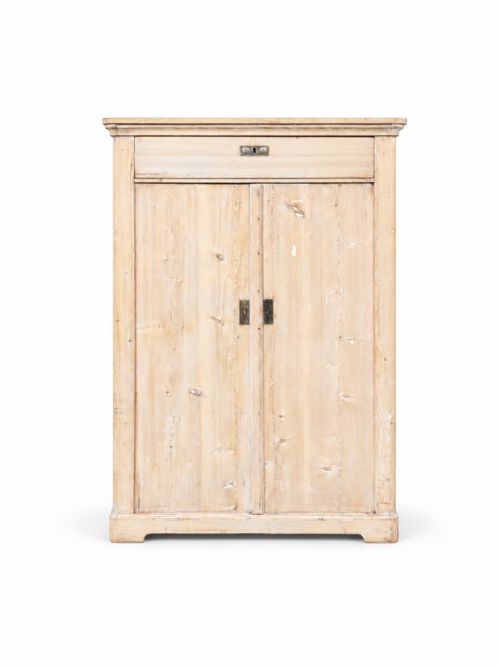
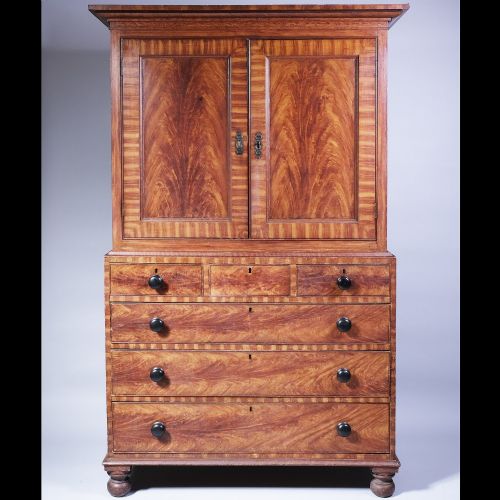
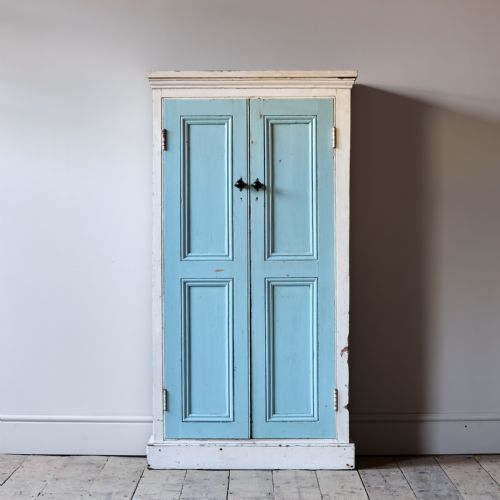
A country house pantry cupboard provides heavy-duty storage, appearing on this page most frequently in nineteenth century and Victorian forms. These pieces often take the shape of housekeeper cupboards, linen presses, or larder cupboards, designed to hold household provisions and textiles. English country and rustic farmhouse styles dominate the selections, alongside occasional Swedish country pieces.
The items seen here span the eighteenth century, the Victorian era, and the Edwardian period, reflecting practical domestic needs over generations. Forms range from two-door storage cupboards to kitchen dressers and scullery cupboards. Their primary function was organisation and preservation within large households, resulting in utilitarian proportions and practical internal layouts.
Materials and construction methods
Pine serves as the primary structural timber across these items, often finished with paint, scumble glaze, or left as painted wood. Iron and brass hardware such as hinges and latches secure the doors, while wire mesh sometimes appears on food storage variants for ventilation. Glass panes occasionally feature in upper sections, distinguishing display storage from solid timber larders.
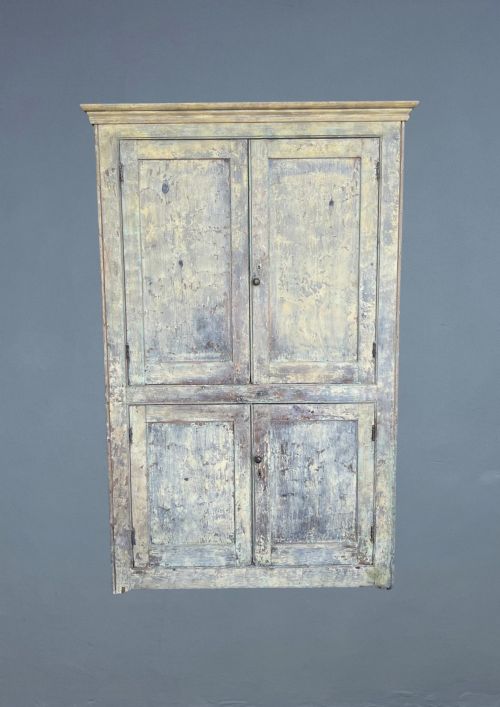
Makers utilised straightforward joinery suitable for heavy daily use in sculleries and pantries. Original paint surfaces survive on several examples, showing layers of historic decoration or scumble graining applied over the pine base. Construction prioritizes durability over delicate ornamentation, reflecting their origins in working country houses.
Country House Pantry Cupboard Retail Price Guide 2026
Typical asking prices for country house pantry cupboard among the pieces listed under this phrase on Sellingantiques today, from the lower quarter to the upper quarter. They describe what is for sale here now, not the wider market.
Scumble-painted finishes show how past householders tried to make humble pine look like expensive exotic timber with a brush and some glaze.
Assessing quality in utility furniture
Quality in a country house pantry cupboard rests on the survival of original surfaces and the integrity of the pine framework. Pieces retaining their original paint or scumble decoration command greater interest than those stripped down to bare wood. The balance of proportions between upper and lower sections also indicates the care taken in the workshop.
Hardware integrity and the retention of internal shelving alter the character of each piece. Simple vernacular versions display honest utility, while breakfront kitchen dressers and larger larder cupboards show more ambitious architectural planning. The depth of the timber and the tightness of the joinery mark the division between standard utilitarian storage and finer examples.
The Country House Pantry Cupboard Glossary
- Scumble painted
- A decorative technique involving a translucent glaze dragged or combed over a base coat to imitate finer wood grain. It was frequently used on pine furniture to elevate its appearance.
- Housekeeper cupboard
- A large storage piece typically featuring multiple doors and internal shelving used for linens, dry goods, and domestic provisions. These formed the central storage station in large country houses.
- Larder cupboard
- A specialised storage unit incorporating wire mesh or louvred panels for ventilation, designed to keep food cool and protected. They are closely related to pantry and scullery cupboards.
- Breakfront
- A cabinet design where the central section projects forward from the flanking wings. This architectural arrangement adds visual weight and depth to larger dressers and cupboards.
- Linen press
- A tall piece of furniture designed specifically for storing folded textiles and bedding, often containing sliding trays behind the upper doors.
Country House Pantry Cupboard: Frequently Asked Questions
What is a country house pantry cupboard?
A country house pantry cupboard is a large storage furniture item traditionally used in large kitchens, sculleries, or pantries for household provisions and linens. They are built primarily from pine and often feature painted or scumble-glazed surfaces.
These pieces range from eighteenth-century regional items to Edwardian examples, reflecting the changing needs of domestic storage over time. Their robust construction made them essential for organising household goods before modern fitted kitchens.
How were these cupboards used historically?
Historically, these cupboards stored dried foods, preserves, crockery, and household linens away from damp and pests. They stood in pantries, sculleries, or housekeeper rooms where daily domestic management took place.
Different variants served specific tasks, with wire mesh versions keeping food ventilated and linen presses holding folded textiles. Their large capacity allowed staff to keep provisions orderly and accessible.
How do I date a pantry cupboard?
Dating relies on examining the construction methods, timber choice, hardware, and surface finishes such as original paint or scumble glaze. Eighteenth-century pieces often display hand- cut nails and simpler, heavier framing, while Victorian examples show standardised joinery.
Stylistic cues like Georgian proportions or Edwardian simplicity also help place a piece within its era. Examining the backboards and interior shelving reveals the age of the construction.
Where should I place one in a modern home?
These large cupboards fit well in modern kitchens, dining rooms, or hallways as a statement storage piece for tableware or dry goods. Their deep shelving provides practical space for contemporary storage needs while adding traditional character.
Allowing sufficient wall space for their substantial proportions ensures they sit comfortably in a room. Their painted or pine finishes complement both rustic and contemporary interior schemes.