




Country House Oak Chest
A country house oak chest brings domestic storage from past centuries straight into a modern interior with honest timber and age.
Country House Oak Chest
A country house oak chest covers a practical group of antique storage forms built to serve domestic households over generations. Buyers searching for a country house oak chest encounter sturdy timber constructions designed for bedrooms, halls, and utility spaces rather than formal urban parlours.
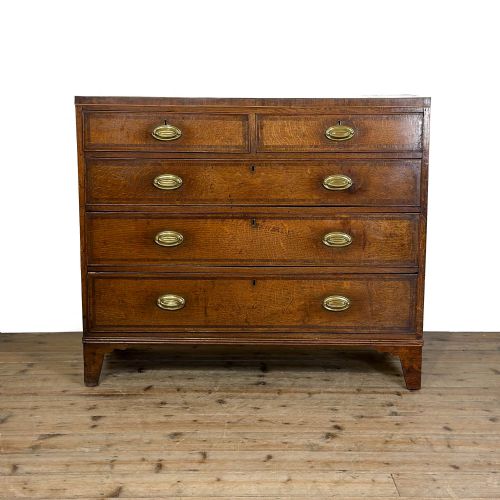
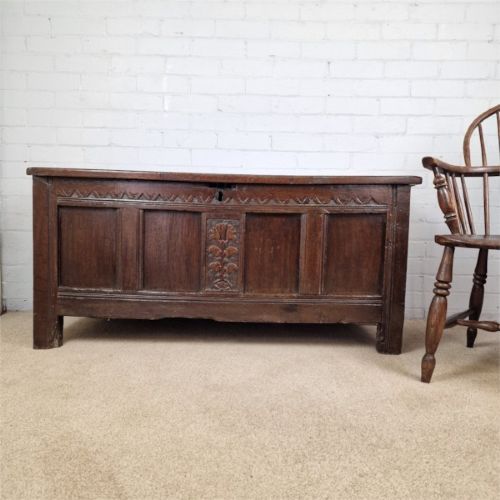
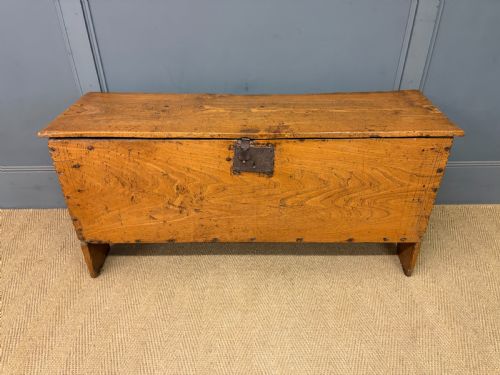
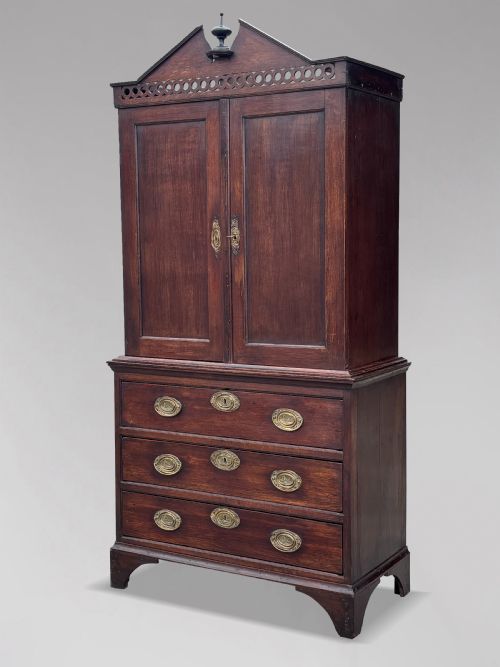
The pieces listed on this page span several centuries, drawing heavily from the eighteenth century, the nineteenth century, and the Georgian period. Forms range widely from straightforward chests of drawers and coffers to mule chests, cupboards, and spice cabinets.
Most examples rely on solid oak construction, though related items incorporate elm, yew wood, pine, and pollard oak. These sturdy pieces reflect vernacular English and regional cabinet-making traditions, offering straightforward utility paired with heavy timber grain.
Materials and Construction
Carpenters built these storage pieces using solid oak boards alongside secondary timbers such as pine and elm for internal linings and panels. Workshops relied on heavy frame and panel construction to accommodate the natural seasonal movement of unseasoned or quarter-sawn oak.
Metal hardware plays a crucial role in daily function, with blacksmiths providing durable iron hinges, locks, and carrying handles. Brass escutcheons and drawer pulls appear frequently on Georgian and Victorian iterations, adding a refined contrast to dark timber.
Country House Oak Chest Retail Price Guide 2026
Typical asking prices for country house oak chest among the pieces listed under this phrase on Sellingantiques today, from the lower quarter to the upper quarter. They describe what is for sale here now, not the wider market.
Numbered iron-bound silver chests once guarded family plate against light-fingered staff in sprawling country piles.
Evaluating the Pieces
Quality rests heavily on the integrity of the timber selection and the restraint of subsequent alterations over the decades. Pieces retaining their original board surfaces, patination, and structural joinery stand apart from examples subjected to extensive timber replacement.
Hardware originality dictates the integrity of a piece, as original iron hinges, locks, and brass pulls anchor the object in its period. The finesse of the drawer construction and the thickness of the oak panels also separate standard utility items from finer vernacular commissions.
The Country House Oak Chest Glossary
- Coffer
- A heavy wooden chest traditionally used for storing valuables, linen, or dry goods. Early examples employ boarded or frame and panel construction with hinged lids.
- Mule chest
- A storage chest featuring one or two drawers set beneath the main compartment. This form bridges the gap between the traditional coffer and the modern chest of drawers.
- Housekeeper's cupboard
- A tall storage unit designed for domestic provisions, linens, or tableware in large country residences. These pieces often combine upper cupboard doors with lower banks of drawers.
- Quarter-sawn
- A method of milling logs radially to produce timber with characteristic growth rings and stability. This cut minimises warping in heavy oak furniture.
- Patina
- The surface sheen and colour acquired by wood over centuries of handling, polishing, and exposure to light. Unspoilt patination remains a primary indicator of age and honest preservation.
Country House Oak Chest: Frequently Asked Questions
What is a mule chest?
A mule chest is a traditional storage box that incorporates one or more drawers beneath the main lifting lid compartment.
This hybrid form emerged when makers realised adding drawers improved accessibility without sacrificing top-loading storage space.
How do I date an oak chest?
Dating relies on examining construction techniques, timber preparation methods, hardware types, and overall stylistic vernacular cues.
Hand-cut dovetails, forged iron hinges, and the method used to split or saw the oak planks all point toward specific manufacturing eras.
Where were these chests used?
These pieces served practical storage needs across bedrooms, landings, hallways, and estate service rooms.
Their robust timber construction allowed them to withstand heavy daily use in busy domestic environments.
What is limed oak?
Limed oak refers to timber treated with a lime composition to protect the wood and create a pale surface finish.
Historical examples utilise this technique to lighten the dark grain of native oak.
How do I care for antique oak?
Maintaining antique oak involves keeping pieces away from direct heat sources and sudden humidity fluctuations.
Occasional application of traditional beeswax helps nourish the wood and preserves the surface sheen.