


Country House Housekeeper Cupboard
A country house housekeeper cupboard offers generous proportions and honest utility, providing practical storage with the warmth of domestic vernacular history.
Country House Housekeeper Cupboard
A country house housekeeper cupboard is a substantial storage piece designed for domestic organisation in large estates and provincial homes. These cabinets provide deep shelving and hanging space originally utilised for household linens, provisions, or estate records. The search phrase encompasses sturdy utility furniture built to serve the daily demands of historic domestic service.
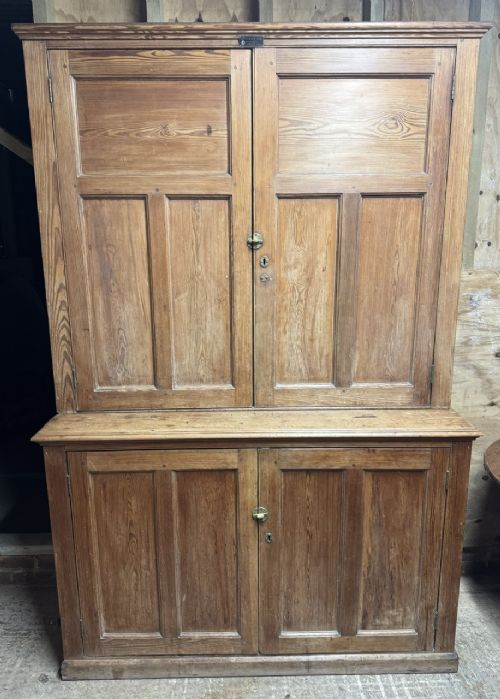
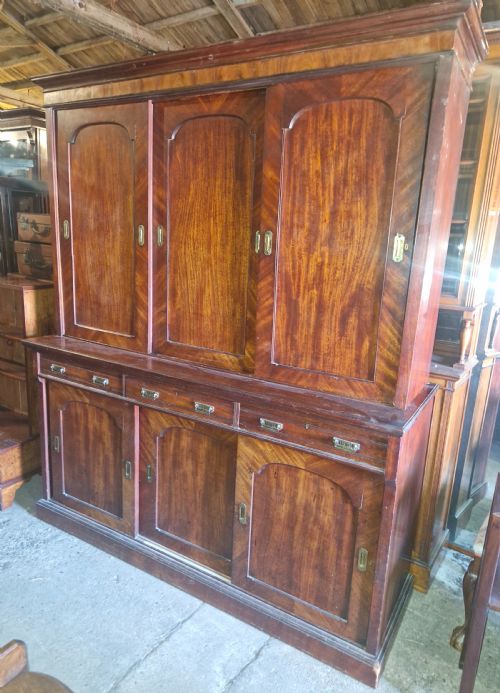
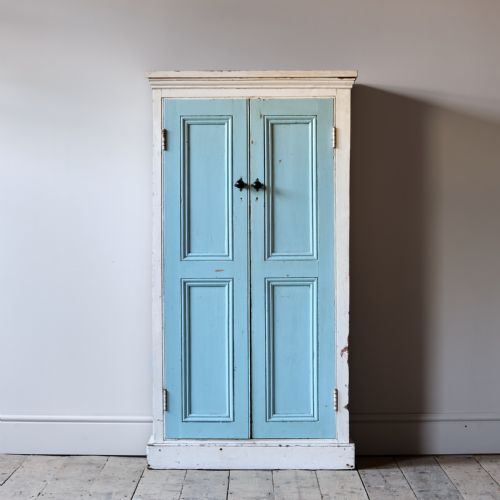
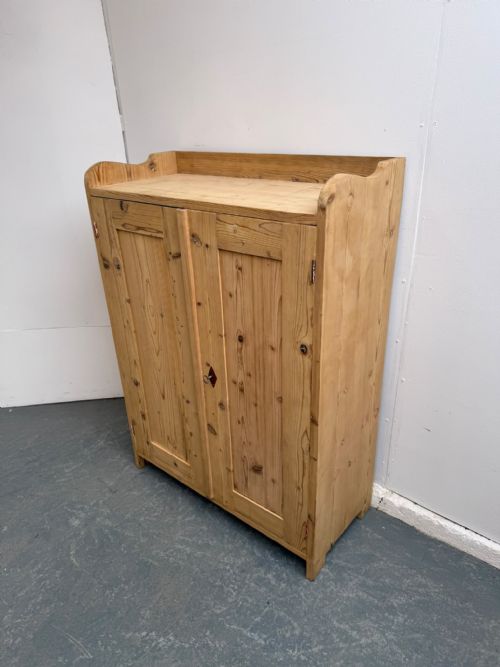
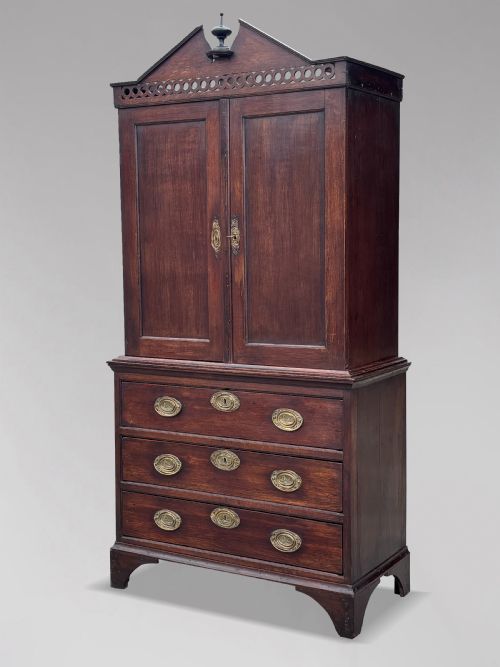
The version most commonly met on this page is the pine or oak housekeepers cupboard originating from regional workshops during the eighteenth and nineteenth centuries. Examples span Georgian and Victorian periods, often displaying vernacular regional traits such as West Country or Yorkshire construction. These pieces range from simple painted pine storage cabinets to larger mahogany library or estate office configurations.
Materials and construction methods
Construction relies heavily on solid timber, with pine and oak forming the primary structural framework for these large cupboards. Cabinet makers utilised durable hardwoods and softwoods to withstand heavy daily use in busy estate sculleries and linen rooms. Brass and iron hardware, including hinges and latches, secure the heavy panelled doors.
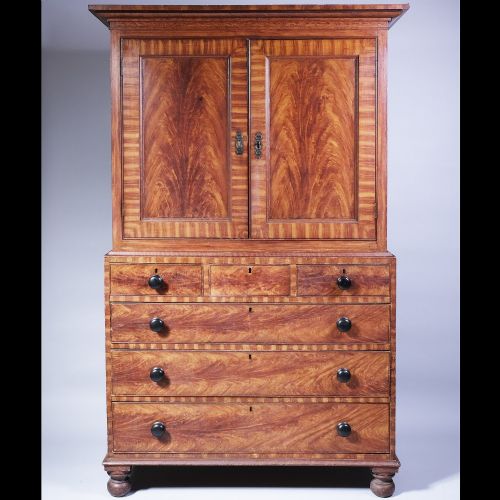
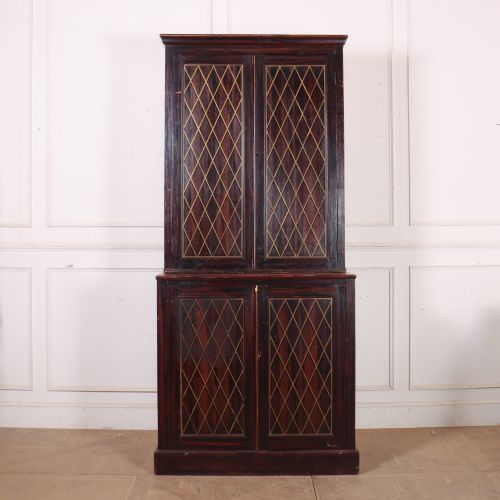
Many surfaces display original paint, scumble finishes, or applied grain effects designed to embellish simpler utility timbers. Where mahogany is utilised, flame veneers add a decorative focal point suited to gentleman's libraries and estate offices. Joinery methods reflect traditional regional cabinet making, prioritising structural resilience over superfluous ornament.
Several cupboards retain traces of original tack and harness storage, hinting at stables long since converted to domestic rooms.
Assessing quality in vernacular storage
Quality in these large cupboards rests upon the integrity of the original timber and the retention of authentic surface finishes. Pieces retaining their initial paintwork or scumble glaze demonstrate a higher degree of historical survival than those stripped down to bare wood. The weight of the timber and the solidity of internal shelving distinguish superior estate furniture from standard utility items.
Proportion and regional character dictate desirability among collectors of vernacular furniture. Finer examples exhibit thoughtful architectural detailing, such as fielded panels and well-turned cornices, whilst maintaining their functional purpose. The presence of untouched brass or iron fittings further elevates the standing of an individual piece.
The Country House Housekeeper Cupboard Glossary
- Scumble painted
- A decorative technique where a translucent glaze is dragged or brushed over a base coat to simulate more expensive wood grain.
- Vernacular
- Architecture or furniture built by local craftsmen using traditional regional methods and materials rather than high style academic designs.
- Linen cupboard
- A tall storage cabinet specifically proportioned with internal shelving to store household sheets, blankets, and textiles.
- Fielded panel
- A raised wooden panel set within a frame, tapered at the edges to fit into grooves and accommodate seasonal wood movement.
- Cornice
- The decorative moulded projection that crowns the top of a large cabinet or wardrobe.
Country House Housekeeper Cupboard: Frequently Asked Questions
What were housekeepers cupboards used for?
These large pieces served as the central storage hub for household linen, dried provisions, and domestic accounts within a large estate. Housekeepers relied on them to keep household supplies secure and organised.
Over time, their internal configuration of deep shelves and cupboards adapted to changing domestic storage needs across the Georgian and Victorian eras.
How do I date an antique cupboard?
Dating relies on observing construction methods, timber choice, and surface treatments visible across the piece. Eighteenth-century examples frequently utilise heavy oak with pegged joinery, while nineteenth-century pieces often feature pine or mahogany.
Hardware styles and the presence of original paint layers also provide reliable chronological indicators for regional vernacular furniture.
Are these cupboards suitable for modern kitchens?
Their generous proportions and deep shelving make them exceptionally practical for pantry storage, linen organisation, or general household tidying. They bring substantial character and honest utility to contemporary domestic spaces.
Buyers should carefully measure ceiling heights and access routes before placement, as these estate cabinets are built on a grand scale.
What is the difference between oak and pine versions?
Oak versions typically originate from earlier periods, displaying heavier structural timbers and traditional regional joinery from the seventeenth and eighteenth centuries. Pine examples frequently date from the nineteenth century and often carry painted finishes.
While oak conveys a sense of architectural permanence, painted pine introduces lighter tonal qualities suited to country house aesthetics.