


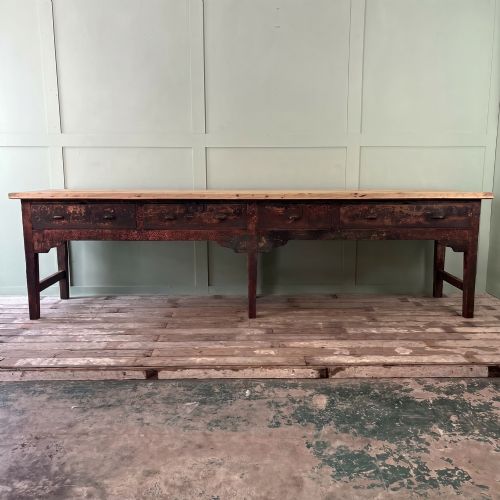

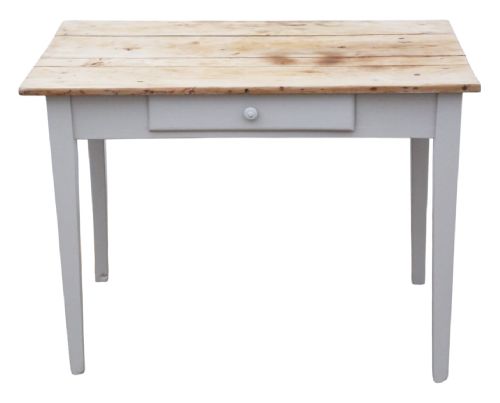
Country Farmhouse Console
A country farmhouse console brings sturdy utility and centuries of domestic history straight into a modern hallway or kitchen.
Country Farmhouse Console
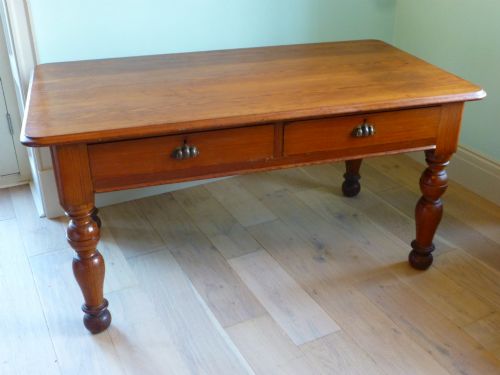
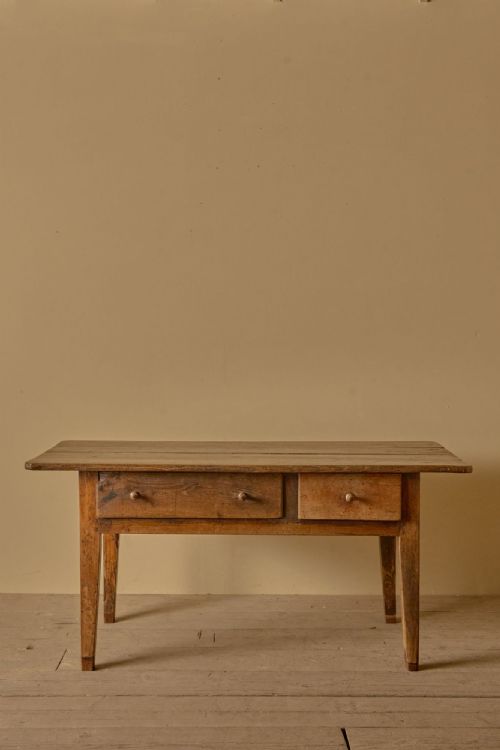
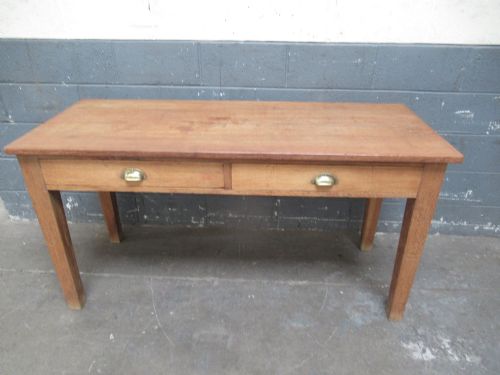
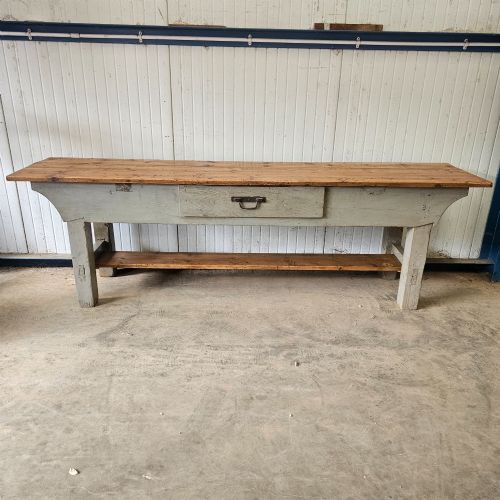
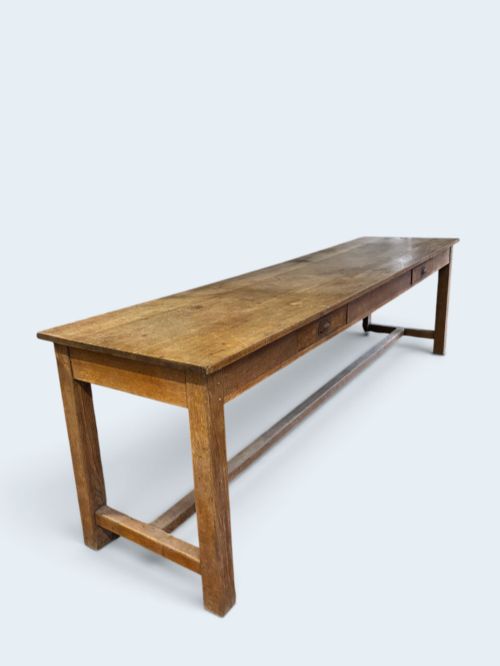
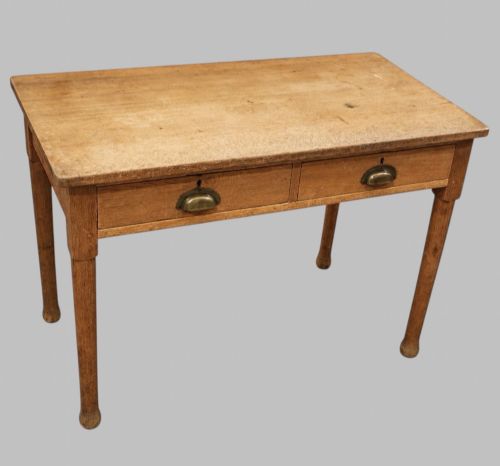
When you search for a country farmhouse console, you encounter practical utility pieces built for rigorous domestic labour, adapted today as narrow side tables, serving surfaces or hallway furniture. These functional survivors span several centuries, originating from kitchens, dairies, sculleries and workshops where heavy timber mattered more than polite polish.
Geographic origins vary widely across the selection, encompassing English, Scottish, Welsh, and French regional traditions. Whether styled as rustic farmhouse, French provincial or Georgian country, each piece carries the distinct marks of its rural working origins.
How they were made
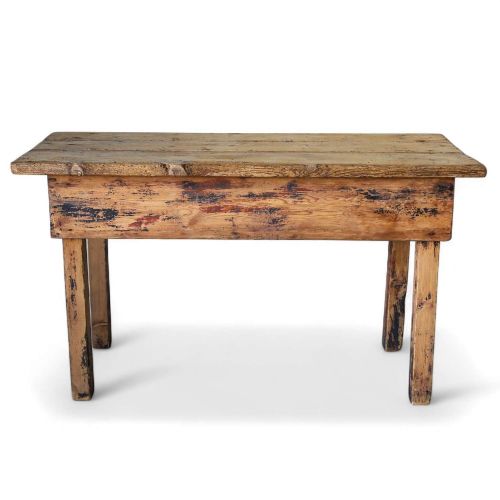
Carpenters constructed these tables using straightforward joinery and durable timbers such as pine, oak, cherrywood, sycamore and elm. Surfaces frequently show the evidence of scrubbing, bleaching or historical layers of paint applied over decades of domestic use.
Hardware details remain functional and sparse, relying on iron or brass fittings only where needed for drawers and structural support. The emphasis stayed strictly on solid timber construction capable of withstanding daily friction and heavy weight.
Country Farmhouse Console Retail Price Guide 2026
Typical asking prices for country farmhouse console among the pieces listed under this phrase on Sellingantiques today, from the lower quarter to the upper quarter. They describe what is for sale here now, not the wider market.
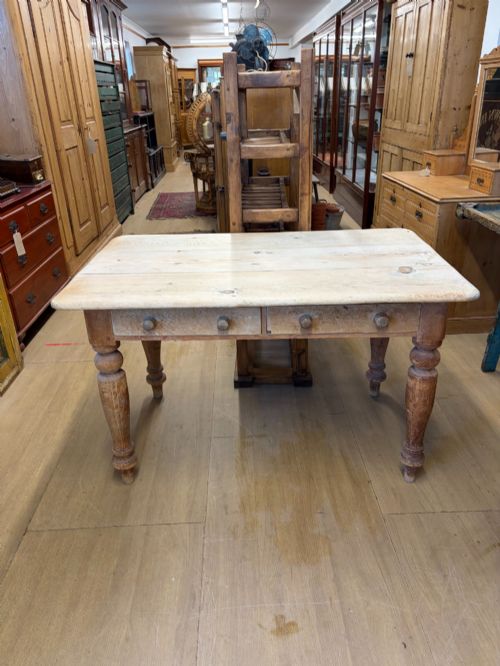
A genuine scrub-top bears the literal wave-form topography of decades of weekly scrubbing with sand and water by past generations.
What varies in quality
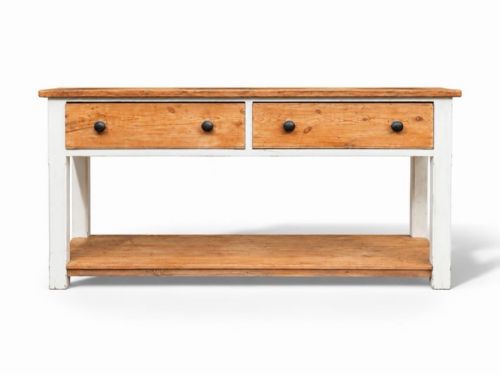
The distinction between ordinary utility items and finer examples rests in the choice of timber and the proportion of the frame. Tables built from dense oak or cherrywood with integrated potboards and well-fitted drawers represent a more ambitious form of country joinery than standard softwood boards.
Proportion and scale dictate the visual success of a console in a contemporary room, particularly given the narrow depths required for hallways and passage spaces. Original unpainted scrubbed surfaces or well-preserved historical paint retain a stronger integrity than stripped timber lacking any surface depth.
The Country Farmhouse Console Glossary
- Potboard
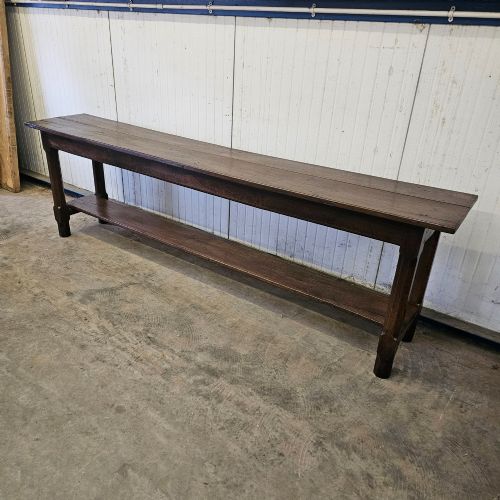
- A low slatted shelf positioned near the floor between the legs of a serving table or dresser base. This lower platform originally held heavy pots and kitchen stoneware.
- Scrub-Top
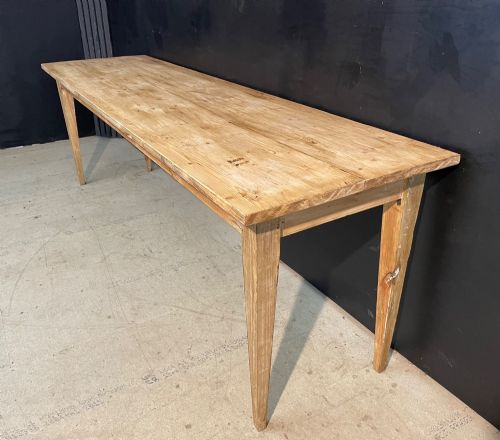
- A thick wooden tabletop designed to withstand aggressive daily scrubbing with water and sand to keep preparation surfaces clean. Over generations, this cleaning process wears the soft grain away and leaves the harder rings proud.
- Trestle Table
- A table structure consisting of two or more support frames connected by a horizontal beam or stretcher. This design maximises legroom along the length of the table.
- Dairy Table
- A specialised work table used historically in cool dairy rooms for processing milk and cheese. These pieces often feature scrubbed pine or slate tops built to resist moisture.
- Dresser Base
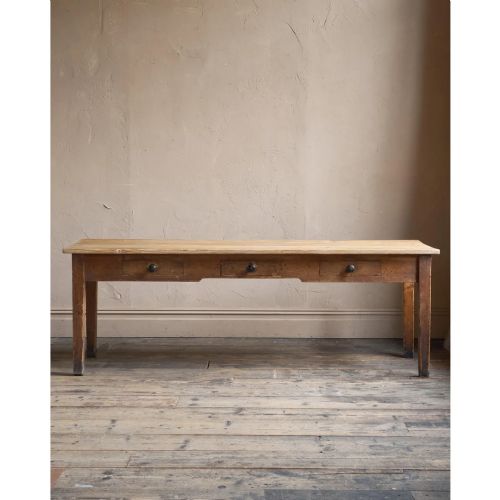
- The lower section of a kitchen dresser featuring drawers or cupboards beneath a wide serving surface. When separated from upper shelving units, these bases function effectively as deep console tables.
Country Farmhouse Console: Frequently Asked Questions
What is a country farmhouse console?
A country farmhouse console is typically a narrow worktable, serving table or dresser base adapted from old kitchen and scullery furniture. These practical pieces provide long, shallow surfaces suited for hallways and living spaces.
They draw on regional English, Welsh, Scottish and French traditions, often featuring useful drawers or lower pot-shelves.
Where were these tables used?
These tables served primarily in rural domestic spaces such as kitchens, dairies, sculleries and farmhouses. They functioned as heavy preparation surfaces for food, bread making and washing.
Today, their narrow proportions allow them to transition easily into modern hallways, dining rooms and living areas as serving consoles.
What woods were used?
Makers relied on accessible regional timbers, with pine and oak appearing most frequently across the listings. Harder woods like cherrywood, sycamore and elm also feature in regional worktables.
Surfaces are finished in various ways, including scrubbed natural wood, historical paint layers, or bleached timber finishes.
How do I measure for a console?
Measure your available floor space carefully, paying close attention to the depth of the room or hallway where the table will sit. Many farmhouse consoles were built with shallow widths specifically to fit narrow passage areas.
Check the height of any lower potboards or stretchers to ensure they clear baseboards and do not obstruct foot traffic.