



Country Cottage Wall Art
Country cottage wall art brings rural tranquillity indoors through watercolours and oils depicting thatched roofs, gardens and quiet lanes.
Country Cottage Wall Art
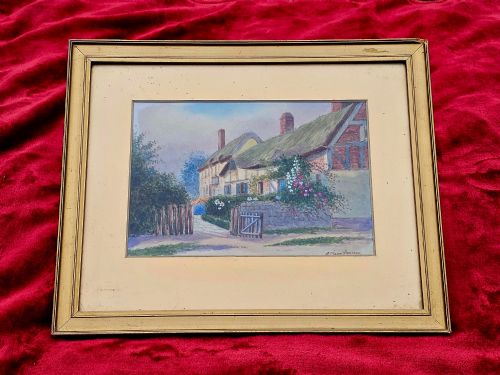
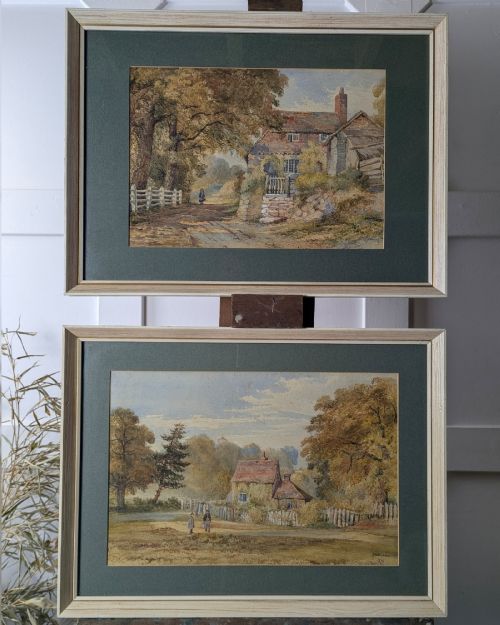
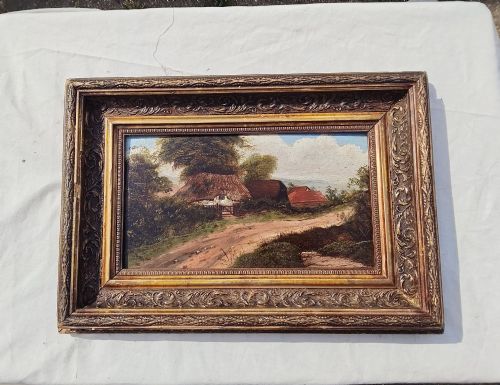
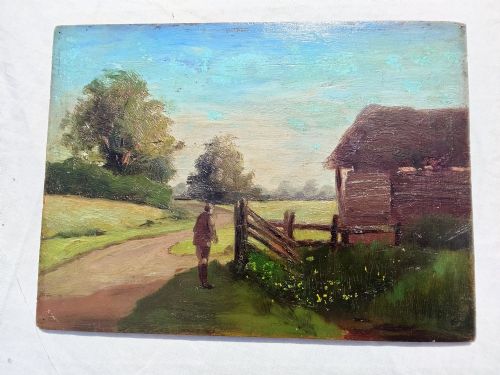
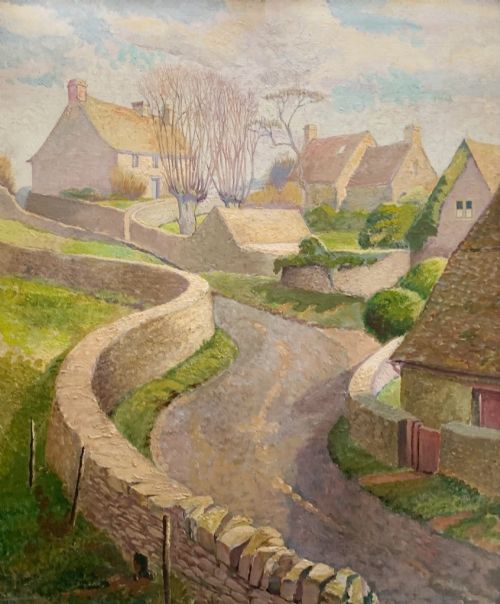
Country cottage wall art encompasses paintings and framed works depicting rural domestic life, farmhouses, and pastoral landscapes. The selection spans the nineteenth and twentieth centuries, capturing vernacular architecture like thatched cottages and village pathways.
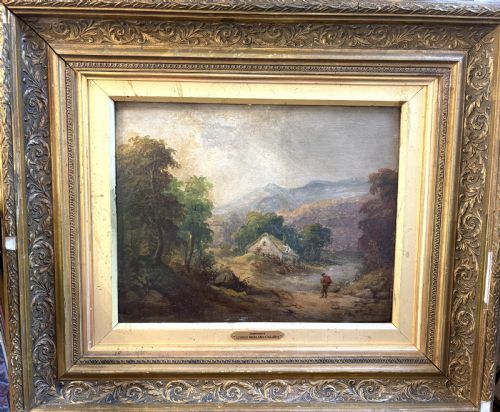
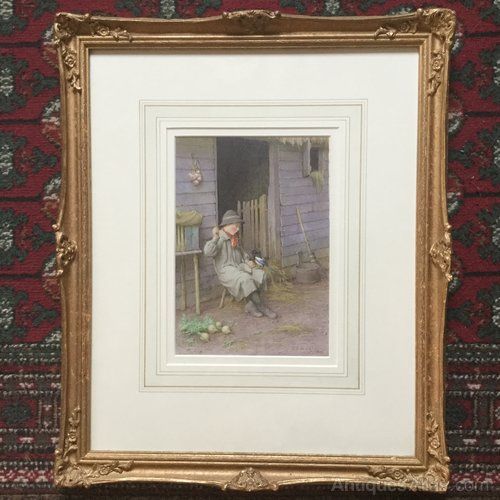
Watercolours and oil paintings predominate across the listings, frequently framed in gilt wood or simple timber surrounds. These works range from intimate studies of gardens to broader views of English schools and impressionist landscapes.
How They Were Made
Artists utilised oil paint on canvas, wooden board, or card, building texture and depth through layered brushwork. Watercolour on paper offered a lighter medium, capturing the translucent qualities of rural light and garden foliage.
Supports were frequently housed in period wooden or gilt frames that complemented the intimate scale of the domestic scenes. Mixed media and lithographic prints also appear, reflecting broader shifts in reproductive techniques during the early twentieth century.
Several cottages clearly needed a new coat of thatch over a century ago.
What Varies in Quality
Quality rests upon the artist's handling of light, atmosphere, and perspective within the rustic composition. Skilled practitioners rendered architectural details and natural foliage with a convincing sense of place, whereas lesser examples rely on formulaic repetition.
The preservation of the paper or canvas significantly influences the overall integrity of the piece. Intact original framing and well-maintained paint layers contribute to the sustained visual impact of these historic works.
A. Marie Parsons·Robert A. Nottingham·George Morland·Charles Edward Wilson·J S Ainley·William Greaves·William Henry Knight·Owen Bowen·Ernest Higgins Rigg·Harry Sylvester Stannard·Abraham Hulk Junior·David Woodlock·Harry Pennell·Ernest Walbourn·Ernest Cox·Thomas Nicholson Tyndale·John Falconar Slater·James William Stamper·Benjamin D. Sigmund·Theresa Sylvester Stannard·George Frederick Nicholls·Thomas Thomas
The Country Cottage Wall Art Glossary
- Watercolour
- A paint consisting of pigment suspended in a water-soluble binder. It is traditionally applied to paper to achieve translucent washes.
- Oil on Canvas
- A painting technique using pigments suspended in a drying oil applied to a stretched canvas support. This method allows for rich colour saturation and blended textures.
- Folk Art
- Artistic work produced from an indigenous cultural tradition or peasant craft style. These pieces often display a charming disregard for formal academic perspective.
- Gilt Wood
- Timber that has been coated with a thin layer of gold leaf or gilt finish. It is commonly found on period frames designed to enhance the artwork within.
- Impressionism
- A nineteenth-century movement characterised by relatively small, thin, yet visible brush strokes and an emphasis on accurate depiction of light.
Country Cottage Wall Art: Frequently Asked Questions
What periods do these paintings cover?
The works span from the nineteenth century through the mid-twentieth century, capturing shifting artistic movements like British Impressionism and pastoral realism.
Victorian and Edwardian examples sit alongside later mid-century interpretations of rural life.
Are the frames original to the pieces?
Many watercolours and oils retain period frames, including gilt wood and simple wooden mouldings that suit the vernacular subject matter.
Framing styles help indicate the approximate era of the artwork's initial display.
How should I hang watercolour paintings?
Watercolours require placement away from direct sunlight to prevent the fading of delicate pigments on paper.
Maintaining stable indoor humidity levels also protects both the paper support and the surrounding frame.
What subjects appear most frequently?
Thatched cottages, country gardens, riverscapes, and farmworkers' dwellings dominate the visual subject matter.
These scenes reflect a widespread artistic fascination with rural tranquillity and traditional English architecture.