


Country Ash High Chair
A country ash high chair offers rustic vernacular charm, combining sturdy native timbers with comfortable spindle-back seating built for domestic life.
Country Ash High Chair
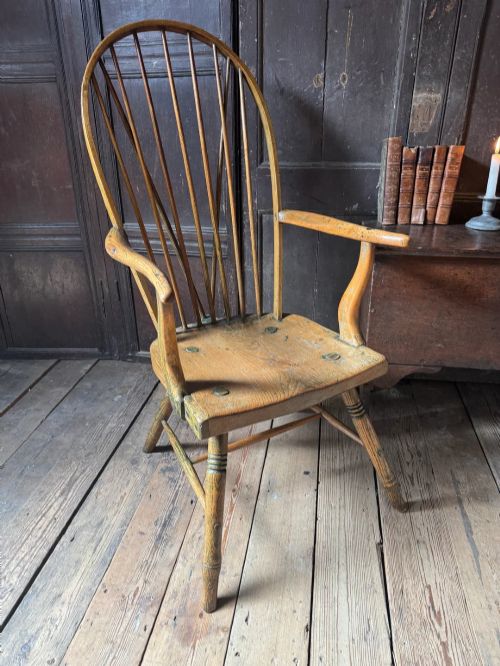
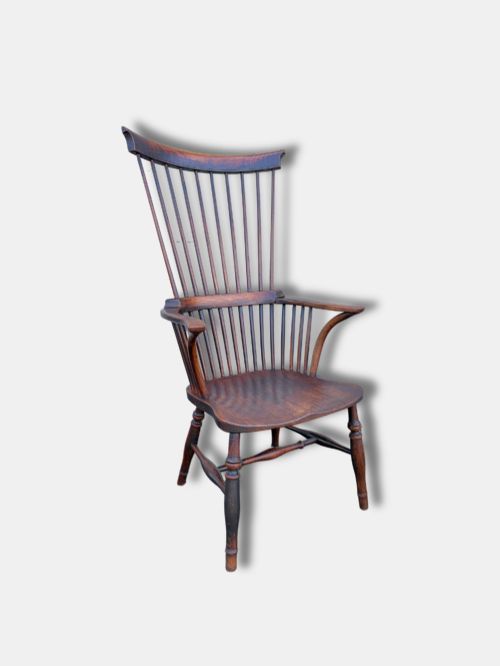
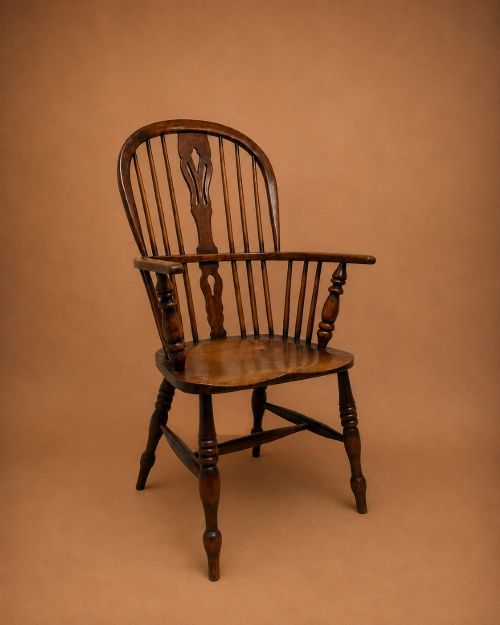
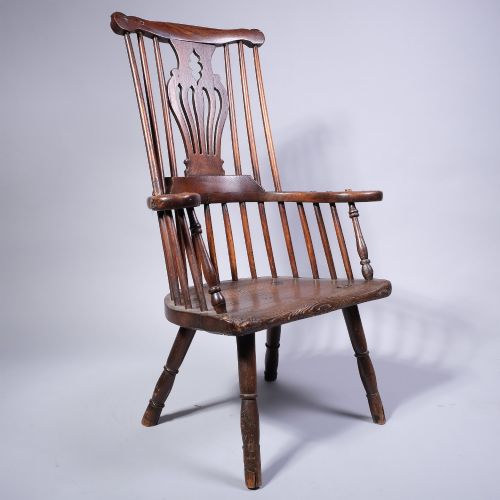
A country ash high chair brings together traditional domestic seating and elevated child-minding forms found across the English and Scottish vernacular traditions. These pieces predominantly pair ash with elm, frequently appearing as high back Windsor chairs built for household use.
The selection ranges from Georgian pieces dating to the eighteenth century through to Victorian examples from the nineteenth century. Buyers encounter high comb-back Windsor variants, hoop-back designs, and naive child-sized armchairs intended for daily family life.
Materials and construction methods
Maker construction relies on the pairing of ash for strong turned spindles and frames, alongside elm for resilient, saddled seats that withstand heavy wear. Beech and rush also appear across specific regional styles, utilising native timbers selected for local availability and structural strength.
Makers shaped these high chairs using traditional greenwood techniques, turning components on a lathe and steam-bending timbers to form distinctive high hoops and comb backs. Joinery depends on wedge-pinned mortise and tenon joints, securing the sticks directly into the solid wood seats.
Listings feature pieces from the 18th century, Georgian, and Victorian eras, primarily constructed from ash, elm, beech, and rush.
Distinctions in quality and execution
Quality separates through the elegance of the spindle turning, the sculptural depth of the saddled elm seat, and the balanced proportion of the high back structure. Superior examples display refined wheel or fillet turnings on the legs and arm supports, whereas simpler pieces rely on plain, heavier components.
Regional provenance and early dating elevate certain pieces, particularly those exhibiting distinct vernacular traits from West Country or Scottish workshops. The integrity of the original timber surface and the retention of crisp joinery distinguish finer workshop output from more naive, utilitarian builds.
Duncan McKellar of Fenwick
The Country Ash High Chair Glossary
- Windsor chair
- A chair built with a solid wooden seat into which the legs and back sticks are independently socketed. This method creates a sturdy, resilient frame typical of country furniture.
- Comb back
- A Windsor chair design where the upright spindle tops are capped by a horizontal wooden rail resembling the spine of a comb. It provides comfortable shoulder support.
- Hoop back
- A continuous bentwood bow that forms both the arms and the arched backrest of a chair. Steam-bending ash achieves this curved structural form.
- Vernacular
- Objects made by regional craftsmen following local traditions rather than strict academic pattern books. This approach prioritises practical utility and local materials.
- Saddled seat
- A wooden seat scooped and hollowed out by hand using an adze and scorper to fit the human form. Elm is often chosen for this due to its resistance to splitting.
Country Ash High Chair: Frequently Asked Questions
How do I date a country ash high chair?
Dating relies on observing structural characteristics, tool marks, and timber wear. Earlier eighteenth-century examples often feature deeper seat saddling and more slender turnings compared to later nineteenth-century counterparts.
Regional traits and construction methods also help place a piece within the Georgian or Victorian periods. Nail types, timber shrinkage, and assembly techniques offer further clues to the exact era of manufacture.
What woods were used in these high chairs?
Makers predominantly combined ash and elm, using ash for flexible spindles and structural legs, while elm provided a tough, split-resistant seat. Beech and occasionally oak also appear depending on the regional workshop and local timber availability.
Each wood was chosen for specific mechanical properties, ensuring the child's chair could endure heavy domestic use. The natural grain variation adds distinct visual character to every surviving piece.
Were these high chairs meant for children?
Many examples on this page are explicitly built as children's seating or high chairs, designed to elevate a child to table height. They served a purely functional role in rural farmhouses and cottages.
Smaller armchair variants allowed young children to sit safely near the hearth. The sturdy construction ensured the seat remained stable during daily family meals.