





Countertop Shop Display
These pieces of countertop shop display span Victorian counters and Art Deco haberdasheries, offering practical storage with historic commercial character.
Countertop Shop Display
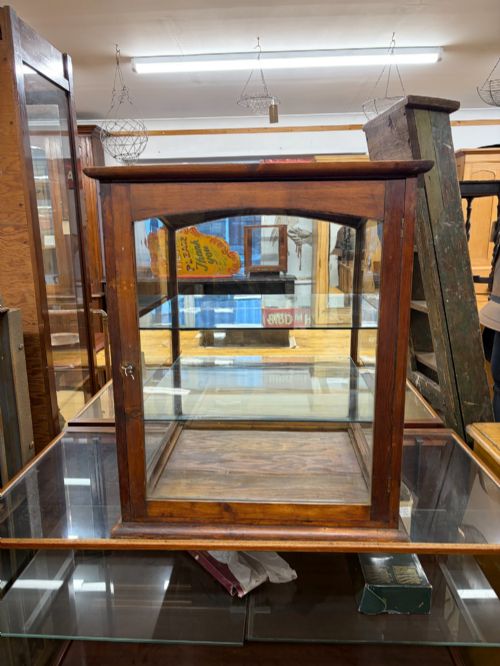
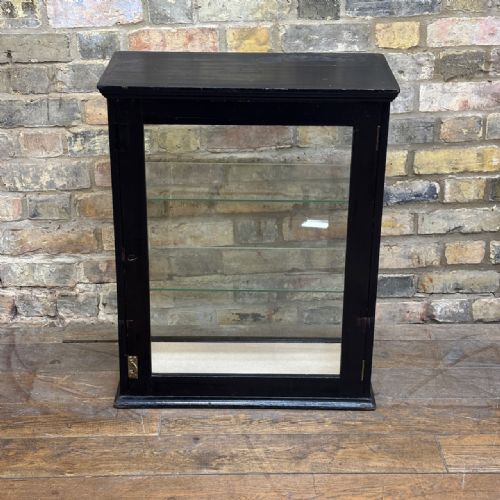
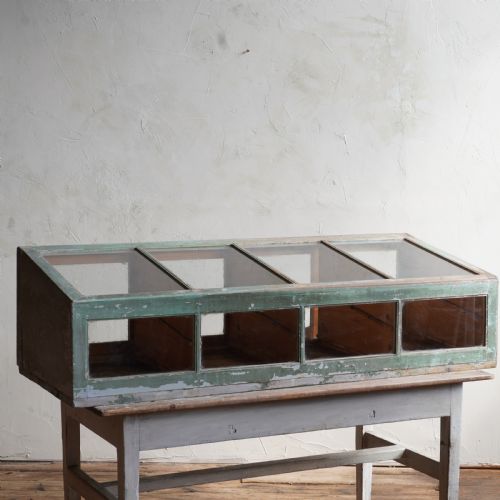
A countertop shop display brings the utilitarian function of historic commerce into domestic interiors, presenting small collections or everyday items with clear visibility. These objects include glazed tabletop cabinets, haberdashery drawers, and specialised holders originally used in confectioners, chemists, and outfitters.
The pieces on this page originate predominantly from the Victorian and Edwardian eras through to the 1930s, reflecting the commercial expansion of the nineteenth and early twentieth centuries. Oak and mahogany tabletop cases dominate the selection, often accompanied by brass fittings and glass viewing panels designed to showcase goods to prospective customers.
Buyers will also encounter specialised variants such as perfume bottles, hat stands, and advertising display cases bearing historic confectionery branding. These items served specific trades, from jewellers to drapers, before finding new utility in modern homes.
Materials and Construction
Timber frames in oak and mahogany provide the structural foundation for the majority of these glazed cabinets and cases. Joinery methods of the period relied on durable framing to support heavy glass panels and frequent daily access on shop counters.
Metal components, principally brass for hinges, handles, and framing, combine with mirrored glass and felt linings to complete the interior presentation. Sign-written decoration and applied branding appear on glass and timber surfaces, utilising hand-painted lettering techniques specific to commercial advertising of the era.
Countertop Shop Display Retail Price Guide 2026
Typical asking prices for countertop shop display among the pieces listed under this phrase on Sellingantiques today, from the lower quarter to the upper quarter. They describe what is for sale here now, not the wider market.
Object forms on this page include haberdashery cabinets, hat stands, perfume bottles, and tabletop display cases.
Gradations in Quality
The distinction between standard commercial fittings and superior pieces rests on the integration of specialised joinery, such as finely rebated glazed doors and original brass hardware. Maker attribution through stamped metal plaques or authentic hand-painted trade advertising elevates a piece above anonymous utilitarian stock.
Subtleties in timber selection, including figured oak or dense mahogany, distinguish workshop production from mass commercial output. The survival of original glass panes, functional drawers, and intact internal felt or mirrored surfaces marks the difference between well-preserved examples and heavily altered items.
John Stow Ltd of Bradford·Manoah Rhodes & Sons Ltd·F. Sage & Co. London
The Countertop Shop Display Glossary
- Haberdashery cabinet
- A multi-drawer unit designed for storing small sewing items, ribbons, and fasteners. These pieces feature glazed or panelled fronts to allow merchants to display stock.
- Tabletop cabinet
- A compact glazed display case built to sit directly upon a retail counter. They allow customers to inspect small luxury goods while keeping items secure.
- Ebonized
- Timber treated with a chemical stain or finish to imitate ebony. This dark, formal treatment appears frequently on display pieces from the late nineteenth and early twentieth centuries.
- Plateau mirror
- A mirrored tabletop base used by jewellers to reflect light upwards onto displayed items. They often feature decorative metal frames.
- Sign-written
- Lettering painted by hand directly onto timber or glass surfaces. In commercial antiques, this denotes authentic period branding for chocolates, cocoa, or pharmaceuticals.
Countertop Shop Display: Frequently Asked Questions
What were countertop shop displays used for?
These glass and timber enclosures sat upon retail counters to protect delicate merchandise while offering clear visibility to passing customers. Merchants utilised them for confectionery, haberdashery, jewellery, and apothecary goods.
In modern interiors, collectors repurpose the cabinets to exhibit small collections, pocket watches, or vintage accessories while protecting them from dust.
How do I identify a Victorian display case?
Victorian examples typically employ heavy timbers like solid mahogany or oak, often accompanied by hand-cut glass panes and robust brass hardware. Their proportions reflect nineteenth-century shopfitting standards, prioritising sturdy construction over sleek lines.
Later Edwardian and 1930s pieces often incorporate lighter oak, ebonized finishes, or streamline Art Deco framing associated with twentieth-century commercial design.
Are the advertising signs on these cabinets original?
Some cabinets retain their original hand-sign-written advertising for brands like Fry’s, Rowntree’s, or Cadbury’s, painted directly onto the glass or timber. These authentic commercial markings indicate the specific trade the cabinet served.
Other pieces feature later sign-written decoration applied during subsequent restorations to emulate period shop displays.
How do I care for antique glass and wood?
Maintain timber surfaces by applying appropriate natural waxes rather than modern silicone polishes, which can damage historic finishes. Clean glass panels gently with mild solutions, avoiding abrasive materials around painted advertising or sign-written lettering.
Protect the joints and hinges from excessive moisture and sudden temperature shifts to preserve the structural integrity of the cabinet.