

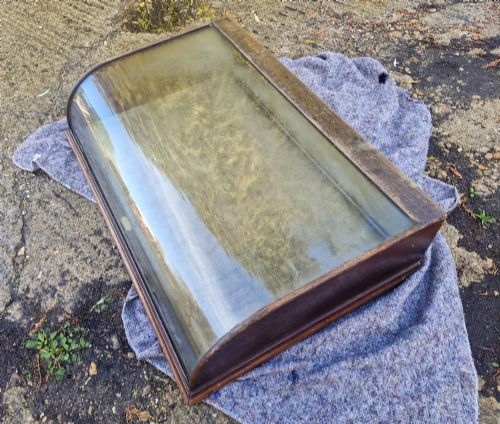
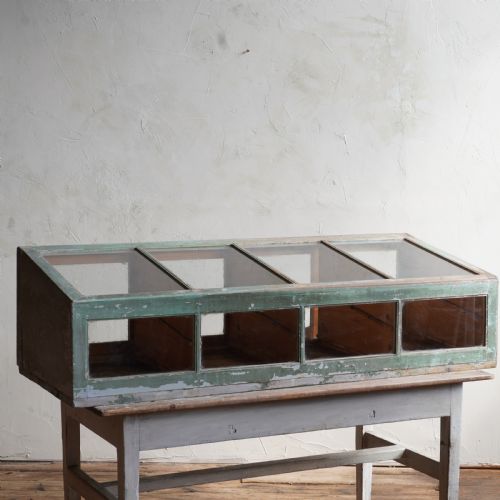


Countertop Display
Countertop display pieces bring commercial heritage indoors, offering compact glazed protection for small collections and retail wares.
Countertop Display
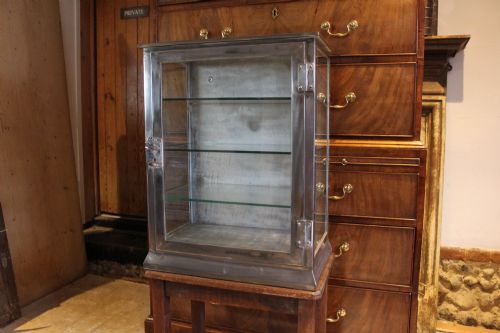
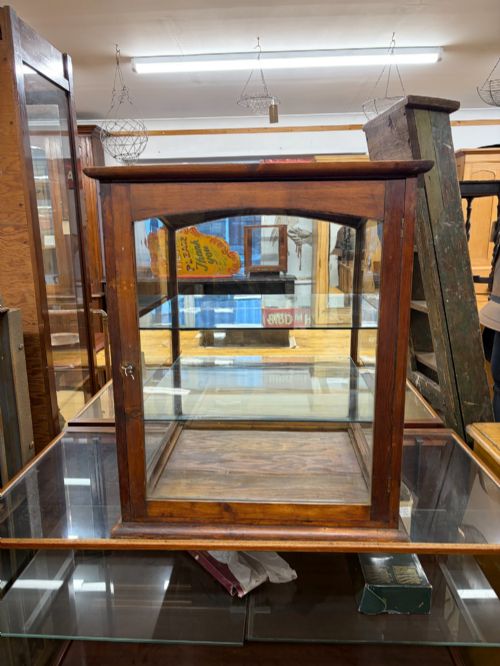
When searching for a countertop display, a buyer encounters glazed shop cabinets, haberdashery units, and plateau mirrors originating from the Victorian era through the 1930s. These pieces include oak and mahogany tabletop cases, brass jewellery frames, and specialised display stands designed for retail merchants.
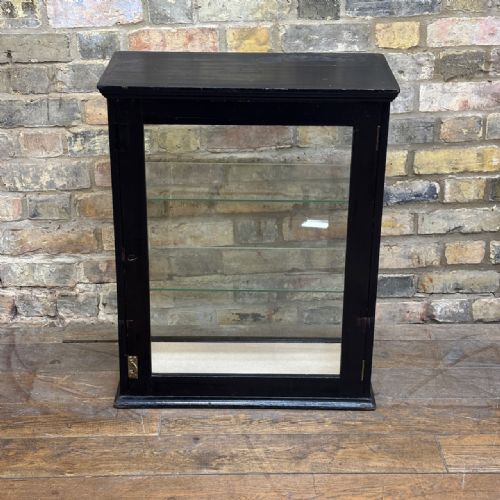
The most common items on this page are timber and glass countertop cabinets from the 1920s and Edwardian periods, often featuring hinged or sliding doors. Alongside these cabinets appear hat stands, perfume bottles, and mannequin busts suited for tabletop placement.
Materials and Construction
Makers utilised solid timbers such as mahogany and oak alongside ebonised wood and brass to construct sturdy frames capable of withstanding daily retail trade. Glazing panes provide the primary transparency for viewing contents, whilst internal mirrors and felt or velvet linings enhance the presentation of stored items.
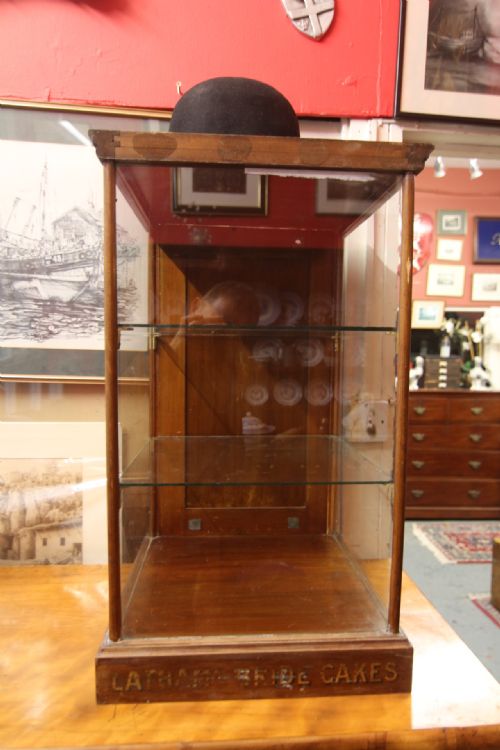
Joinery methods range from straightforward panel construction in Victorian examples to the cleaner geometric lines seen in Art Deco pieces. Surface finishes include distressed paint, polished hardwoods, and hand sign-written advertising panels bearing period brand names.
Countertop Display Retail Price Guide 2026
Typical asking prices for countertop display among the pieces listed under this phrase on Sellingantiques today, from the lower quarter to the upper quarter. They describe what is for sale here now, not the wider market.
Listings feature countertop display forms in oak, mahogany, brass, and glass, spanning the Victorian era through the Art Deco period.
Quality and Distinction
The standard of a countertop display depends heavily on the integrity of its timber frame and the clarity of its original glass panels. Superior examples retain matching brass hardware, tight-fitting joints, and unblemished internal mirror plates that reflect light evenly through the display chamber.
Original signage adds considerable character, distinguishing commercial pieces commissioned for chocolatiers or haberdashers from plain utility cabinets. The distinction between a standard retail container and a finer merchant case lies in the refinement of the moulding and the retention of authentic period details.
John Stow Ltd of Bradford·Manoah Rhodes & Sons Ltd·F. Sage & Co. London
The Countertop Display Glossary
- Haberdashery cabinet
- A multi-drawer retail unit designed for storing small sewing items and ribbons. These pieces often incorporate glass fronts or labelled pulls to help merchants locate stock quickly.
- Plateau mirror
- A mirrored tray or base placed upon a counter to display silverware, perfume bottles, or jewellery. The reflective surface multiplies the visual impact of the items placed upon it.
- Ebonised
- Wood finished with a dark stain or lacquer to imitate ebony. This treatment was popular during the Victorian and 1920s periods for creating sharp contrast within display settings.
- Sign-written
- Hand-painted lettering applied directly to glass or wood surfaces for commercial advertising. These inscriptions frequently name period confectioners or grocers.
- Glazed
- Fitted with panes of glass to protect merchandise from dust and handling whilst maintaining visibility. This technique defines the majority of tabletop cabinets.
Countertop Display: Frequently Asked Questions
What items fit inside a countertop display?
These compact cabinets and cases suit small collectibles, pocket watches, vintage perfume bottles, and delicate curiosities. Their shallow depth allows them to sit comfortably on standard tabletops or sideboards.
Collectors frequently use them to organise and protect small groupings without obscuring natural light.
How do I date a countertop display?
Dating relies upon observing timber choices, hardware styles, and construction techniques characteristic of specific decades. For instance, heavy mahogany frames generally point to Victorian manufacture, whereas geometric lines suggest Art Deco or 1920s origins.
Original sign-written advertising for known period brands also helps anchor a piece within a specific era.
Were these cabinets meant for homes?
Most pieces originated in retail shops, chemists, and sweet shops rather than domestic interiors. Merchants utilised them on counters to showcase goods securely to customers.
Today, buyers repurpose these commercial shopfittings to display personal collections within residential rooms.
How do I maintain glass and timber cabinets?
Routine care involves dusting the timber surfaces gently and cleaning glass panes with standard non-abrasive solutions. Avoid placing wooden cabinets in direct sunlight to protect polished finishes and period sign-writing.
Checking hinges and sliding doors periodically ensures smooth operation without stressing the antique joinery.