






Cottage River Painting
A cottage river painting brings the calm of rural waterways and historic dwellings directly into a room through traditional canvas and paper works.
Cottage River Painting
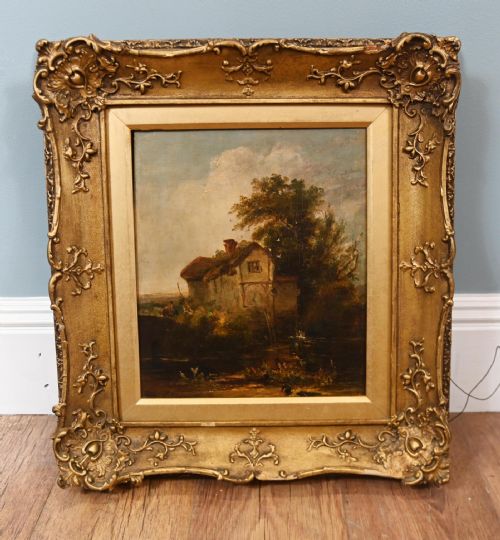
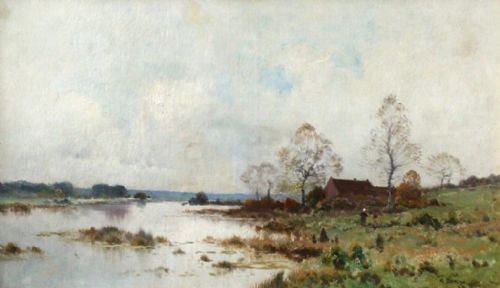
A cottage river painting depicts pastoral scenes featuring waterways, rustic rural dwellings, and figures engaged in quiet daily tasks. These works span multiple eras, including Victorian, Edwardian, and mid-century periods, reflecting shifting approaches to landscape art.
The most frequent examples encountered on this page are 19th-century and early 20th-century oil paintings on canvas, alongside select watercolours on paper. Subjects range from English and Scottish countryside views to French Barbizon style scenes and continental rivers.
Compositions often capture specific atmospheric conditions, such as dusk, sunset, or overcast light, framing watermills, thatched cottages, and boats along riverbanks. Buyers select these artworks to add historic character and traditional scenery to residential interiors.
How they were made
Artists primarily applied oil paint to stretched canvas or wood panels, building rich textures and deep tones that defined the academic and impressionist styles of the eighteenth, nineteenth, and early twentieth centuries. Alternatively, watercolours utilised paper supports, sometimes combined with bodycolour or gouache, to achieve translucent washes of light.
Several cottages appear alongside unexpected companions, including wandering ducks, firewood gatherers, and stray millers.
What varies in quality
Technical proficiency in handling light, perspective, and atmospheric depth distinguishes superior works from more formulaic student or regional productions. Stronger compositions demonstrate confident brushwork, particularly in the rendering of water reflections, foliage, and architectural details.
The integrity of the physical materials also determines the standing of a piece, specifically the preservation of the original canvas, stable paint layers, and the retention of period-appropriate framing. Works bearing clear attribution to established painters command greater attention than unsigned or indistinctly signed examples.
John Horace Hooper·Mario Pinetti·Thomas James Lloyd·Abraham Hulk Junior·Pierre Emmanuel Eugene Damoye·Harry Pennell·Robert Gallon·Thomas Thomas·Yeend King·Stuart Lloyd·Walter Meegan·John Joseph Cotman·Henry Bright·Edward Charles Williams·Alfred Augustus Glendening·John Falconar Slater·Henry Cooper·Charles W Oswald·Victor Forssell·Charles Greville Morris·Henry Maidment·Henry Charles Fox
The Cottage River Painting Glossary
- Barbizon School
- A mid-nineteenth-century French art movement focused on tonal realism, direct observation of nature, and rustic landscape subjects.
- Gesso
- A plaster-like mixture applied to wooden frames or panels to create a smooth surface for gilding or painting.
- Giltwood
- Wood carved and coated with gold leaf or gold paint, frequently utilised for ornate nineteenth-century picture frames.
- Watercolour
- A painting method where fine pigment is suspended in a water-based, translucent solution applied to paper.
- Canvas
- A heavy woven fabric stretched across a wooden frame to serve as a durable support for oil painting.
Cottage River Painting: Frequently Asked Questions
How do I hang a heavy framed oil painting?
Heavy framed oil paintings require robust picture hooks secured directly into wall studs or heavy-duty wall anchors rated for the weight of the piece. Utilising dual mounting points helps distribute the load evenly and keeps the artwork straight.
Ensure the hanging wire or brackets on the back of the frame are securely fastened to the wooden structure rather than the moulding alone. Professional framing assessment is recommended for particularly large or ornate pieces.
Where should I place a landscape painting at home?
Landscape paintings suit living rooms, studies, and hallways where natural light complements the painted atmosphere without causing direct glare. Positioning works away from direct heat sources and intense sunlight preserves the stability of both canvas and pigment.
Many collectors pair traditional rural scenes with wood panelled walls or neutral interiors to highlight the historic tones of the artwork. Eye-level placement generally offers the most comfortable viewing angle for detailed pastoral compositions.
How can I tell a watercolour from an oil painting?
Watercolour paintings sit on paper supports, frequently displayed behind protective glass to prevent moisture damage and surface abrasion. The medium relies on thin, translucent washes where the white of the paper contributes to the luminosity of the scene.
Oil paintings utilise textured canvas or wood panel supports without glass, displaying a visible build-up of paint layers and brush texture. The surface of an oil work often exhibits a varied sheen depending on the varnish applied by the artist.
What does a Barbizon style landscape look like?
Barbizon style landscapes focus on earthy tones, moody skies, and unidealised rural views rather than grand historical narratives. These compositions emphasise atmospheric effects, moody twilight hours, and the quiet labour of figures working near rivers or cottages.
Artists working in this tradition prioritised tonal harmony and direct connection to the natural environment over rigid academic precision. The resulting works project a quiet, contemplative mood suited to traditional interior spaces.