



Cottage Interior Painting
A cottage interior painting captures domestic rural life, offering buyers a window into historic hearthside scenes and quiet family moments.
Cottage Interior Painting
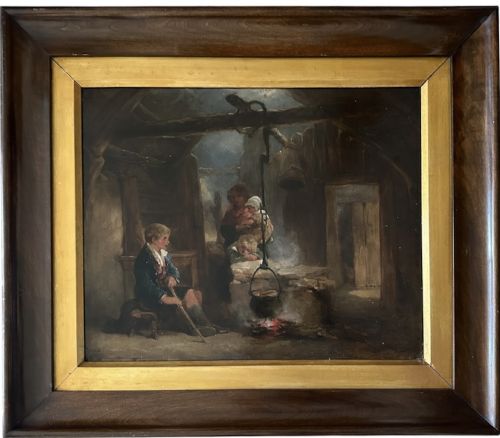
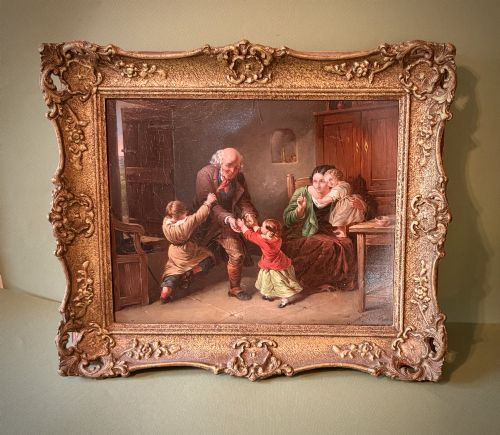
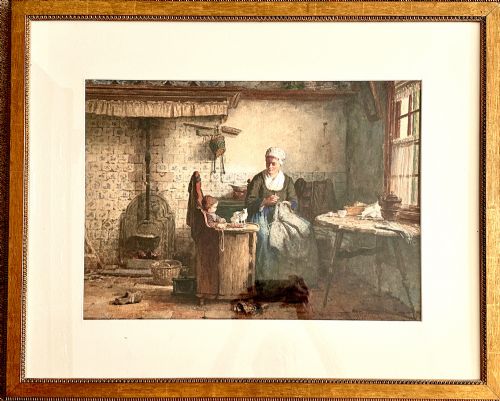
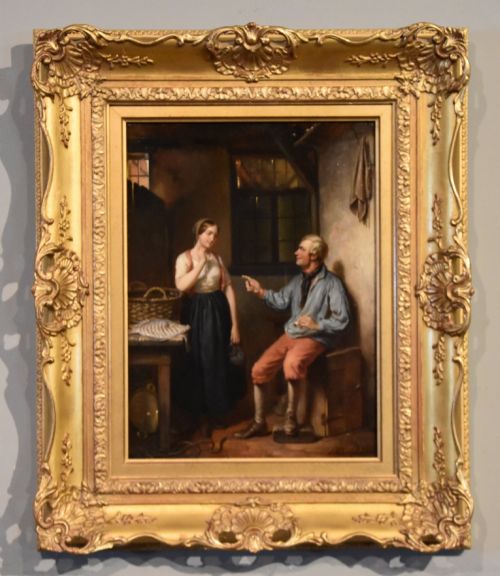
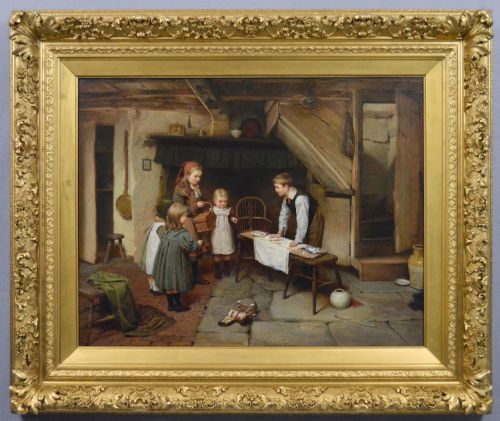
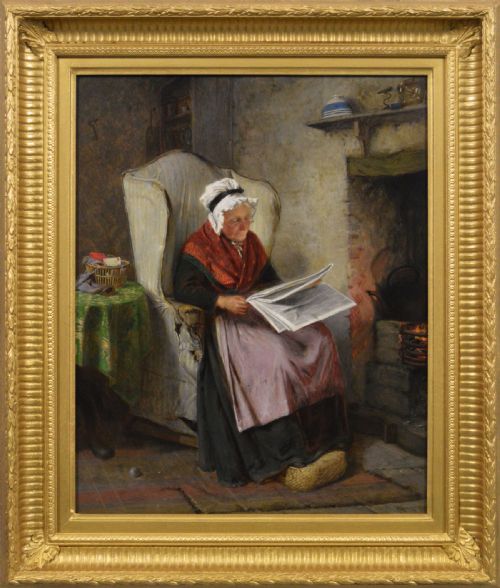
A cottage interior painting depicts domestic domestic scenes within rural homes, often focusing on figures engaged in daily tasks like spinning wool, reading, or resting by the hearth. These works belong to the genre tradition, capturing the intimate realities of working-class or rural family life.
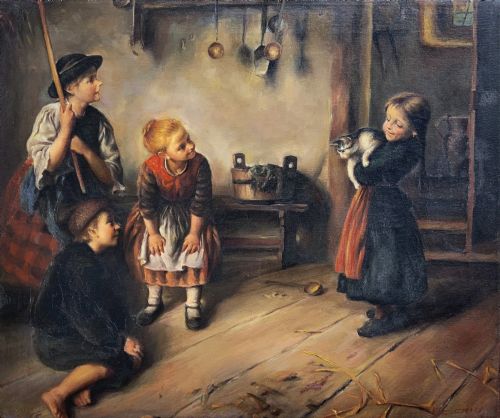
The most common examples on this page date from the nineteenth century into the mid-twentieth century, rendered in oil on canvas, oil on panel, or watercolour. Subjects frequently include mothers and children, elderly residents, and domestic animals sharing the rustic living space.
Geographic origins span British, Dutch, and broader European schools, reflecting a shared nineteenth-century fascination with unpretentious rural existence. Buyers encounter both small-scale watercolour studies and larger, highly detailed oil paintings intended for domestic display.
Assessing Quality and Execution
Quality rests upon the artist's ability to render light, particularly the warm glow of a cottage hearth illuminating figures and domestic objects. Stronger compositions handle multiple figures, animals, and interior details with natural harmony rather than stiff arrangement.
Several domestic scenes include an assortment of household animals, featuring pigs, ponies, guinea pigs, rabbits, and dogs sharing the cottage floor.
George Whitton Johnstone·Hendrik Valkenberg·Jacob Akkersdijk·Harry Brooker·Haynes King·James Kyd·George Smith·Henry Spernon Tozer·Pauline Delacroix Garnier·Alfred Provis·Henry Silkstone Hopwood·Ralph Hedley·Robert Gemmell Hutchison·Jonathan Pratt·Charles Hunt Jnr·John Exley·Paul Constant Soyer·Gustav Vermehren·James Crawford Thom·Jacob Simon Hendrik Kever·Sir David Wilkie
The Cottage Interior Painting Glossary
- Genre painting
- A branch of art depicting scenes from everyday life, typically involving ordinary people engaged in common activities. These works focus on narrative and social observation rather than idealized history or portraiture.
- Chiaroscuro
- An artistic technique employing strong contrasts between light and dark to give a sense of volume to figures and objects. In cottage interiors, this often emphasises the dramatic glow of a fireplace.
- Panel painting
- A painting executed on a flat piece of wood rather than canvas. Wooden supports were widely used in nineteenth-century domestic scenes for stability and fine detail.
- Watercolour
- A painting method in which the paints are made of pigments suspended in a water-based solution. Works on paper utilising this medium offer translucent qualities well suited to domestic interior light.
- Gesso
- A plaster-like mixture applied to wood or canvas as a base before painting. It creates a smooth, stable surface for oil application.
Cottage Interior Painting: Frequently Asked Questions
What subjects appear in these paintings?
These works typically show domestic figures engaged in everyday tasks such as spinning wool, preparing food, or resting by the fireplace. Children, elderly family members, and household animals frequently share the rural cottage setting.
Scenes often highlight quiet moments of family life, emphasising the warmth and simplicity of nineteenth-century rural habitation.
How do I care for an oil painting on wood panel?
Keep the artwork away from direct sunlight and sudden shifts in temperature or humidity, which can cause wood panels to warp or crack. Dust the surface gently with a soft, dry brush without applying cleaning solutions.
Consult a professional conservator if the paint surface requires cleaning or stabilization to ensure the longevity of the panel.
Are watercolours different from oil paintings in these listings?
Waterworks utilise pigments on paper, producing lighter and more translucent interior scenes. Oil paintings on canvas or panel offer richer surface textures and deeper colour saturation.
Both mediums were popular for domestic subjects during the nineteenth and early twentieth centuries, serving different decorative scales.
How can I tell the period of a cottage interior painting?
Dating relies on stylistic clues, artist signatures, framing materials, and the physical support such as canvas or wood panel. Nineteenth-century works frequently display realistic genre conventions and specific regional dress.
Recorded dates for known artists provide a reliable framework for establishing when a particular canvas was produced.