




Cottage Garden Painting
Cottage garden painting captures rural domestic life and floral scenes from the Victorian period through to the mid-twentieth century.
Cottage Garden Painting
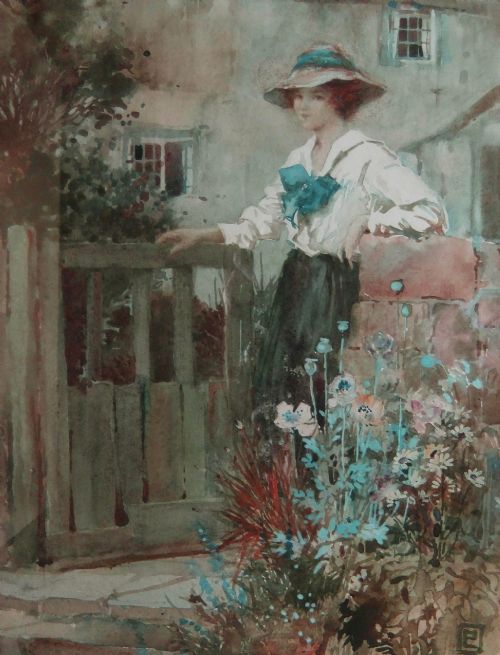
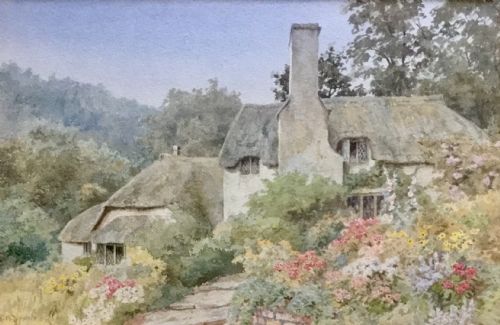
A cottage garden painting portrays rural dwellings surrounded by flowers, foliage, and daily countryside activities. These artworks emerge predominantly from the late nineteenth century, the Edwardian era, and the early twentieth century.
Most examples found here take the form of detailed watercolours on paper or oil paintings on canvas and wood panels. The imagery spans pastoral scenes, walled gardens, and figures engaged in domestic tasks outside thatched or half-timbered homes.
How they were made
Artists utilised watercolour pigment on paper to achieve luminous botanical details and soft atmospheric washes, often mounting finished sheets behind glass in wooden frames.
Oil paint was applied to stretched canvas, wood, or board to build textured surfaces that captured natural light in garden landscapes and rural genre scenes.
The listings span the Victorian era, the Edwardian period, and the 1920s and 1930s.
What varies in quality
Quality rests upon the artist's command of perspective, handling of light, and precision in rendering botanical forms alongside architecture. Stronger compositions balance the architectural elements of the cottage with the vibrant chaos of the surrounding flora.
The preservation of the medium dictates visual impact, separating works with vibrant, unfaded pigments and clean paper supports from those affected by dampness or heavy discoloration.
Percy Lancaster·Theresa Stannard·Owen Bowen·Ernest Higgins Rigg·Kershaw Schofield·Lilian Stannard·David Woodlock·Herbert Royle·Arthur Claude Strachan·John Abernethy Lynas-Gray·Thomas Nicholson Tyndale·Jane Utley·Henry John Sylvester Stannard·Benjamin D. Sigmund·George Frederick Nicholls·Arthur H Buckland·Minnie Smythe·Ernest Walbourn·Sidney Valentine Gardner·Amy Antill·Henry Gillard Glindoni·John Falconer Slater·F Fletcher·K M Attlee·John Edward Mace
The Cottage Garden Painting Glossary
- Watercolour pigment
- A colour medium ground with water-soluble binders, applied to paper to create translucent layers. It requires careful protection behind glass to prevent moisture damage.
- Rural genre
- A category of art depicting scenes of everyday life in the countryside. These works often include figures tending gardens, feeding hens, or resting outside historic homes.
- Impressionism
- A style focused on capturing the visual impression of the moment, particularly shifting light and colour. British variants applied these principles to pastoral landscapes and domestic gardens.
- Mixed media
- An artwork combining two or more artistic materials on a single support. This approach appeared in later twentieth-century interpretations of traditional garden subjects.
Cottage Garden Painting: Frequently Asked Questions
What periods do these paintings date from?
The available selection spans the nineteenth century, the Victorian era, the Edwardian period, and the early twentieth century up to the 1940s.
Most dated examples cluster around the decades leading up to and immediately following the First World War.
What are the common subjects?
Common subjects include thatched cottages, walled gardens in summer, floral borders with delphiniums, and figures feeding hens or knitting outside.
Artists frequently recorded specific rural regions across Britain, including Somerset, Yorkshire, and Surrey.
How should I frame and display them?
Watercolour paintings require preservation behind glass to protect the paper and water-soluble pigments from atmospheric moisture and direct sunlight.
Oil paintings on canvas or wood benefit from stable indoor environments away from extreme temperature fluctuations that can cause paint cracking.
How do I distinguish watercolours from oils?
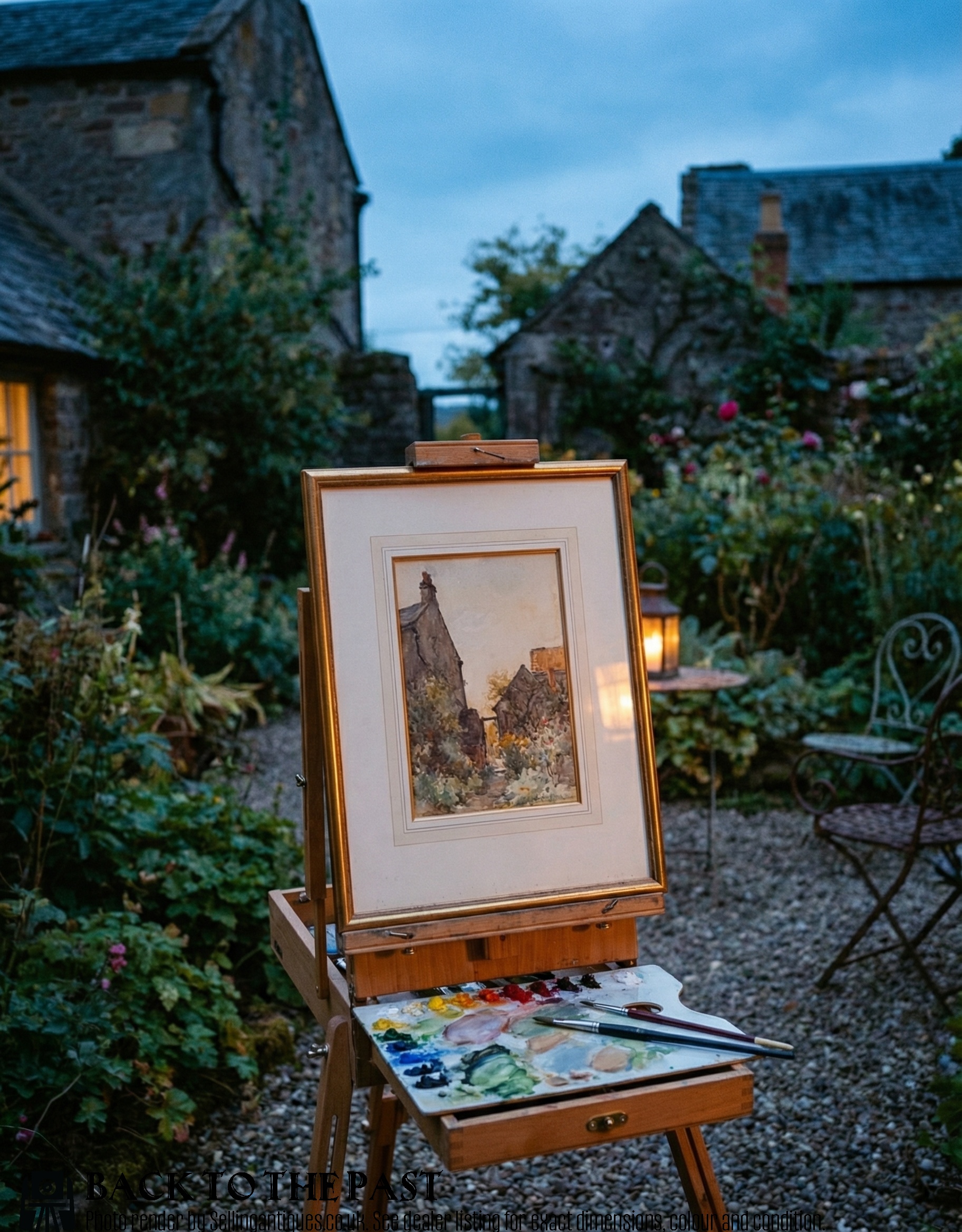
Watercolours feature translucent pigments on paper supports, usually displayed behind glass with a card mount separating the artwork from the frame.
Oil paintings present a heavier, textured pigment layer applied directly to canvas, wood panels, or boards without glass protection.