





Cottage Garden Landscape Painting
A cottage garden landscape painting captures the ordered floral abundance of rural homes across the Victorian and early twentieth-century periods.
Cottage Garden Landscape Painting
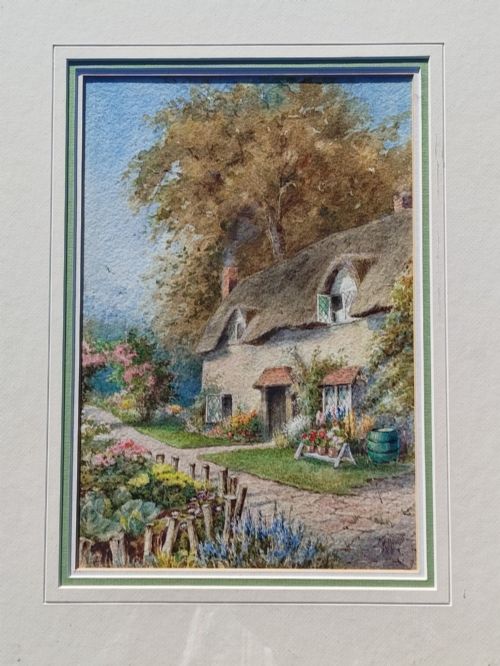
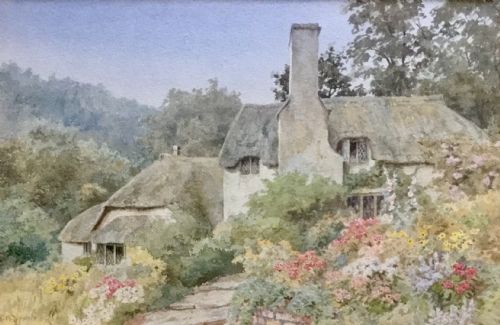
A cottage garden landscape painting depicts rural English homes surrounded by dense floral plantings, country paths and pastoral scenes. You will frequently encounter works executed during the Edwardian period and the early decades of the twentieth century. These pieces record a traditional way of country life through gardens filled with summer blooms and half-timbered or thatched dwellings.
The selections span traditional watercolours on paper alongside oil paintings on canvas and wood panels. Artists of the late nineteenth and early twentieth centuries favoured these rustic subjects to evoke a sense of quiet rural domesticity. Most examples measure on a domestic scale, framed behind glass or within traditional wood mouldings.
Materials and methods
Painters relied primarily upon watercolour pigment applied to paper or oil paint laid onto canvas and wood panels. Watercolour works utilise thin washes and fine brushwork to capture the luminous qualities of summer light upon flowers and foliage. Oil paintings employ heavier impasto and layered pigments to build rich textures across garden paths and rustic masonry.
Framing materials typically consist of carved or moulded wood, sometimes paired with glass protection for works on paper. The physical construction reflects standard studio practices of the Victorian and Edwardian eras, combining traditional stretchers, mounts and protective backboards.
Cottage Garden Landscape Painting Retail Price Guide 2026
Typical asking prices for cottage garden landscape painting among the pieces listed under this phrase on Sellingantiques today, from the lower quarter to the upper quarter. They describe what is for sale here now, not the wider market.
The documented periods span from the nineteenth century through the Victorian era and into the nineteen-forties.
Judging the work
Quality rests upon the artist's handling of natural light and the structural clarity of the composition. Stronger examples display confident brushwork that defines botanical species and architectural details without stiffness. Weaker pieces often rely on formulaic foliage and muddy colour palettes that obscure the depth of the scene.
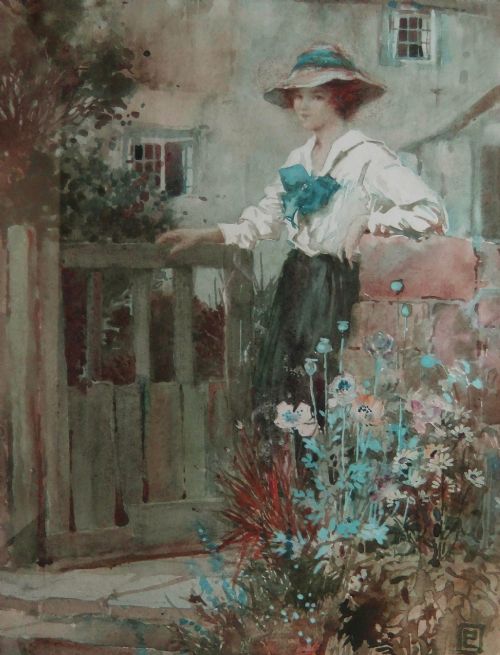
The preservation of the pigment also dictates the standing of a piece. Works retaining their original colour intensity without excessive fading or paper discolouration command greater appreciation. The integration of human or animal figures, such as gardeners, children or poultry, adds narrative depth to the finest compositions.
Percy Lancaster·Theresa Stannard·Owen Bowen·Ernest Higgins Rigg·Kershaw Schofield·Lilian Stannard·David Woodlock·Herbert Royle·Arthur Claude Strachan·John Abernethy Lynas-Gray·Thomas Nicholson Tyndale·Jane Utley·Henry John Sylvester Stannard·Benjamin D. Sigmund·George Frederick Nicholls·Minnie Smythe·Sidney Valentine Gardner·John F. Pasmore
The Cottage Garden Landscape Painting Glossary
- Impressionism
- A style of painting emphasising unblended brush strokes and the accurate depiction of changing light. British practitioners adapted these continental techniques to local rural subjects.
- Watercolour
- A painting method where water-soluble pigments are suspended in a water-based solution. Artists apply these transparent washes to paper to create luminous effects.
- Pastoral
- A genre of art depicting the rustic life of the countryside in an idealized manner. These scenes often feature cottages, gardens and agricultural workers.
- Impasto
- The process of applying paint thickly on a canvas so that the brush or palette knife marks remain visible. This technique adds tactile relief to oil paintings.
Cottage Garden Landscape Painting: Frequently Asked Questions
What periods do these paintings date from?
The available works span from the nineteenth century through the Victorian era and into the early twentieth century. Many examples date specifically from the nineteen-tens and nineteen-twenties.
This broad timeline encompasses late Victorian rural genre painting and the rise of British Impressionism. Each decade brings distinct stylistic shifts in how artists recorded the English countryside.
Are these works created on paper or canvas?
The inventory includes both watercolours executed on paper and oil paintings created on canvas or wood panels. Watercolours are typically mounted and framed behind protective glass.
Oil paintings on canvas often present a heavier textured surface framed within traditional timber mouldings. Both mediums were widely utilised by painters working in rural settings during this era.
How do I care for an antique watercolour?
Protect watercolours from direct sunlight to prevent the fading of delicate pigments on paper. Keep them in rooms with stable humidity levels to avoid warping the paper or mount.
Ensure the glazing remains intact and the backing board is sealed against dust and moisture. Professional framing using acid-free materials preserves the integrity of the piece.
How do I distinguish Edwardian from Victorian scenes?
Victorian rural genre pieces often lean towards narrative storytelling with darker, more sombre palettes. Edwardian and later works frequently embrace brighter light and looser brushwork influenced by impressionist ideas.
Examining the clothing of any figures depicted can also offer clues to the specific decade of creation. Landscapes from the nineteen-twenties often show a lighter, more decorative interpretation of the cottage garden.