


Cornish Oil Landscape
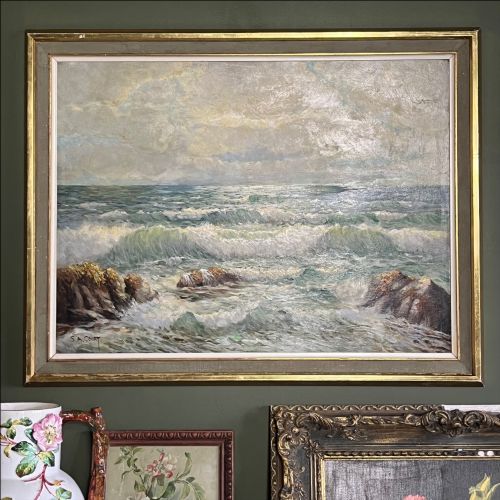
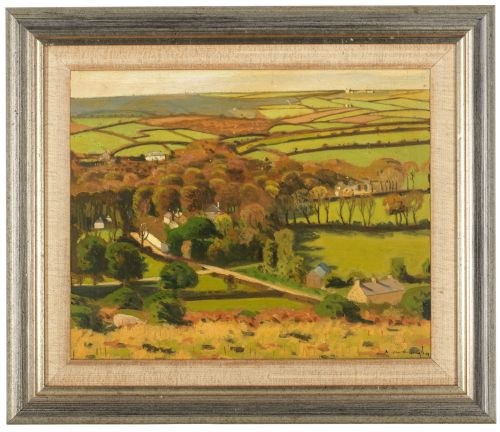
A cornish oil landscape captures the shifting light and rugged maritime character of the far southwest, prized for its atmospheric coastal views.
Cornish Oil Landscape
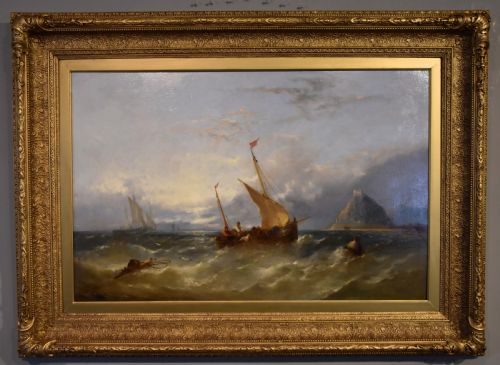
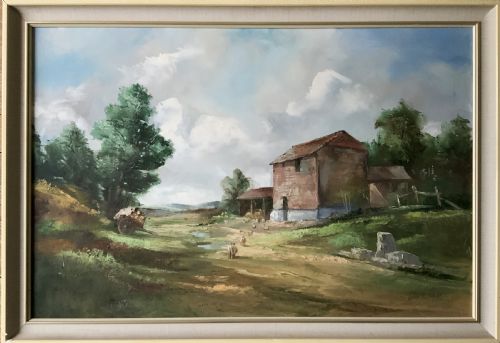
A cornish oil landscape depicts the harbours, cliffs, and rural scenes of Cornwall, recorded across periods ranging from the Victorian era through the mid twentieth century. Buyers encounter works executed in styles such as British Impressionism, Modern British, and Victorian maritime realism, capturing specific locations like St Ives, Mevagissey, and Polperro.
The selection on this page relies heavily on early twentieth century and mid twentieth century examples, alongside nineteenth century interpretations. These paintings document the enduring appeal of the Cornish coast and countryside to visiting and resident artists alike.
How they were made
Artists painted primarily with oil paint on canvas or board, often working en plein air to capture immediate atmospheric conditions on site. Canvases were typically stretched over wooden supports and frequently housed in gilt wood frames adorned with gesso mouldings.
The technique relies on pigment application that builds texture and depth, whether depicting turbulent seas off Trebarwith Strand or quiet harbour waters at low tide. Painters utilised the medium to manage the distinct coastal light and maritime atmosphere characteristic of the region.
The listings combine Victorian maritime scenes with twentieth century British Impressionism, utilising canvas and board supports.
What varies in quality
Quality rests on the artist's command of light, brushwork, and atmospheric perspective, distinguishing loosely rendered impressionistic studies from more rigid academic recordings. Works by established painters associated with recognised regional schools demonstrate greater sureness in composition and tonal balance.
The integration of the painting with its period frame also influences the overall standard, as original gilt wood settings complement the visual weight of the canvas. Condition of the paint layer, stability of the support, and clarity of signature further differentiate standard works from more accomplished examples.
Sidney A Court·Robert Morson Hughes·William Henry Williamson·Joan Gillchrest·Edward Matthew Elliott·Gyrth Russell·George Turland Goosey·Charles Sim Mottram·William Pitt·Joseph Farquharson·William Lambert Bell·Jack R Mould·Hendrik Yan Wolter·Herbert James·William Edward Webb·J Titcomb·Denys Law
The Cornish Oil Landscape Glossary
- En plein air
- Painting outdoors directly from nature to capture transient effects of light and weather. This method defined much of the regional output associated with coastal artist colonies.
- Gesso
- A plaster mixture applied to wooden frames before gilding or painting. It provides a smooth base that receives decorative detail.
- British Impressionism
- A painting style influenced by French movements that focused on light and everyday subjects. British practitioners applied broken brushstrokes to coastal scenes.
- Maritime realism
- A genre dedicated to accurate depictions of ships, coastal waters, and sea weather. Artists observed nautical detail and coastal topography closely.
- Newlyn school
- An art colony based in West Cornwall focused on naturalistic plein air painting of local life and landscapes. Artists captured working people and coastal environments.
Cornish Oil Landscape: Frequently Asked Questions
What is a cornish oil landscape?
A cornish oil landscape is an original painting executed in oil paint that depicts the coast, harbours, or countryside of Cornwall. These works record regional topography and maritime activity across multiple generations.
Subjects range from busy fishing ports like St Ives and Mevagissey to quiet rural streams and farmyards. They serve as historical and aesthetic records of a distinct British art colony region.
How were these paintings displayed?
These paintings were traditionally displayed in domestic interiors within decorative surrounds, often utilising gilt wood frames with gesso detailing. The frame acted as a formal boundary between the canvas and the room.
Period frames varied from ornate Victorian mouldings to simpler profiles favoured by mid twentieth century modernists. Selecting an appropriate frame maintains the historical integrity of the artwork.
How do I live with an oil painting?
Living with an oil painting requires stable indoor conditions away from direct sunlight and extreme humidity fluctuations. These precautions protect both the canvas support and the delicate oil pigments from degradation.
Regular light dusting with a soft brush maintains the surface without disturbing the paint layer. Displaying the work at eye level allows proper appreciation of the artist's brushwork and tonal range.
How do I tell periods apart?
Periods are distinguished by stylistic shifts in brushwork, framing choices, and palette, moving from detailed nineteenth century realism to looser twentieth century impressionism. Victorian works often feature darker, more formal compositions.
Twentieth century pieces, particularly those from the interwar and post-war years, frequently embrace brighter palettes and freer application. Signatures, artist biographies, and framing styles provide additional dating evidence.