


Cornish Coastal Oil Painting
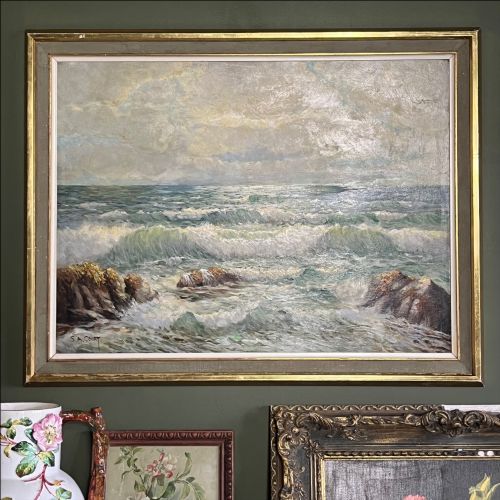
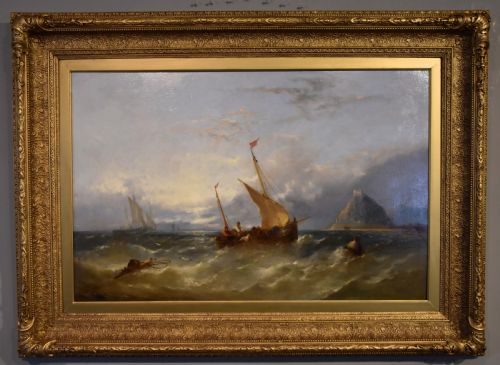
A cornish coastal oil painting captures the rugged light and maritime temper of the peninsula through the weight and texture of oil on canvas.
Cornish Coastal Oil Painting
A cornish coastal oil painting brings the harbours, fishing boats and rocky shores of the south-west into a room through historic depictions of locations like St Ives, Mevagissey and Polperro. Buyers searching for a cornish coastal oil painting encounter works ranging from 19th-century Victorian maritime scenes to mid-20th-century impressionistic views.
The pieces on this page primarily consist of framed oil paintings on canvas, supported by wooden stretchers and housed in gesso or gilt wood frames. The subjects focus closely on the sea, shipping traffic, and local coastal life depicted by artists working both in the studio and en plein air.
Stylistically, these works cross multiple periods including Victorian realism, Edwardian views, British Impressionism and the Newlyn School. A buyer is most likely to meet canvases reflecting these distinct regional movements, which recorded the changing light of the Cornish coast across successive decades.
Materials and methods
The foundation of these works is oil paint applied to canvas, often stretched over a wooden frame to provide a stable working surface. Artists utilised the slow-drying properties of oil to build rich textures and blend coastal light.
Many of these paintings were created en plein air directly on the Cornish coast, capturing atmospheric shifts in weather and tide. Finishing touches often included protective varnishes and placement within decorative wood and gesso frames.
Listings span the 19th century through the mid-20th century, utilising canvas, oil paint, wood, and gesso.
Assessing quality
Quality in these coastal works rests upon the artist's handling of light, atmosphere and maritime perspective. Superior pieces demonstrate a confident brushwork that conveys the movement of water and the particular quality of Cornish air without excessive detail.
The relationship between the canvas and its original or period frame also influences the overall integrity of the piece. Works that retain their period gilt wood or gesso frames preserve a more complete historical context.
Sidney A. Court·William Henry Williamson·Edward Matthew Elliott·Charles Napier Hemy·Gyrth Russell·George Turland Goosey·Charles Sim Mottram·William Pitt·William Lambert Bell·Jack R Mould·William Edward Webb·Joseph Vickers De Ville·David James
The Cornish Coastal Oil Painting Glossary
- En plein air
- Painting outdoors to capture direct observations of natural light and weather. This method was widely utilised by artists working along the Cornish coast.
- Newlyn School
- An art colony based in Cornwall during the late 19th and early 20th centuries. Painters in this group focused on naturalistic depictions of local fisherfolk and coastal life.
- Gesso
- A plaster-like mixture applied to wooden frames before gilding or painting. It provides a smooth base for ornate decorative mouldings.
- Stretcher
- The internal wooden framework that holds a canvas taut. Historic pieces feature pegged or wedge corners to allow for future adjustment.
Cornish Coastal Oil Painting: Frequently Asked Questions
Where were these paintings created?
These works were produced by artists visiting or residing in Cornish coastal locations such as St Ives, Mevagissey, Polperro, and Penzance.
Many painters worked directly on location to capture the changing tides and local fishing fleets.
How do I date a Cornish oil painting?
Dating relies on stylistic evidence, artist signatures, framing materials, and recorded exhibition periods.
Victorian and Edwardian works often display specific framing styles and dress, while mid-century pieces show looser impressionistic brushwork.
What subjects appear most often?
Harbours, fishing trawlers, maritime rescues, and rocky headlands dominate the subject matter.
Artists frequently recorded the daily activities of sea fishermen and local coastal life.
How should I display these frames?
Hang paintings away from direct sunlight and fluctuating heat sources to protect the canvas and oil paint.
Ensure the wall fixings match the weight of the wooden stretcher and gilt wood frame.