
Corner Storage Cupboard
A corner storage cupboard turns dead domestic space into timber display and storage, bringing architectural line to awkward angles in period rooms.
Corner Storage Cupboard
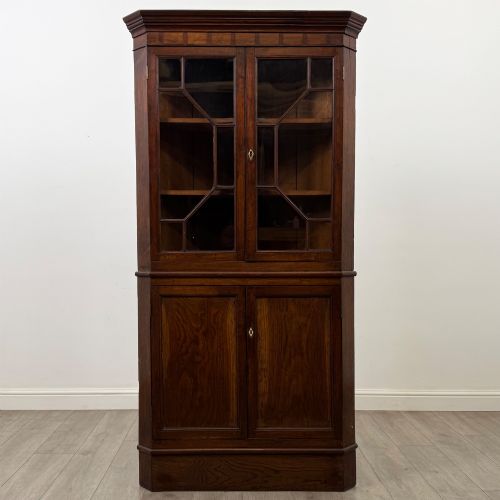
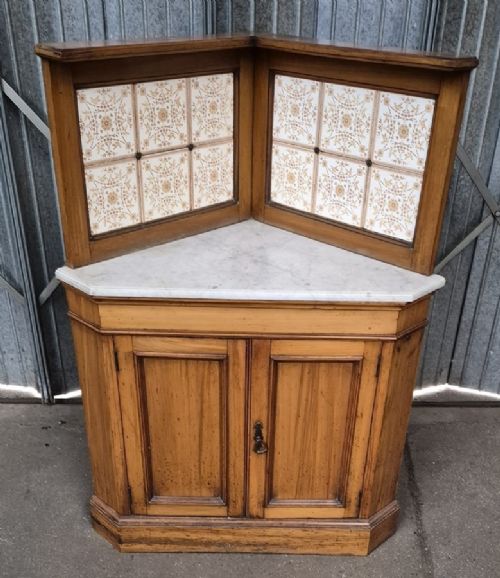
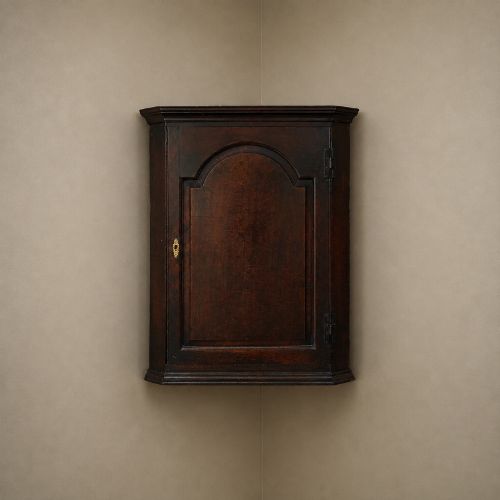
A corner storage cupboard occupies the junction of two walls, using a wedge-shaped footprint to house shelving, doors, and sometimes glass panels. The selection spans straightforward wall-hanging units to substantial floor-standing pieces that fill room heights.
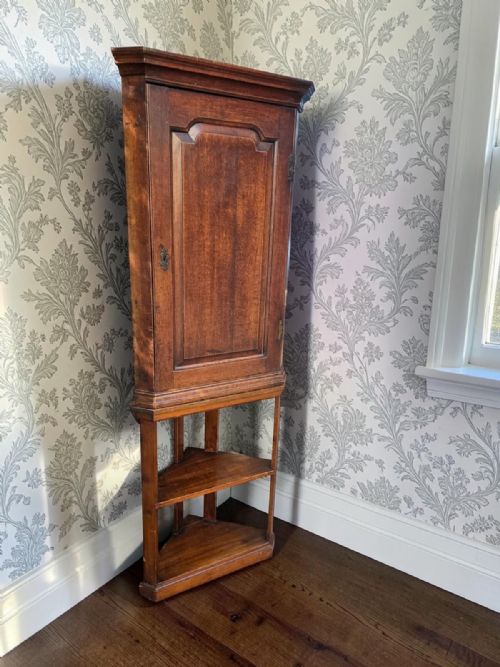
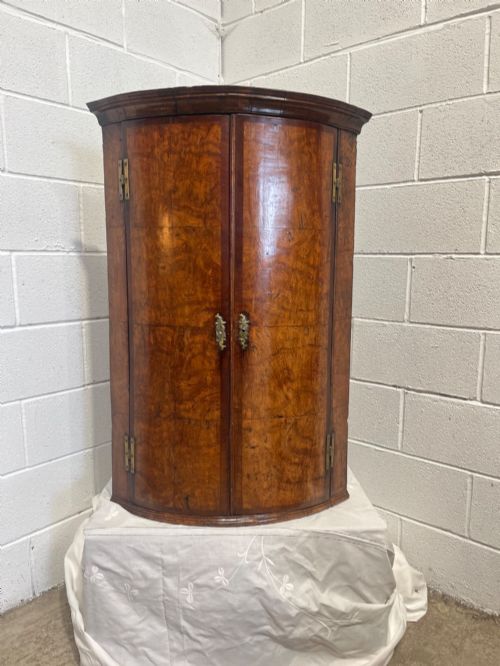
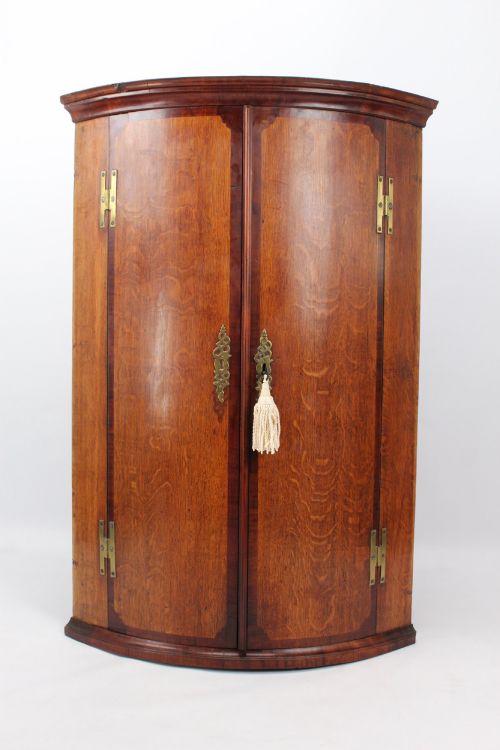
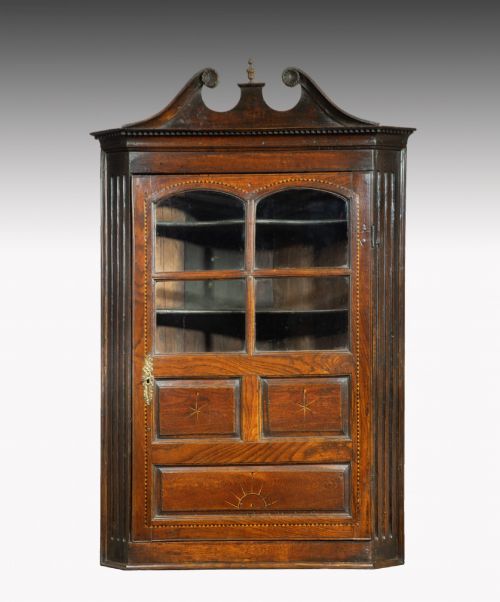
Georgian examples predominate, particularly in oak and mahogany, often featuring bow fronts or architectural pediments. Victorian iterations introduce walnut, marquetry, and regional variations such as Welsh elm or stripped pine.
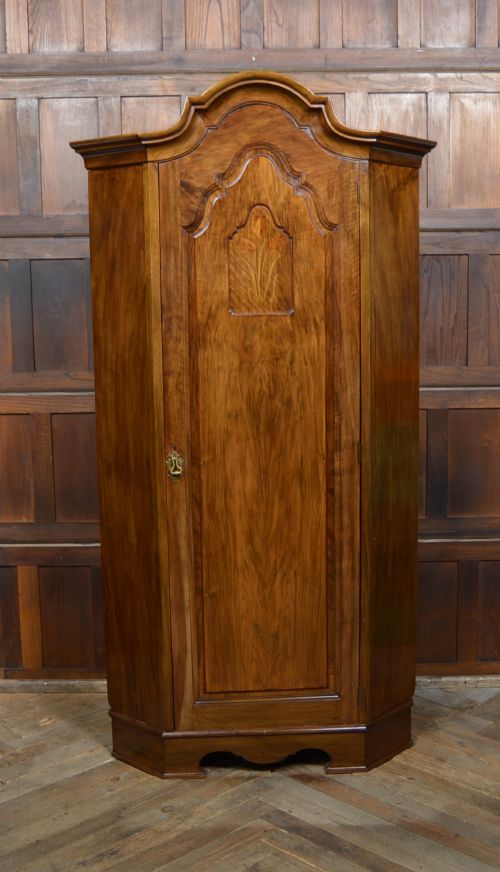
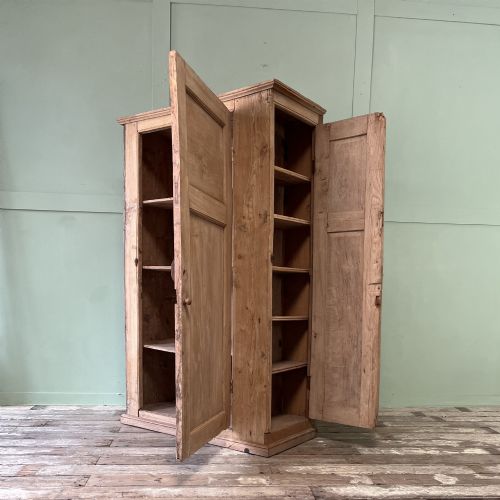
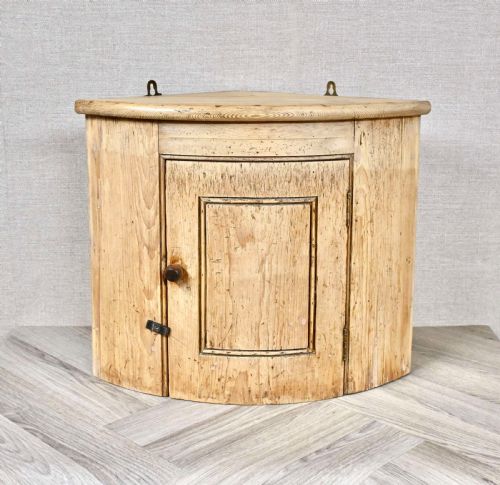
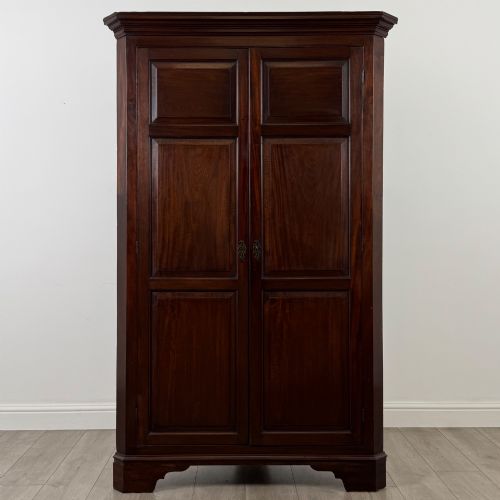
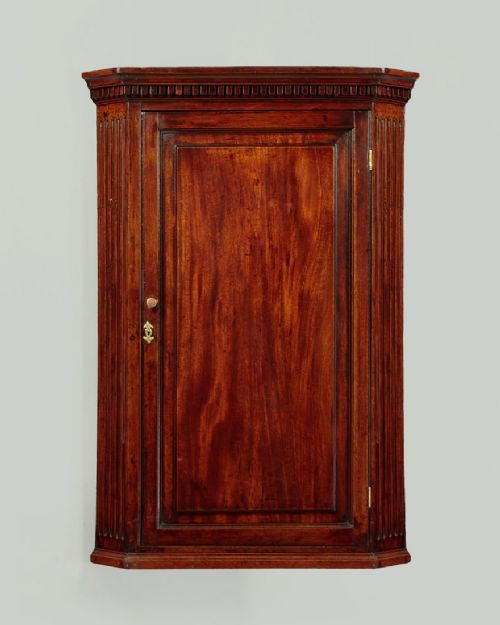
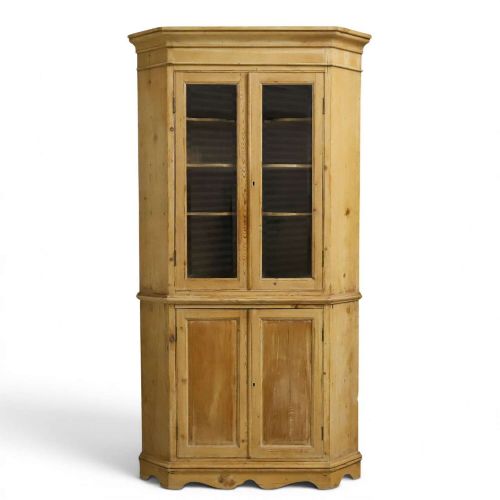
Formats range from single-door wall cabinets to two-part cupboards and tall standing wardrobes. Makers built these to anchor domestic interiors where straight furniture fails.
Construction and Materials
Timbers such as oak, mahogany, walnut, and pine form the carcasses, joined with traditional cabinetry methods to withstand the tension of hinged doors. Grain selection governs the visual weight, from figured Cuban mahogany to scrubbed or painted pine.
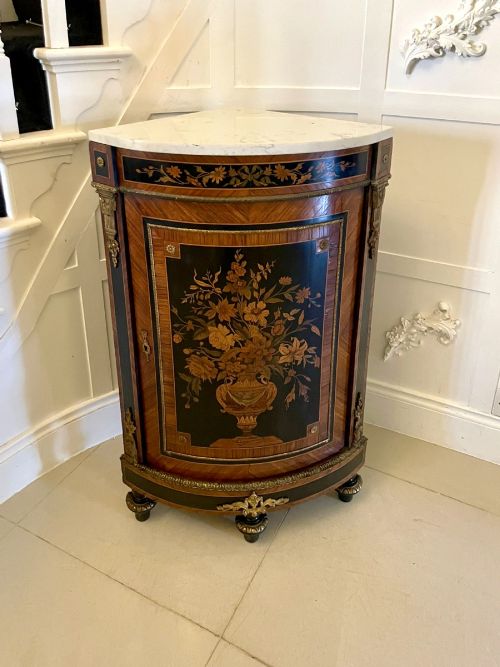
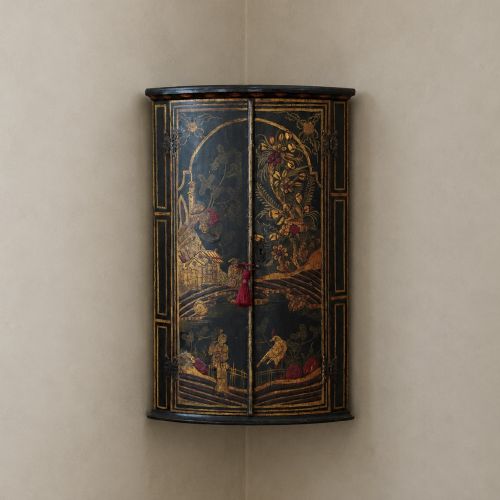
Brass hinges and key escutcheons secure doors while marble tops appear on specialised washstands and French Louis XVI style cabinets. Glass panes and japanned chinoiserie finishes diversify the surface treatments.
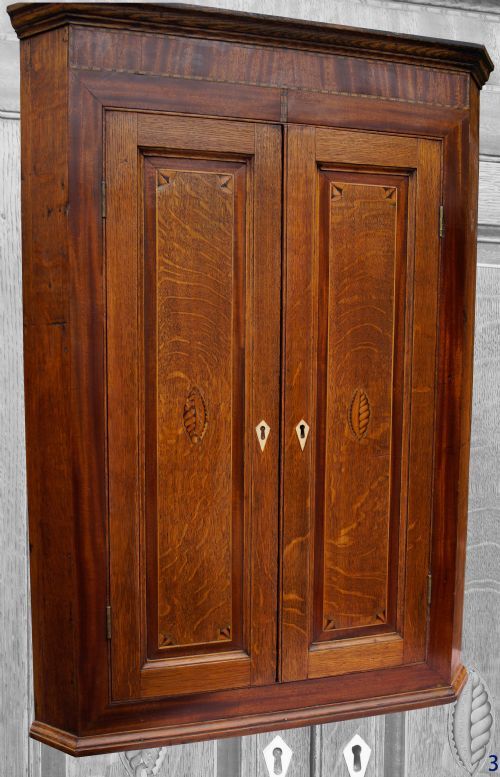
Architectural cornices and inlaid marquetry panels demonstrate the joiner's hand across George III and Victorian eras.
Listings span Georgian, Victorian, and early twentieth-century eras, utilising oak, mahogany, walnut, pine, and elm.
Judging Quality and Craft
Quality rests in the selection of primary timbers and the integrity of the carcass joinery. Well-chosen mahogany and burr oak display coherent grain matching across doors and panels, whereas utilitarian pine relies on painted or stripped finishes.
Hardware integrity dictates functional success, notably heavy brass hinges capable of supporting heavy timber doors over centuries. The precision of bow front curves and the crispness of carved mouldings separate provincial joinery from metropolitan workshops.
Walker & Sons
The Corner Storage Cupboard Glossary
- Bow front
- A convex, outwardly curving front facade that softens room angles. This shape appears frequently in Georgian and nineteenth-century mahogany pieces.
- Marquetry
- The art of applying decorative veneer pieces to form geometric or pictorial patterns. This technique surfaces on Victorian and continental cabinets.
- Pediment
- A triangular or arched architectural ornament crowning the top of a cabinet. It gives taller floor-standing cupboards a classical proportion.
- Escutcheon
- A flat plate surrounding a keyhole, usually fashioned from brass. It protects the surrounding timber from wear.
- Chinoiserie
- European decorative art imitating Chinese artistic styles. Japanned versions utilise raised lacquer work on timber surfaces.
Corner Storage Cupboard: Frequently Asked Questions
How do I hang a wall corner cupboard?
Wall-hanging corner cupboards require secure fixing directly into masonry or robust timber studs behind the plaster. Because the weight of timber doors pulls forward when opened, the upper hanging brackets bear significant leverage.
Professional installation ensures the carcass stays square so the doors close evenly without binding against the frame.
What is the difference between wall hanging and floor standing?
Wall-hanging units bolt directly to room surfaces to save floor space, often featuring shaped bottoms designed to clear furniture below. Floor-standing variants carry their own weight down to plinths or bracket feet, offering greater internal volume.
Standing cupboards range from small waist-height cabinets to tall wardrobes and drinks cabinets.
How do I date an oak corner cupboard?
Dating relies upon construction clues such as hand-cut dovetails, timber species, and moulding profiles. Eighteenth-century Georgian pieces typically show pegged mortise and tenon joints with wider oak boards.
Victorian items often introduce machine-sawn components, standardised brass screws, and different interior shelving arrangements.
Will a bow front cupboard fit standard room corners?
Bow front cupboards project slightly further into the room centre than flat-fronted versions because of their curved doors. The internal corner angle remains ninety degrees, but the exterior footprint requires careful measurement.
Checking the arc against adjacent skirting boards and door frames prevents clearance issues.