

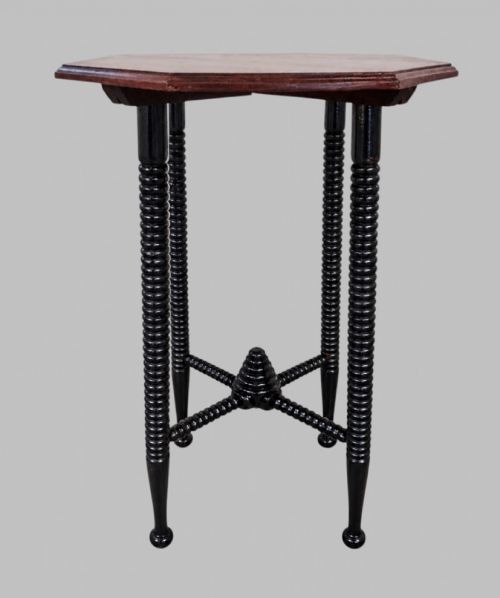
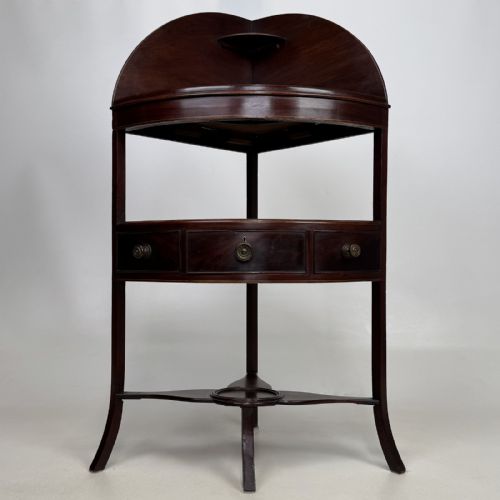
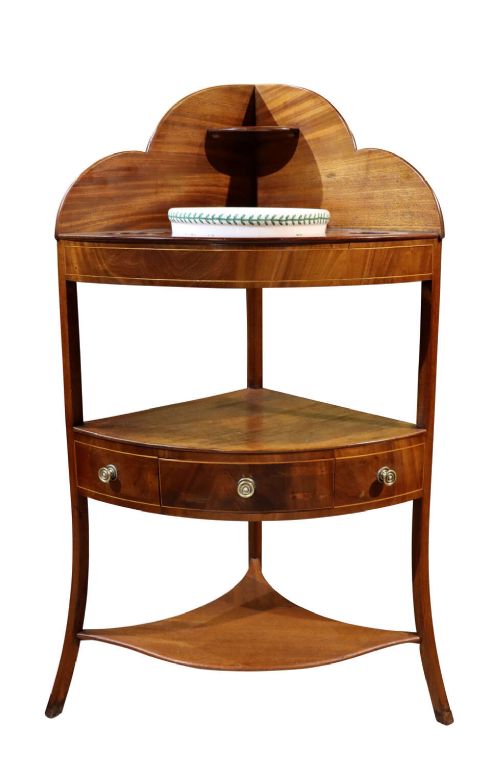
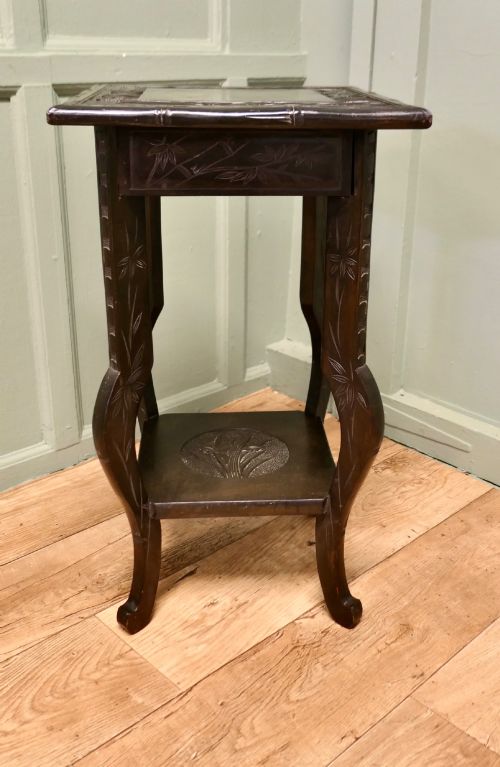

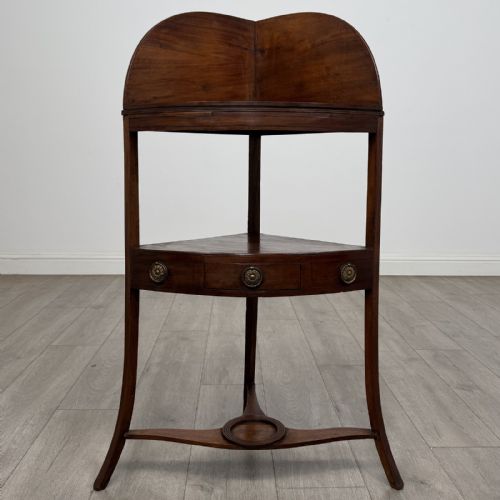
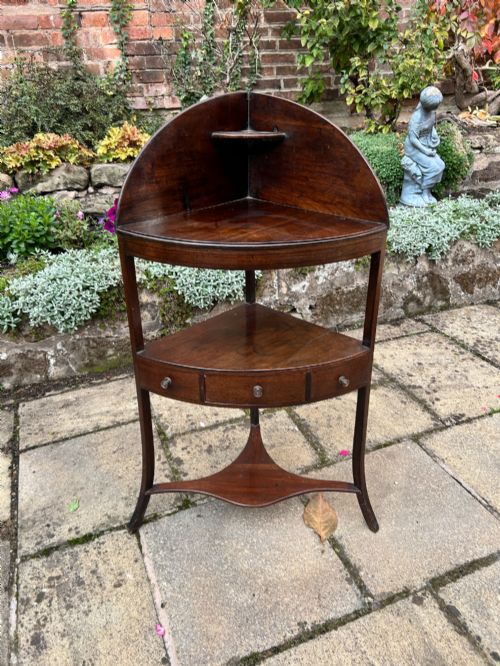
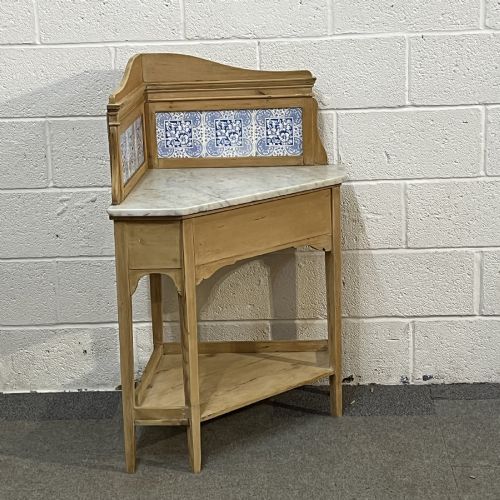
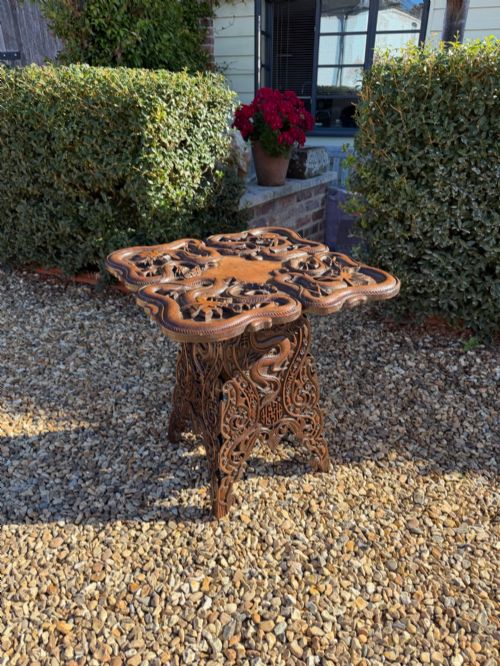
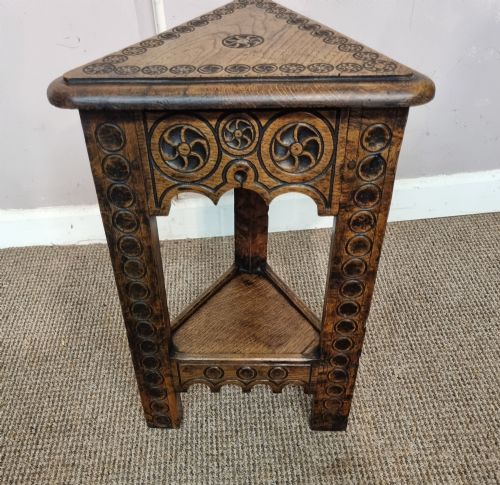

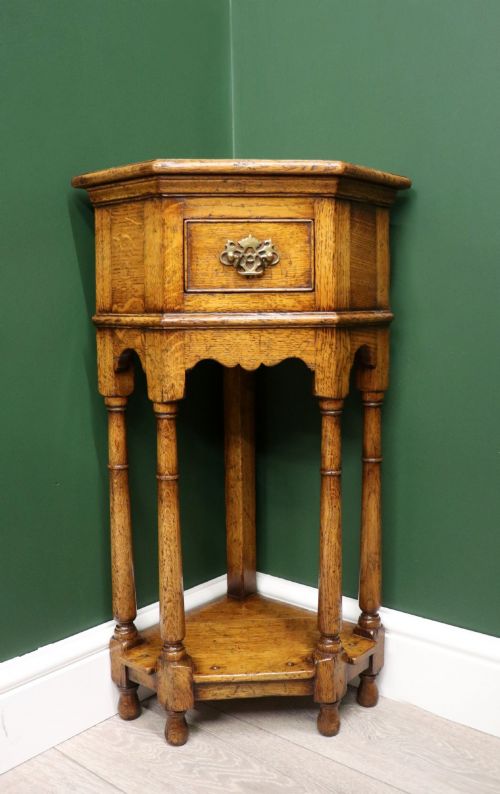
Corner Plant Table
A corner plant table makes clever use of neglected interior angles, holding greenery or ceramics upon tiered timber surfaces.
Corner Plant Table
A corner plant table serves to utilise awkward domestic spaces, lifting pots and ornaments into unused angles of a room. When buyers search for a corner plant table, they meet a variety of triangular and multi-tiered forms designed specifically to fit room perimeters.
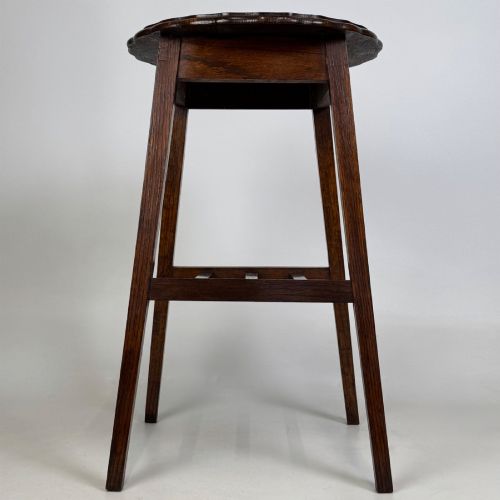
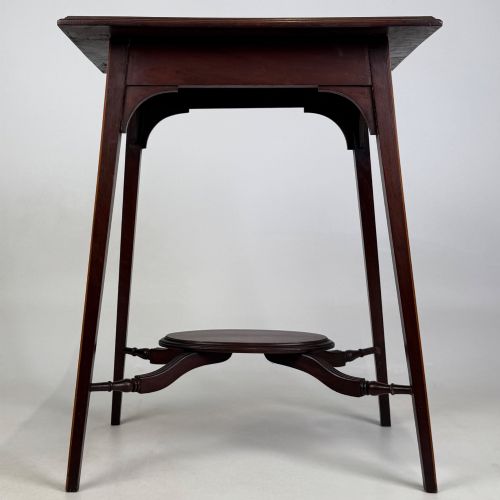
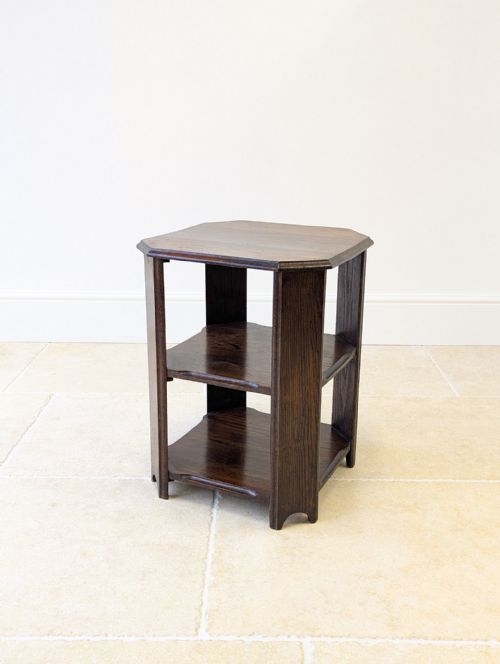
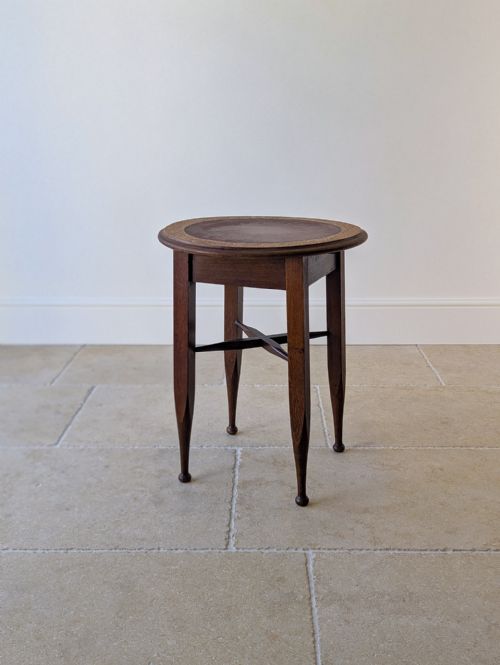
The selection ranges widely across periods, including Georgian washstands adapted for modern botanical display, alongside Edwardian inlaid mahogany tiers and sturdy Arts and Crafts oak structures. Many pieces appearing in this category double as occasional tables or washstands, sharing the distinct triangular footprint required for corner placement.
Origins span from traditional British workshops working in mahogany and oak to more exotic examples employing walnut and bamboo. Buyers encounter items varying from simple three-legged stands to elaborate etageres with raised galleries designed to contain spills or secure pots.
How they were made
Joiners constructed these stands primarily using dense hardwoods such as mahogany, oak, and walnut, often enhanced with contrasting boxwood stringing or satinwood inlay. Timber selection dictated both stability and decorative finish, with mahogany favored for smooth polished surfaces and oak for robust vernacular framing.
Construction techniques involved precise angled joinery to ensure the triangular frame fit snugly against intersecting walls. Makers utilised turned legs, carved brackets, and raised galleries, sometimes incorporating brass fittings or copper trays to handle moisture from plants.
Surface treatments ranged from traditional wax polishing on Georgian mahogany to ebonised finishes and carved detailing reflecting Aesthetic Movement and Arts and Crafts ideals. These methods combined structural integrity with decorative flair suited to domestic display.
Corner Plant Table Retail Price Guide 2026
Typical asking prices for corner plant table among the pieces listed under this phrase on Sellingantiques today, from the lower quarter to the upper quarter. They describe what is for sale here now, not the wider market.
Some plants spend centuries looking down on the same piece of mahogany.
What varies in quality
The standard of a corner plant table depends heavily on the crispness of its timber carving and the subtlety of any inlay work. Superior examples display tight, stable joints and carefully selected grain patterns that follow the difficult geometry of a triangular top.
Proportion and structural balance separate finer pieces from utilitarian versions, as weight distribution must prevent tipping on three-legged frames. The presence of original brass hardware, undamaged raised galleries, and uncompromised secondary timbers elevates an item's standing.
Liberty and Co
The Corner Plant Table Glossary
- Gallery
- A raised wooden border running along the edge of a shelf or tabletop. It prevents items from sliding off the surface.
- Washstand
- A piece of furniture originally designed to hold a basin and jug for washing. These sturdy three-legged stands are frequently repurposed today to hold potted plants.
- Etagere
- A set of open shelves for displaying small objects or ornaments. They provide vertical storage within a compact footprint.
- Stringing
- A narrow strip of contrasting wood inlaid into the surface of a piece for decoration. It frames panels and outlines tabletops.
- Boxwood
- A dense, pale hardwood used historically for fine inlay and stringing. Its uniform texture allows for sharp detail.
Corner Plant Table: Frequently Asked Questions
What is a corner plant table?
A corner plant table is a specialised piece of furniture built with a triangular or angled footprint to fit neatly into the corner of a room. These stands provide elevated surfaces for displaying houseplants, trailing greenery, or decorative ceramics without obstructing pathways.
Many examples found today were originally designed as washstands, wig stands, or occasional tables before finding a new purpose in botanical displays. Their space-saving design makes them particularly useful in smaller rooms or narrow hallways.
How do I style a corner plant table?
Styling a corner plant table involves playing with height and trailing foliage to soften the hard angles of the walls behind it. Placing a taller, upright plant on the main tier and pairing it with a trailing variety on a lower shelf creates visual balance.
Keep surrounding items minimal to allow the period details of the wood, whether mahogany, oak, or walnut, to remain visible. Ensure that any watering tray used is discreet to protect historic timber surfaces from moisture damage.
Are these tables sturdy enough for heavy pots?
Most antique corner tables are structurally sound, but their load capacity depends on their original intended use and current timber condition. Washstands and oak occasional tables are generally robust, whereas delicate inlaid Edwardian tiers suit lighter ceramic pots.
Check the stability of the legs and the tightness of the corner joints before placing substantial planters on upper or lower shelves. Using saucers or protective mats helps prevent water rings and soil stains on the polished wood.
How do I identify a Georgian corner stand?
Georgian corner stands typically feature solid mahogany construction, elegant three-legged frames, and shaped raised galleries designed to secure washbasins. They often exhibit fine proportions, simple turned supports, and rich, dark patination acquired over centuries of use.
Later Victorian and Edwardian copies or adaptations often incorporate lighter woods, decorative inlay, or multiple display tiers rather than the utilitarian basin cut-outs found on genuine 18th-century washstands.