


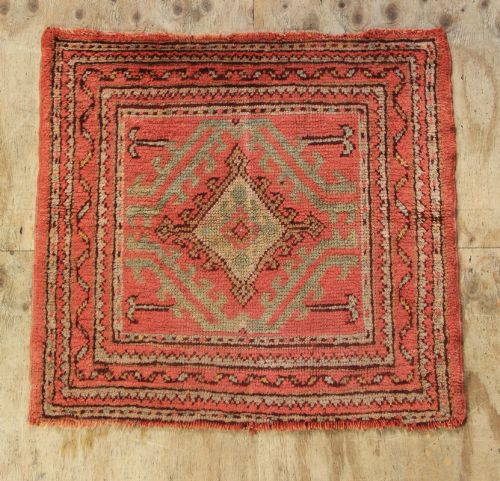


Coral Wool Rug
These coral wool rug pieces are hand-knotted floor coverings in traditional designs, bringing historical warmth and texture to any interior.
Coral Wool Rug
A coral wool rug search reveals hand-knotted carpets, mats, and runners originating from Turkish and Persian weaving centres. These floor coverings span production dates from the late nineteenth century through the early twentieth century.
The selection on this page centres primarily on large carpets, smaller mats, and narrow runners bearing classical Anatolian, Ottoman, and Persian stylistic influences. Buyers encounter distinct regional designations such as Ushak, Melas, Malayer, Serapi, Hamadan, Kayseri, and Sharkoy.
Formats range from square proportions to grand oversize runners and expansive carpets measuring over four metres in length. Each piece reflects traditional weaving methods tied to its specific regional origin.
Materials and construction methods
These textiles rely principally on natural wool for the pile and foundation elements, frequently supported by cotton structures in specific regional types. Weavers knotted these materials by hand on upright looms using traditional techniques handed down through generations.
Dye methods utilise natural colorants derived from local plants and minerals, creating the soft hues observed across older Anatolian and Persian examples. The density of the knotting and the quality of the spun wool determine the physical weight and handle of each textile.
Coral Wool Rug Retail Price Guide 2026
Typical asking prices for coral wool rug among the pieces listed under this phrase on Sellingantiques today, from the lower quarter to the upper quarter. They describe what is for sale here now, not the wider market.
Listings span production dates from 1880 to 1930, focusing entirely on wool and cotton materials from Turkish and Persian workshops.
Distinctions in quality and execution
Quality separates along lines of knot density, precision of the drawn motif, and the condition of the wool pile across the field. Finer examples display crisper geometric or floral delineation and more complex border structures.
The integrity of the original selvedges and ends plays a significant role in determining the preservation state of older runners and carpets. Even wear across the wool surface indicates balanced usage, while structural soundness in the cotton or wool foundation underpins long-term durability.
Maples
The Coral Wool Rug Glossary
- Pile
- The upright tufts of wool that form the soft surface of the rug. This layer absorbs foot traffic and displays the woven design.
- Runner
- A long, narrow carpet format designed for hallways, corridors, or alongside beds. These pieces emphasise linear pattern arrangements.
- Kilim
- A flat-woven textile produced without a raised pile. These pieces are lighter in weight and feature sharp geometric motifs.
- Selvedge
- The reinforced edge binding that runs parallel to the length of the rug. This finish prevents the side cords from unravelling.
- Prayer rug
- A small format textile featuring a distinct mihrab or niche design at one end. Historically utilised for individual daily prayers.
Coral Wool Rug: Frequently Asked Questions
How do I clean an antique wool rug?
Gentle surface brushing and professional specialist washing maintain the wool fibres without disturbing natural dyes.
Avoid harsh chemical treatments or excessive water immersion to preserve the historical integrity of the textile.
Can I place these rugs in high traffic areas?
Durable wool construction handles normal domestic movement well when supported by an appropriate underlay.
Rotating the carpet periodically ensures even exposure and balances wear across the surface over time.
How do I identify an Ushak carpet?
Ushak pieces typically feature large-scale floral motifs, medallion layouts, and a characteristic warm, muted colour palette.
The softer wool handle and distinctive loom techniques separate them from tighter Persian productions.
What is the difference between a runner and a carpet?
Runners are narrow and elongated, specifically proportioned for corridors, staircases, and narrow gallery spaces.
Carpets provide broad, expansive surface coverage intended for the centre of principal reception rooms.