

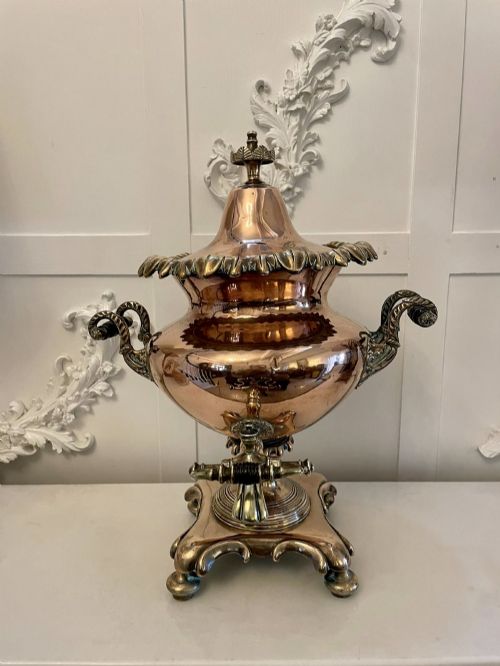
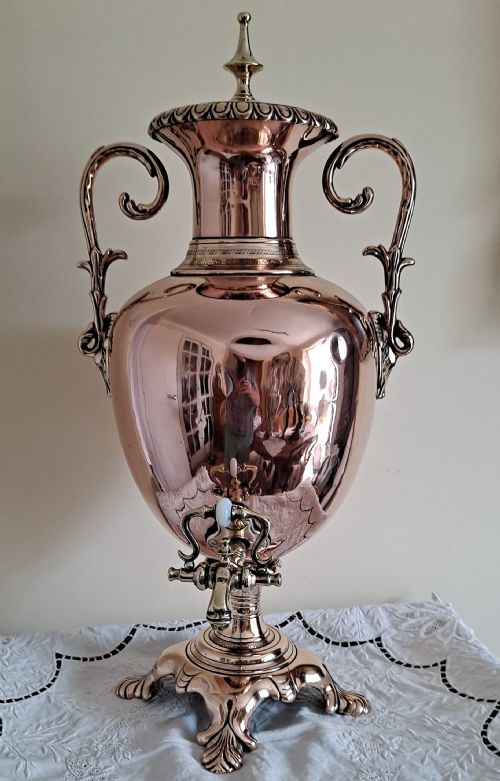


Copper Samovar Spigot
A copper samovar spigot is the vital tap and valve assembly that finishes these period tea urns, drawing collectors for its fine brass and bell metal craftsmanship.
Copper Samovar Spigot
A copper samovar spigot forms the discharge mechanism for period water urns and tea urns found across the 19th Century, Victorian, Regency, and Georgian eras. These components appear on English tea urns and samovars manufactured from copper, often complemented by brass, bell metal, and ceramic details.
Buyers encounter these fittings attached to large hanging copper water urns, kettle samovars, and ornate tea urns dating from 1800 through the 1880s. The forms span George III designs to late Victorian iterations, reflecting the domestic ritual of boiling water for tea.
How they were made
Craftsmen forged these assemblies primarily from copper and brass, frequently incorporating bell metal and ebonised wood handles or bone insulators. Individual components required careful casting and turning to ensure a secure fit on the body of the tea urn.
Makers integrated original fittings with threaded screws or soldered joints, pairing bronzed copper finishes with contrasting metals to highlight the spigot mechanism as a focal point.
Copper Samovar Spigot Retail Price Guide 2026
Typical asking prices for copper samovar spigot among the pieces listed under this phrase on Sellingantiques today, from the lower quarter to the upper quarter. They describe what is for sale here now, not the wider market.
Some Victorian tea urns feature bone insulators on the spigot handles, ensuring the host's fingers stayed cool while pouring boiling water.
What varies in quality
Quality rests in the weight of the metal and the complexity of the casting, distinguishing standard utility taps from ornate George III and Regency examples. Better pieces display crisp turning, integrated bone or ebonised wood details, and intact original brass or bell metal fittings.
The presence of original components separates superior specimens from later replacements. Pieces retaining their matching foundry work and uncompromised structural integrity command closer attention from collectors.
The Copper Samovar Spigot Glossary
- Spigot
- The tap or valve mechanism fitted to the lower body of a vessel to control liquid flow. This component is essential for operating a tea urn.
- Samovar
- A heated metal container traditionally used to boil and heat water in Russia and throughout 19th Century British households. These vessels often feature decorative spigots.
- Bell Metal
- A hard alloy used for casting metallic fittings and bells, combining copper and tin. This material provides durability and a bright finish to urn hardware.
- Bronzed Copper
- Copper treated to achieve a dark, patinated bronze appearance. This finish was favoured during the Regency period for decorative domestic wares.
- George III
- The British design period spanning the late 18th and early 19th centuries. Pieces from this era often exhibit neoclassical restraint and fine proportions.
Copper Samovar Spigot: Frequently Asked Questions
What is a copper samovar spigot used for?
A copper samovar spigot functions as the primary discharge valve for drawing hot water from a tea urn. It regulates the flow of water heated within the main chamber during tea service.
These components were essential for the domestic ritual of tea preparation in 19th Century homes, allowing hosts to serve guests efficiently from a single large vessel.
How do I identify a Georgian samovar?
Georgian samovars typically display neoclassical forms, refined proportions, and restrained ornamentation characteristic of the late 18th and early 19th centuries. They frequently incorporate high-quality copper paired with brass fittings.
Examining the turning on the spigot and the construction of the handles helps date these pieces to the George III or Regency periods.
Are these spigots made of solid brass?
Many spigots combine copper bodies with brass, bell metal, or bronze components to ensure durability at stress points. The mixed metal construction is typical of period manufacturing standards.
Makers selected these alloys for their resistance to corrosion and their ability to take a fine polish on decorative urns.
How should I clean a copper samovar?
Cleaning requires gentle maintenance to preserve the historic patina and avoid damaging the soft copper and brass surfaces. Harsh abrasives should be avoided in favour of mild, non-ionic cleaners.
Preserving the original surface appearance maintains the historical integrity of the piece and protects any applied bronzed finishes.