





Copper Lustre Ceramics
Copper lustre ceramics bring a rich metallic sheen to earthenware, offering functional jugs, bowls and figures from the nineteenth century.
Copper Lustre Ceramics
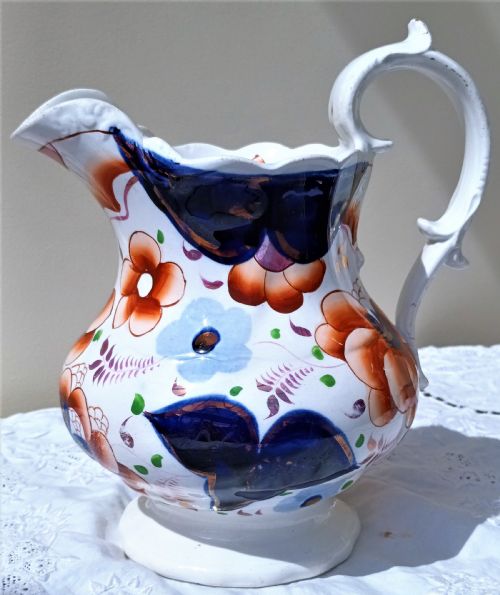
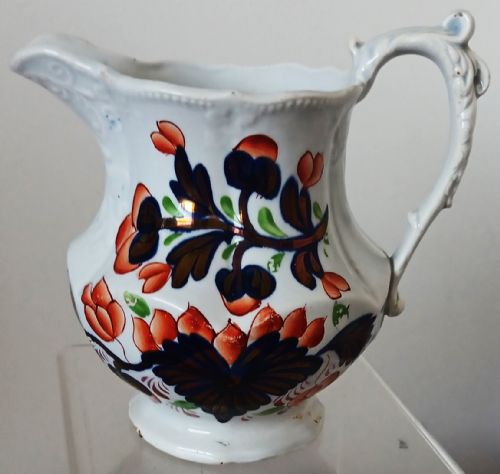
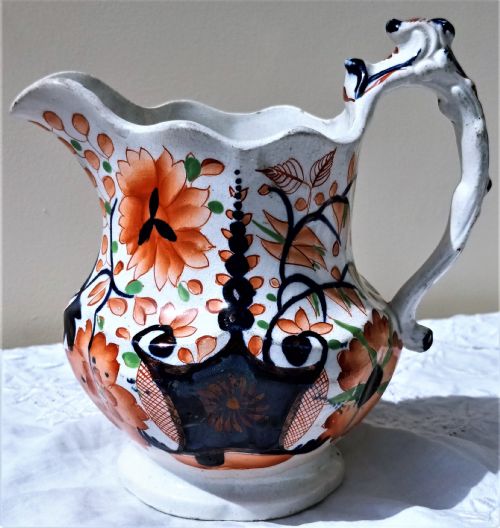
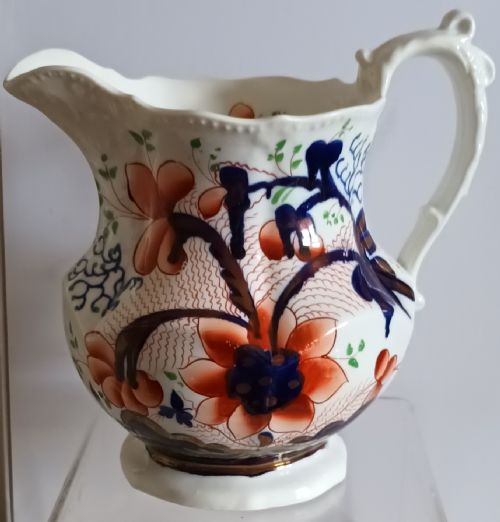
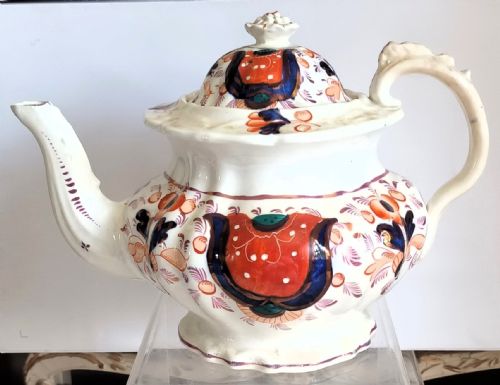
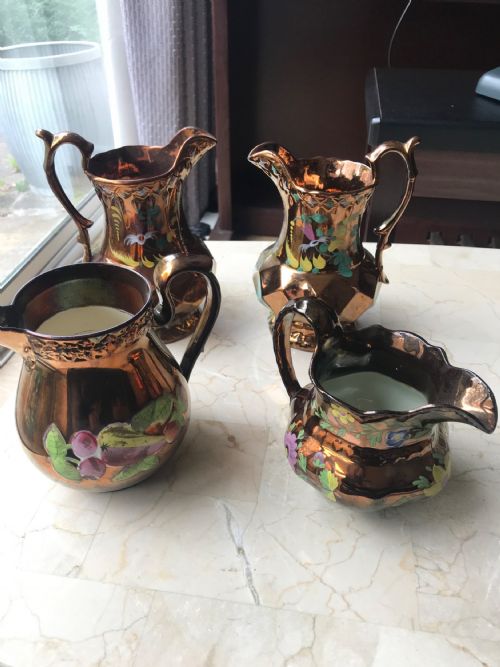
Copper lustre ceramics encompass a variety of utilitarian and decorative objects originating primarily from the nineteenth century, including pitchers, jugs, basins, teapots and sculptural figures. Buyers seeking these items encounter a strong presence of Georgian and Victorian production, ranging from small cream jugs to large milk jugs and footed bowls.
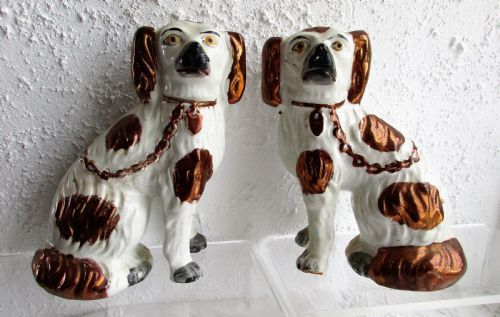
The assortment on this page leans heavily towards regional and Staffordshire wares, displaying distinct styles such as Victorian, Early Victorian, Renaissance Revival and Victorian Folk Art. Alongside standard jugs and bowls, collectors find hand-decorated Staffordshire spaniels and lion sculptures finished in characteristic copper lustre glaze.
Materials and construction
Makers utilised earthenware, ironstone and ceramic bodies as the foundation for these pieces, applying glazes and enamel colours beneath or over the metallic finish. Earthenware formed the primary base for Staffordshire figures and traditional pitchers, while ironstone provided robust durability for utilitarian jugs and basins.
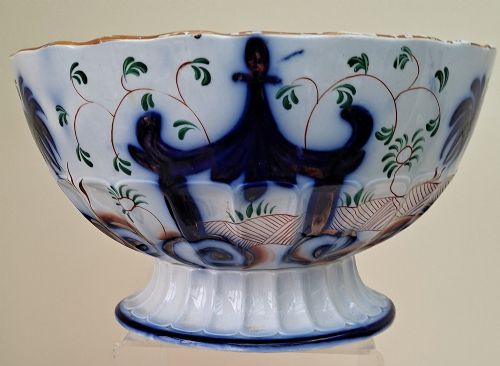
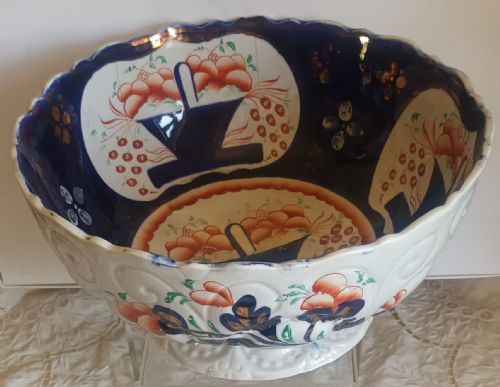
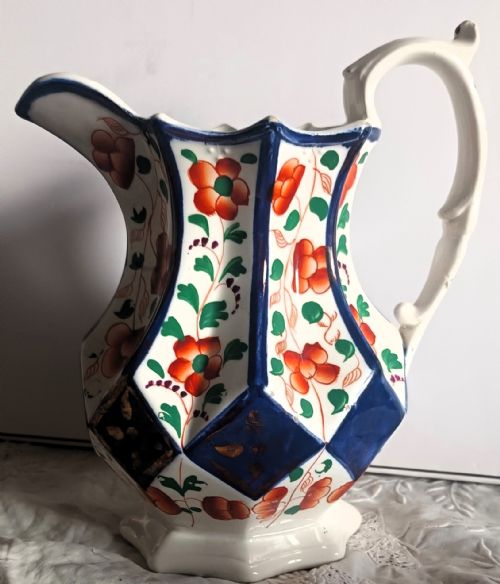
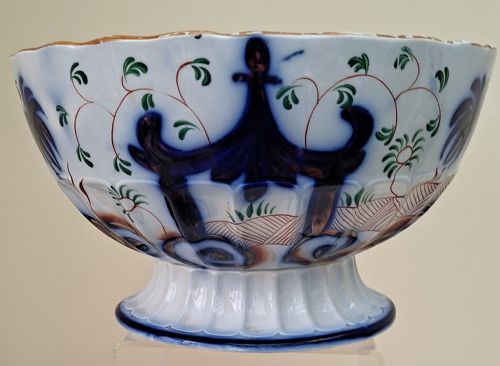
The signature copper lustre glaze was applied to create a reflective, metallic surface often combined with hand-painted polychrome motifs, cobalt glaze and enamel details. Artisans decorated wares with floral, botanical and geometric patterns, including named Gaudy Welsh designs such as Pagoda, Harlech, Celyn and Bethesda.
Copper Lustre Ceramics Retail Price Guide 2026
Typical asking prices for copper lustre ceramics among the pieces listed under this phrase on Sellingantiques today, from the lower quarter to the upper quarter. They describe what is for sale here now, not the wider market.
Listings feature earthenware and ironstone ceramics decorated with cobalt glaze, enamel and copper lustre glaze from the nineteenth century.
Evaluating the objects
Quality in these ceramics rests upon the depth and evenness of the metallic glaze, alongside the precision and complexity of the hand-painted decoration. Finer examples display a brilliant, uniform copper reflection across the entire body without dull patches or uneven pooling in the recesses.
The crispness of the moulded form separates standard production from superior pieces, particularly in sculptural items like Staffordshire dogs, lions and figural groups. Hand-painted details such as fruit, botanical motifs and intricate Gaudy Welsh patterns demand greater artisan skill than simple banded decoration.
Livesley Powell & Co
The Copper Lustre Ceramics Glossary
- Earthenware
- A porous pottery body fired at lower temperatures, commonly used for nineteenth-century jugs and figures before being glazed.
- Gaudy Welsh
- A distinctive nineteenth-century style of pottery featuring bright underglaze enamel colours combined with copper lustre highlights.
- Cobalt Glaze
- A deep blue vitreous coating applied to ceramics, frequently used in combination with lustre effects and botanical patterns.
- Ironstone
- A dense, durable type of semi-vitrified earthenware developed in the nineteenth century for robust domestic service.
- Staffordshire
- A major English pottery region known for producing earthenware figures, dogs and lustre jugs during the Georgian and Victorian eras.
Copper Lustre Ceramics: Frequently Asked Questions
What periods do these ceramics cover?
The pieces span the Georgian and Victorian eras, with the majority originating from the nineteenth century.
Production dates stretch across specific decades such as eighteen-thirty, eighteen-fifty-five, eighteen-sixty, eighteen-eighty and eighteen-ninety.
How were copper lustre jugs used?
These vessels served functional roles for milk, cream and water in nineteenth-century households.
Many larger jugs and basins also functioned as decorative display items rather than daily tableware.
What decorative styles appear on the wares?
Styles range from Victorian folk art and Renaissance revival to traditional Gaudy Welsh patterns.
Common motifs include baskets of flowers, grapes, pagodas, oriental designs and hand-painted fruit.
Are figural pieces common in copper lustre?
Figural ceramics include Staffordshire spaniels, known as comforter dogs, and lion sculptures.
Potters finished these sculptural animals with copper lustre glazes to match contemporary tableware.