

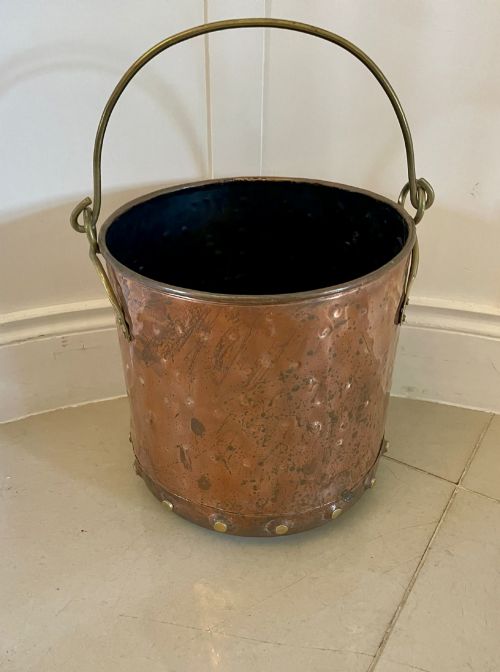


Copper Fuel Scuttle
A proper copper fuel scuttle brings warmth and character to a fireside, holding your logs and coal in style.
Copper Fuel Scuttle
A copper fuel scuttle serves as a practical fireside accessory for storing coal, logs, and kindling beside the hearth. When you search for a copper fuel scuttle, you are looking at metal containers designed to endure daily use while bringing metallic lustre to a room.
The pieces on this page span the nineteenth century and the Edwardian era, taking the form of helmet scuttles, buckets, and lidded boxes. Victorian and Arts and Crafts examples appear most frequently, showing both utilitarian function and decorative ambition.
How they were made
These pieces rely on sheet copper, often shaped by hand and joined with visible rivets alongside brass trim and iron handles. Metalworkers used hammering and seaming techniques to build rigid vessels capable of bearing heavy loads of coal.
Many examples incorporate contrasting materials, pairing copper bodies with oak bases, wood handles, and wrought iron fittings. This combination of metals and timber provided structural strength where the scuttle experienced the most handling.
Copper Fuel Scuttle Retail Price Guide 2026
Typical asking prices for copper fuel scuttle among the pieces listed under this phrase on Sellingantiques today, from the lower quarter to the upper quarter. They describe what is for sale here now, not the wider market.
Design styles represented across the inventory include Victorian, Georgian, Art Nouveau, and Arts and Crafts.
What varies in quality
Quality in these fireside pieces rests upon the heaviness of the metal gauge and the firmness of the construction. Thicker copper sheets resist denting and maintain their structural integrity far better than thin metal over decades of service.
Artistry also separates standard utilitarian buckets from elevated decorative boxes, visible in the hand-beaten surfaces of Arts and Crafts pieces or the refined lines of George III and Victorian designs. Details like dovetailed oak joints and solid brass mountings elevate certain examples above basic shop work.
The Copper Fuel Scuttle Glossary
- Helmet scuttle
- A traditional coal container shaped like a tilted helmet with a wide mouth and a rear lifting handle. This form directed the fuel cleanly into the hearth.
- Purdonium
- A box-style coal scuttle featuring a hinged front flap that drops down to reveal an inner metal shovel or liner. It kept coal contained out of sight.
- Log bin
- A deep container designed specifically for holding firewood rather than loose coal. These often incorporate sturdy wooden bases and iron carrying rings.
Copper Fuel Scuttle: Frequently Asked Questions
How do I clean a copper scuttle?
Wash the surface gently with warm soapy water and a soft cloth to remove soot and dust.
Avoid harsh abrasive cleaners that strip away the aged patina built up over generations.
Can I still use these for real coal?
Most of these historic metal containers can hold coal and logs just as they did originally.
Check for any interior corrosion holes before loading heavy fuel inside the vessel.
How do I date an antique scuttle?
Look at the manufacturing methods, such as hand-beating marks, rivet types, and overall design styles.
Victorian and Edwardian versions often feature machine-assisted sheet metal work, whereas earlier George III items show distinct hand craftsmanship.
What is the difference between a bucket and a purdonium?
A bucket is an open-topped cylindrical or helmet-shaped vessel with a swinging handle for carrying.
A purdonium is an enclosed box with a sloping front door designed to stay stationary by the fireplace.