

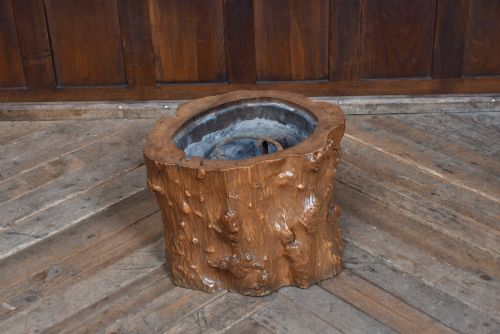


Copper Fire Planter
These copper fire planter pieces combine practical hearth utility with robust metalwork, offering an enduring rustic addition to any interior scheme.
Copper Fire Planter
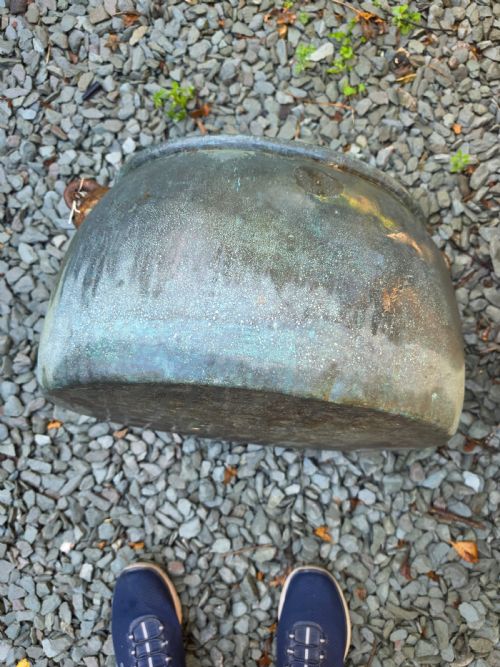
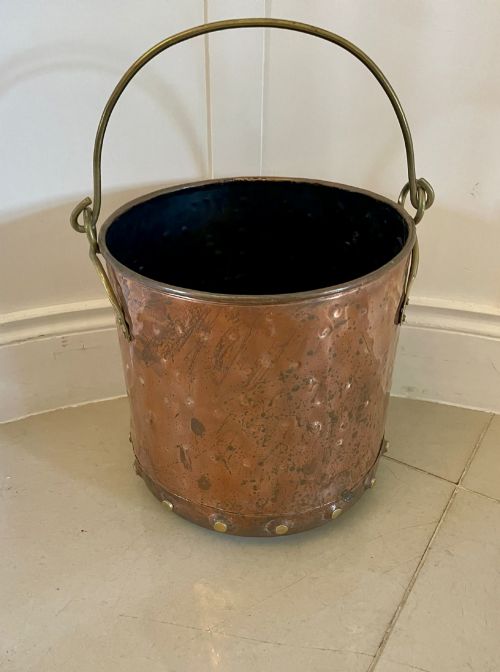
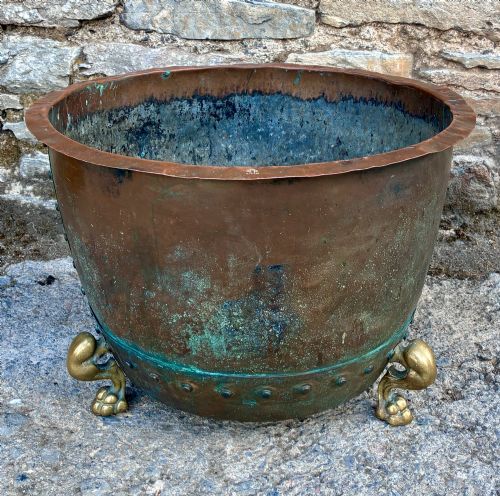
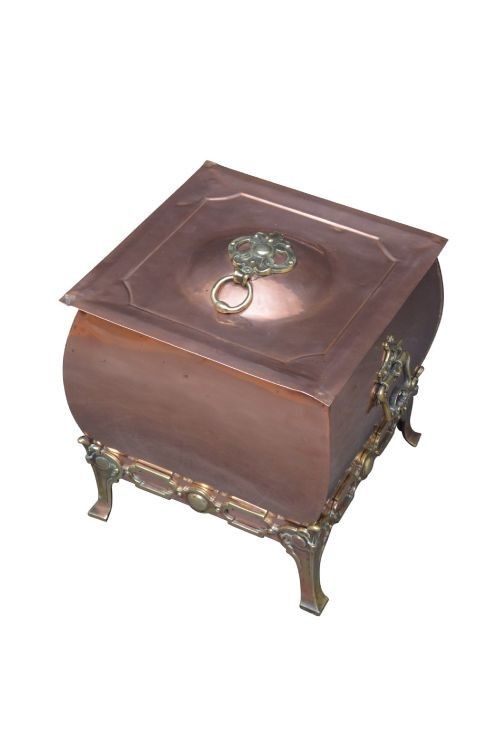
A copper fire planter functions as a dual-purpose vessel, often serving alternately as a log bin, coal bucket, or garden planter by the hearth. The pieces encountered here span the Victorian, Georgian, and Arts and Crafts periods, showing styles from rustic farmhouse to Japanese Mingei.
Most examples originate from the nineteenth century, including specific dates such as 1800, 1850, 1860, 1890, and 1900. Forms range from riveted boilers and ferrats to shaped bowls on stands, large cauldrons, and traditional log buckets.
The dominant material is copper, frequently paired with brass handles, iron accents, or wooden elements. Buyers select these items for their rich metallic surfaces and historical utility near the fireplace.
Materials and construction methods
Construction relies heavily on hammered or riveted copper sheeting joined with structural iron or brass components. Makers fashioned these durable vessels using heavy-gauge metal to withstand the daily weight of coal and logs.
Details such as applied brass bands, swinging handles, and riveted seams distinguish the work of period artisans. Some pieces incorporate wrought iron handles and wooden elements to provide a secure grip and functional stability.
Copper Fire Planter Retail Price Guide 2026
Typical asking prices for copper fire planter among the pieces listed under this phrase on Sellingantiques today, from the lower quarter to the upper quarter. They describe what is for sale here now, not the wider market.
Some nineteenth century vessels doubled as indoor gardens before anyone thought to bring the ferns back outside.
Evaluating the standard of execution
Quality reveals itself in the weight of the metal and the precision of the riveting along the seams. Substantial gauge copper and well-integrated brass mountings indicate a higher grade of manufacture from the period.
The sophistication of the form, whether a shaped bucket, a footed bowl, or a substantial boiler, dictates the visual impact of the piece. Superior examples maintain balanced proportions and harmonious material combinations without clumsy restoration.
The Copper Fire Planter Glossary
- Ferrat
- A traditional metal vessel or bucket utilised around the hearth for holding fuel. These items often feature robust metal handles for daily carriage.
- Hibachi
- A traditional Japanese heating device, sometimes formed from wood or metal, functioning similarly to an open hearth container. Such pieces bring an alternative aesthetic to the standard British fireside accessories.
- Riveted
- Joined together using metal bolts hammered flat to secure overlapping sheets of copper. This technique ensures structural rigidity under heavy loads of logs or coal.
- Verdigris
- The green patina that forms naturally on copper surfaces through atmospheric oxidation over long periods. Many collectors prize this aged surface finish for its authentic visual depth.
Copper Fire Planter: Frequently Asked Questions
How were these used originally?
These vessels served near the fireplace to store coal, kindling, or logs for daily burning. They also functioned as general hearth containers and plant holders.
Their robust construction allowed domestic staff to transport heavy fuel safely from storage areas directly to the grate.
Can I use them as planters?
Many examples double as garden planters or indoor plant holders due to their metal construction. Their capacity to hold soil and moisture makes them suitable for large botanicals.
Gardeners frequently utilise these deep copper vessels to display large plants in exterior or interior settings.
How do I date a piece?
Dating relies on observing construction methods, handle styles, and material combinations recorded across the Victorian and Georgian eras. Riveting patterns and decorative motifs often point to specific decades.
Examining the wear on the copper and the type of brass or iron fixtures helps narrow down the period of manufacture.
How do I care for copper?
Maintenance depends entirely on whether you prefer a bright polished finish or a dark natural patina. Dusting with a soft cloth preserves the existing surface condition.
Avoid abrasive cleaners unless you wish to remove the historical verdigris and expose the raw metal underneath.