

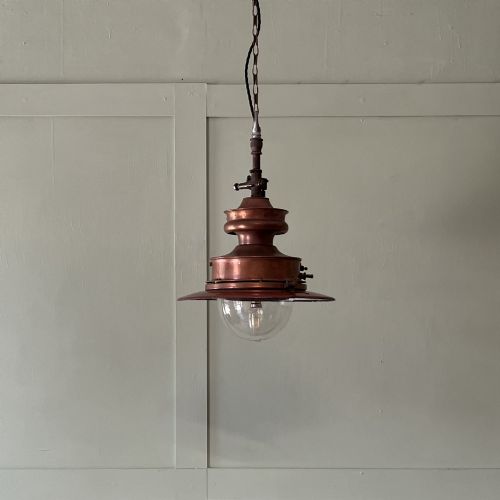


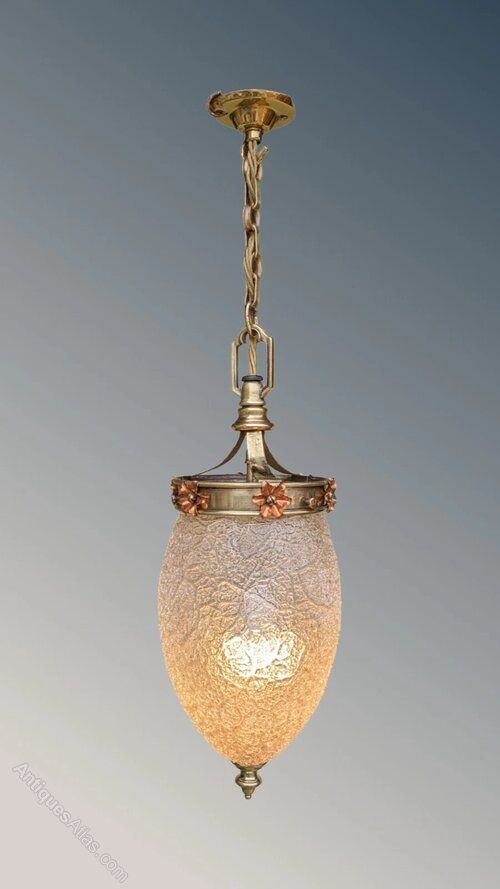


Copper Ceiling Pendant
A copper ceiling pendant brings warmth and industrial character to a room, drawing the eye upwards with rich metallic tones.
Copper Ceiling Pendant
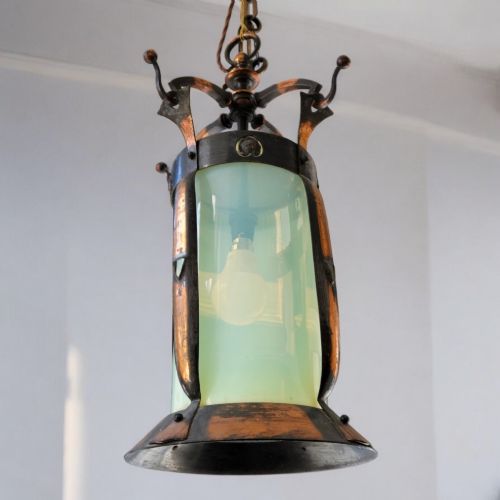
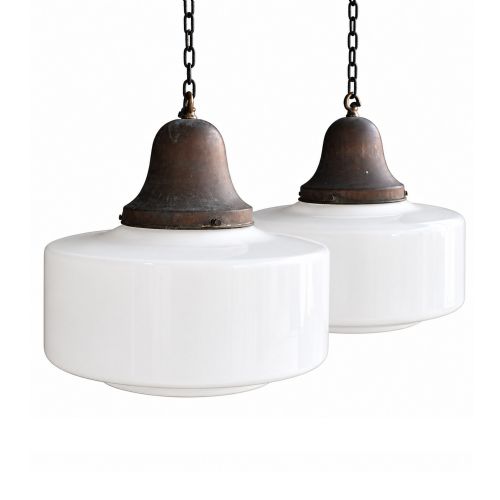
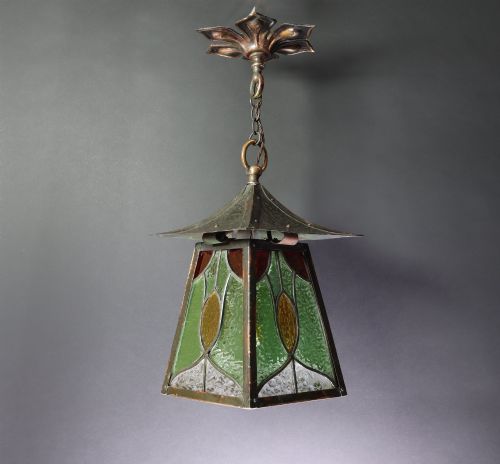
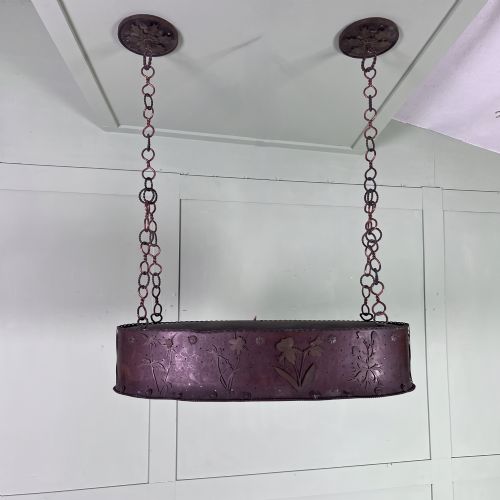
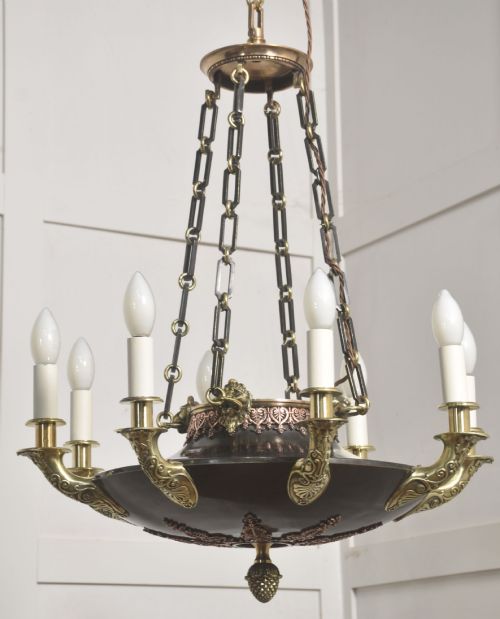
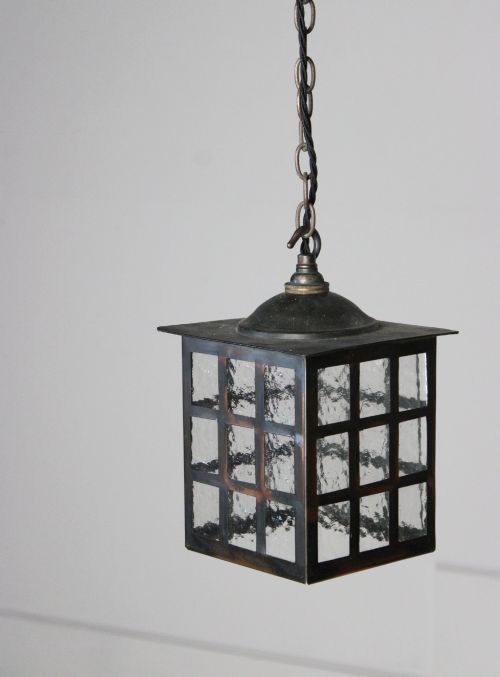
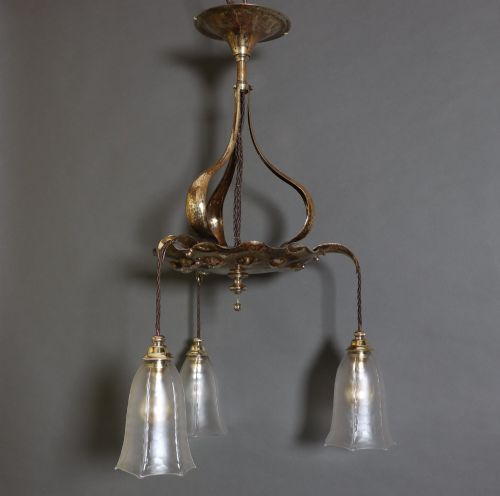
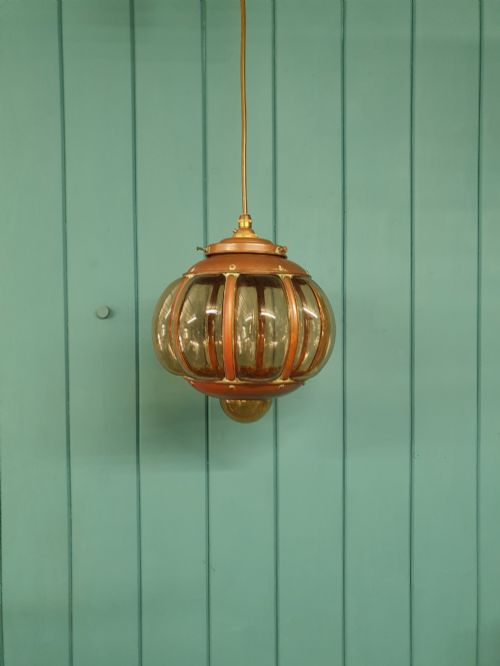
A copper ceiling pendant combines utilitarian roots with decorative craft, appearing across styles from Victorian industrial fixtures to Art Deco lighting. When you search for a copper ceiling pendant, you encounter hanging lanterns, hall lights, and chandeliers constructed to illuminate domestic and institutional spaces alike.
The selection on this page relies heavily on Arts and Crafts designs, alongside Edwardian lanterns and 1920s industrial pieces. These objects range from modest hallway fixtures to large church lights and paired chandeliers.
Origins span British workshops alongside French and Dutch interpretations, utilising metalwork traditions that prioritize structural presence and durable hanging mechanisms.
Materials and construction methods
Metalwork forms the core of these fixtures, utilising sheet copper that is frequently planished or beaten by hand to create tactile surface textures. Brass and iron accents provide structural contrast, while leaded stained-glass, frosted glass, opaline glass, and smoked glass panels soften the internal light source.
Construction techniques involve soldering, riveting, and leaded glazing to hold delicate glass panes within rigid metal frames. Gilding and aged patination are applied to enhance the visual depth of the copper surfaces.
Copper Ceiling Pendant Retail Price Guide 2026
Typical asking prices for copper ceiling pendant among the pieces listed under this phrase on Sellingantiques today, from the lower quarter to the upper quarter. They describe what is for sale here now, not the wider market.
Keep an eye out for the occasional Green Man peering from a decorative copper lantern.
Assessing quality in period lighting
Quality rests in the heaviness of the gauge metal used and the precision of the hand-beaten hammering or planishing marks across the shade. Superior examples display crisp joinery in the metal framework and substantial glass components rather than thin, pressed alternatives.
The integrity of the design proportion dictates the overall success of the piece, where decorative mounts, original chain suspensions, and authenticated period glass integrate harmoniously.
Maison Jansen·Andre Arbus·Jean Gauthier
The Copper Ceiling Pendant Glossary
- Planished
- Metal beaten with a smooth-faced hammer to create small, uniform facets across the surface. This technique hardens the copper while diffusing light across the decorative body.
- Leaded glass
- Individual pieces of coloured or stained glass joined together by narrow strips of lead came. This method allows for geometric or figurative patterns within hanging lantern panels.
- Opaline glass
- A milky, translucent glass type used to diffuse harsh bulb glare evenly. It appears frequently in mid-period and Art Deco ceiling fittings.
- Hall lantern
- An enclosed hanging light fixture designed specifically for narrow entranceways and corridors. These pieces often feature glass panes mounted within a protective metal cage.
- Patina
- The natural surface oxidation and darkening that develops on copper over time. Collectors value undisturbed patination for the historical depth it confers.
Copper Ceiling Pendant: Frequently Asked Questions
How do I clean a copper pendant?
Dust the exterior gently with a dry, soft cloth to prevent scratching the metal surface. Avoid abrasive chemical polishes that strip away the aged patina valued by collectors.
For glass panels, use a mild glass cleaner applied to a cloth rather than sprayed directly onto the fixture, protecting the surrounding copper and lead joints.
How do I date a copper lantern?
Examine the construction methods, such as hand-cut rivets, leaded came thickness, and the style of the suspension chain. Arts and Crafts pieces typically show hand-beaten surfaces, while 1920s industrial models favour clean, utilitarian lines.
Comparing the glass type, whether smoked, opaline, or frosted, also helps align the fixture with its manufacturing decade.
Where should I hang a large copper pendant?
Large lanterns and chandeliers suit high-ceilinged hallways, stairwells, or spacious living areas where their physical drop and scale can be fully appreciated. Ensure the ceiling joist can support the combined weight of the metal and glass.
Position the fixture high enough to clear foot traffic while maintaining a strong visual anchor for the room.