



Copper Ceiling Lamp Fixture
A copper ceiling lamp fixture brings warmth and industrial character to a room, offering both practical illumination and period charm.
Copper Ceiling Lamp Fixture
When you search for a copper ceiling lamp fixture, you encounter a range of hanging forms spanning the late nineteenth century through to the nineteen-thirties. The most common examples on this page take the form of pendants and lanterns originating from the Edwardian period, often utilising durable metals for domestic and nautical settings.
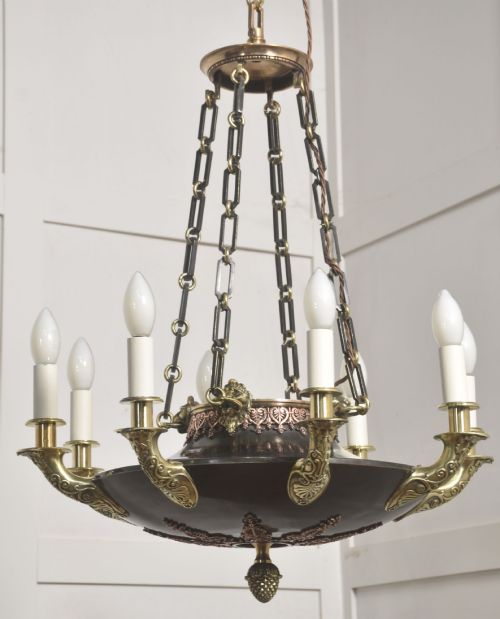
The selection encompasses diverse regional interpretations, from Dutch style chandeliers to French Gothic lanterns. Buyers frequently find pieces displaying stylistic influences such as Arts and Crafts, Art Deco, and Empire Revival, reflecting the shifting aesthetic preferences across these decades.
These fixtures serve as central overhead illumination, utilising loops, chains, or simple brackets for ceiling suspension. The forms vary from compact nautical lights to large multi-light chandeliers designed for substantial spaces.
Construction and materials
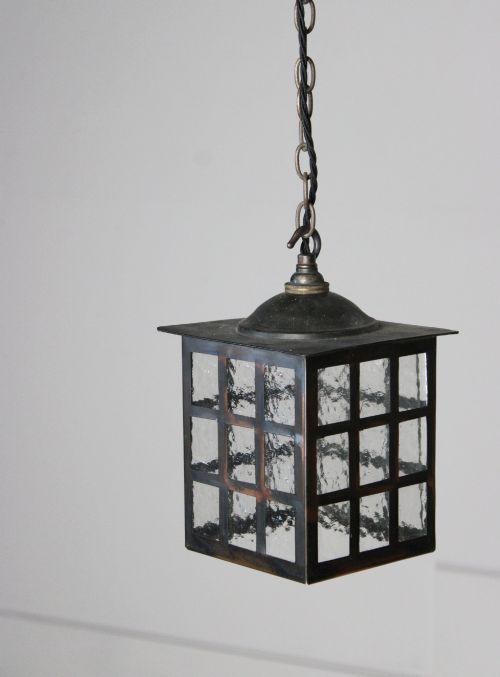
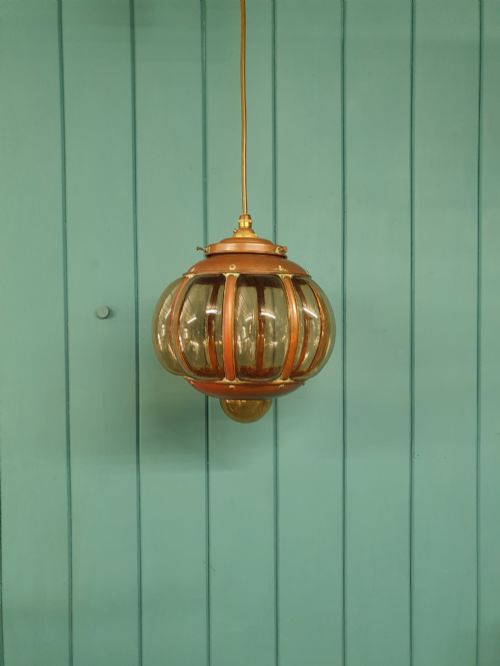
The construction of these fixtures relies heavily on beaten or sheet copper combined with structural brass and iron elements. Makers frequently integrated glass components, such as frosted, smoked, or cut glass panels, to diffuse the light from within the hanging lanterns.
Handworking techniques are visible in the beaten surfaces characteristic of the Arts and Crafts period, where metalworkers shaped the copper by hand. Rivets, soldered joints, and wrought iron fixings provide both the structural integrity and the decorative detail necessary to support heavy glass and metal assemblies.
Copper lanterns built for ships braved the salty air, only to spend their retirement illuminating dry modern hallways.
Judging quality in metalwork and glass
Quality in these fixtures is determined by the weight of the metal and the depth of hand-working evident in the copper. Pieces featuring hand-beaten surfaces and substantial cast brass mounts demonstrate superior craftsmanship compared to later, mass-produced alternatives.
The integration of specialised glass components also dictates the standing of a piece. Original smoked, frosted, or moulded glass panels that fit securely within the metal framework represent a higher tier of production than plain replacement glazing.
Jean Gauthier
The Copper Ceiling Lamp Fixture Glossary
- Pendant light
- A single light fixture suspended from the ceiling by a cord, chain, or metal rod. These units hang downwards to direct illumination over a specific table or room centre.
- Chandelier
- A branched decorative ceiling fixture designed to hold multiple light sources. They distribute illumination widely across larger rooms.
- Frosted glass
- Glass treated to create a surface scatter that diffuses light evenly and softens glare. It appears frequently in Edwardian and Art Deco lantern panels.
- Smoked glass
- Darkened translucent glass used to tone down the brightness of early electric or gas bulbs. It adds a muted, atmospheric quality to nautical and interior pendants.
- Arts and Crafts
- A design movement valuing traditional craftsmanship and visible hand-working over industrial uniformity. Pieces from this tradition often feature beaten copper surfaces.
Copper Ceiling Lamp Fixture: Frequently Asked Questions
What periods do these fixtures cover?
The available lighting spans from the late nineteenth century through the Edwardian era and into the nineteen-thirties. You will find pieces reflecting distinct design movements including Arts and Crafts and Art Deco.
This broad chronological range means designs vary from gothic lanterns to streamlined nineteen-thirties glass and metal combinations.
How were these lamps originally used?
These fixtures served as overhead illumination in domestic halls, dining rooms, and specialised settings such as ships. They provided central lighting before the widespread adoption of recessed ceiling fittings.
Many styles were adapted for both gas and early electric lighting, resulting in robust hanging mechanisms designed to support glass and metal weights safely.
How do I identify an Arts and Crafts piece?
Arts and Crafts lighting typically displays visible hand-working, particularly in beaten copper surfaces that show the marks of the maker's hammer. The aesthetic emphasises honest construction with exposed rivets and structural brass or iron.
These designs avoid excessive ornamentation in favour of solid materials and straightforward geometric or Gothic-inspired forms.
What glass types are used in these lanterns?
Pendants and lanterns frequently incorporate frosted, smoked, or cut glass panels to soften the glare of the light source. Smoked and frosted varieties are particularly common in Edwardian nautical and interior designs.
These glass elements are held securely within copper and brass frameworks, often shaped to complement the overall geometric or organic style of the fixture.