

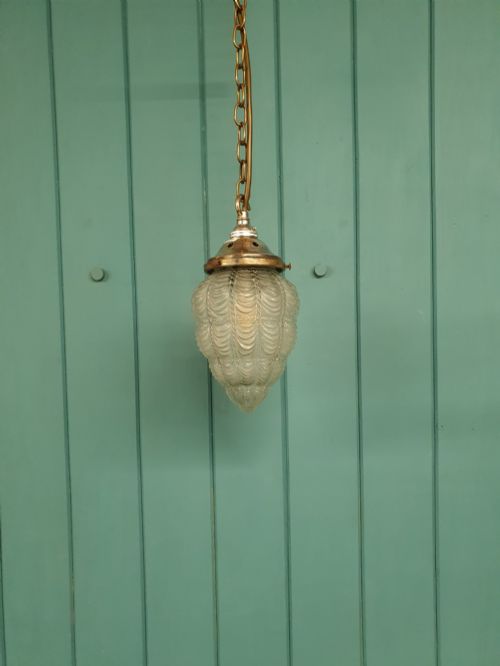


Etched Glass Ceiling Shade
These etched glass ceiling shade fixtures bring genuine period character to a room, offering diffused light through patterned glass.
Etched Glass Ceiling Shade
An etched glass ceiling shade provides soft overhead illumination through decorated panels paired with metal mounts. These fixtures appear across several eras, including the Edwardian period, 1900, 1920, and 1930.
The selections range from single pendant lights and hall lanterns to large bowl chandeliers and dome ceiling lamps. Common forms include brass and glass combinations, copper frames, and crystal bowls.
Buyers frequently encounter Edwardian and 1930s designs alongside earlier 19th-century and Italian Rococo Revival examples. These fittings adapt well to hallways, living spaces, and dining rooms requiring period illumination.
Materials and construction
The primary materials combine glass with metal frameworks, utilising etched glass, frosted glass, cut glass, pressed glass, and crystal alongside brass, copper, and silver gilded metal. Artisans shaped these components into pendants, lanterns, and domed shades.
Metal mounts secure the glass shades, often utilising brass or copper fittings designed to suspend from ceilings. Many period examples retain their original glass shades paired with rewired electrical components.
The recorded styles span Edwardian, Art Deco, Arts and Crafts, and Italian Rococo Revival.
Distinctions in quality
Quality rests on the depth and clarity of the glass etching, the weight of the crystal or pressed glass, and the substance of the metal mounts. Heavier brass and copper frames matched with finely detailed crystal or etched panels represent the upper tier.
Simpler pressed glass shades or lighter metal fittings form the more utilitarian end of the spectrum. The presence of original matching components across the shade and mounting hardware elevates the overall standard.
The Etched Glass Ceiling Shade Glossary
- Etched glass
- Glass treated with acid or abrasive techniques to create decorative surface patterns. This process diffuses light effectively while adding ornamentation.
- Frosted glass
- Glass rendered opaque through sandblasting or acid etching. It produces a soft, non-glare illumination suitable for ceiling fixtures.
- Pendant light
- A single light fixture suspended from the ceiling by a cord, chain, or metal rod. These hang downwards to illuminate specific areas.
- Hall lantern
- An enclosed ceiling light designed for entranceways and corridors. They typically feature glass panels held within a metal framework.
- Crystal
- High-clarity glass containing mineral additives that increase brilliance and weight. It catches and refracts light more intensely than standard glass.
Etched Glass Ceiling Shade: Frequently Asked Questions
How do I hang a heavy ceiling shade?
Heavy brass and crystal fixtures require secure ceiling fixings anchored directly into joists rather than plaster alone. Using appropriate chains or rods ensures the weight is safely distributed.
Professional installation is recommended for older wired fixtures to ensure the electrical connections meet current safety standards while preserving the original metalwork.
What rooms suit these ceiling lights?
Hallways and entryways benefit greatly from enclosed lanterns and compact pendants, which provide adequate illumination without dominating the space. Larger bowl chandeliers and dome lamps suit living rooms and dining areas.
Matching the scale of the shade to the ceiling height ensures the fixture functions effectively as both a light source and a decorative feature.
How do I clean etched glass shades?
Dust the glass regularly with a soft cloth and wash periodically using warm water and mild soap. Avoid abrasive scourers that can scratch the delicate etched or frosted surfaces.
Remove the shade from the metal mount if possible to clean it safely without straining old fixings or wiring.