


Copper Ash Scuttle
A copper ash scuttle is a fireside vessel for fuel, bringing warmth and metallic lustre to the hearth through practical design.
Copper Ash Scuttle
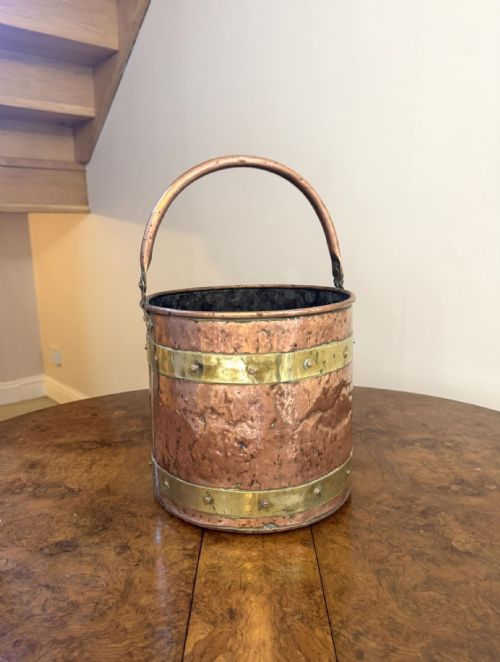
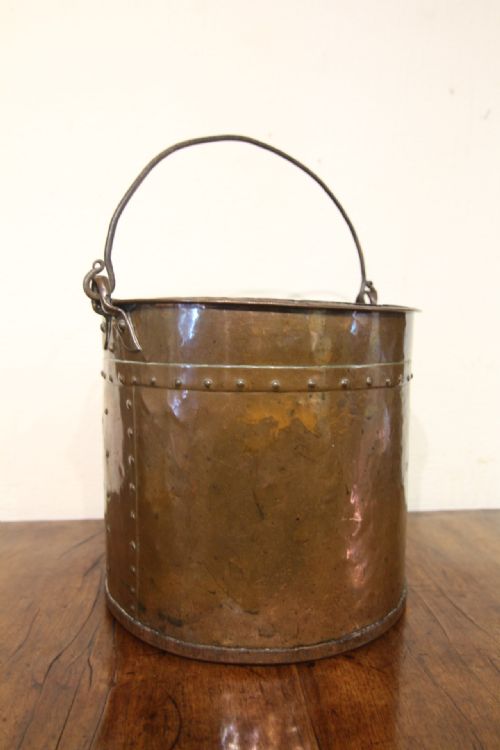
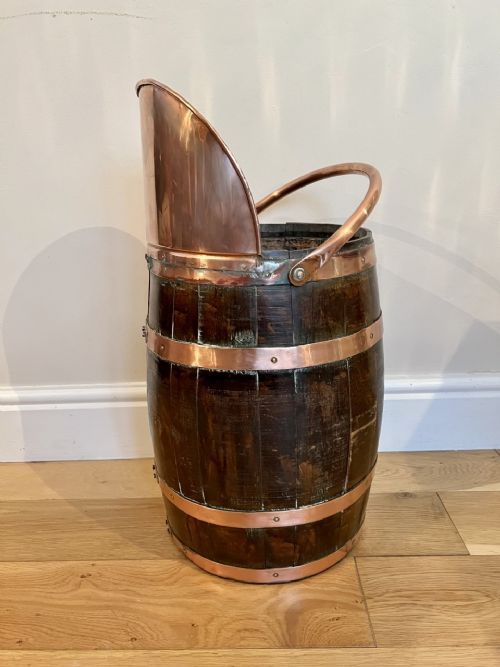
A copper ash scuttle serves as a functional fireside container for holding coal or fuel near the hearth. When exploring this selection, buyers frequently encounter traditional helmet shapes, cylindrical buckets, and open cauldrons.
The pieces span several historical eras, moving from Georgian and Victorian designs through to Edwardian, Arts and Crafts, Art Nouveau, and Art Deco periods. These vessels combine utilitarian metalwork with domestic ornamentation, designed to sit beside the fireplace.
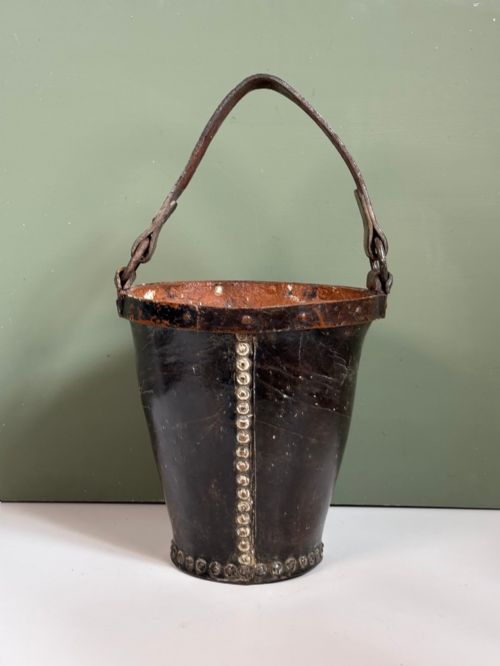
Materials extend beyond pure metal, incorporating brass bands, wrought iron handles, oak bodies, and even boiled leather. Such variations reflect the shifting aesthetic tastes of makers across the nineteenth and early twentieth centuries.
Materials and construction methods
Metalworking techniques define these pieces, relying heavily on sheet copper shaped into bodies, helmets, and circular bins. Riveting joins seams securely, while hand-beating adds texture and rigidity to the softer metal walls.
Contrasting metals and secondary materials provide structural support and decorative contrast. Brass banding reinforces rims and bases, wrought iron forms sturdy carrying handles, and oak staves shape wooden bucket bodies.
Some nineteenth-century makers chose boiled leather over metal for their fuel buckets, proving that hearthside fashion could take unexpected turns.
Evaluating craftsmanship and distinction
The standard of workmanship separates ordinary utility vessels from finer decorative pieces. Superior examples display careful hand-beating, tight riveting, and harmonious integration of brass and iron mounts.
Proportion and decorative movement also distinguish the range. Pieces bearing distinct stylistic traits from the Arts and Crafts or Art Nouveau movements show greater artistic ambition in their handles and form.
The Copper Ash Scuttle Glossary
- Helmet scuttle
- A fireside vessel shaped like a traditional helmet, featuring a sloped top and a protruding lip for easy fuel distribution.
- Dinanderie
- A term for various objects made of brass, copper, or bronze, often associated with decorative vessels from the Art Deco period.
- Riveted
- Joined together using metal bolts hammered flat at the ends. This method secures heavy copper plates on traditional buckets.
- Boiled leather
- Material soaked in hot water or wax to harden it into rigid shapes. It appears in utilitarian containers from the nineteenth century.
Copper Ash Scuttle: Frequently Asked Questions
How do I clean copper?
Cleaning copper requires gentle polishing to remove tarnish while preserving the aged surface character. Avoid harsh abrasives that scratch the metal.
Many owners prefer a soft cloth and specialised metal cleaner to maintain the warm glow of the copper.
Are these pieces functional?
These vessels remain suitable for holding logs, coal, or kindling beside a working fireplace. Their sturdy metal and riveted construction handles dry fuel easily.
Some collectors choose to display them empty or use them as planters for large houseplants.
How do I date a scuttle?
Dating relies on stylistic clues, construction methods, and materials used in the piece. Georgian and Victorian examples show traditional riveting, while later pieces often exhibit Arts and Crafts or Art Nouveau motifs.
Examining handles, banding, and surface treatment helps place the item within its historical period.