



Copper and Brass Tray
These copper and brass tray items bring diverse global styles and rich mixed metals straight into your home.
Copper and Brass Tray
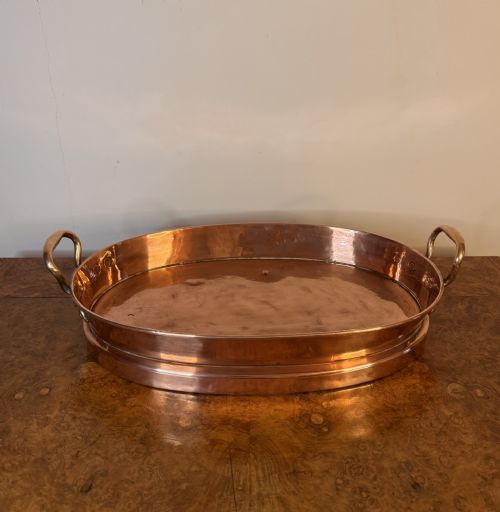
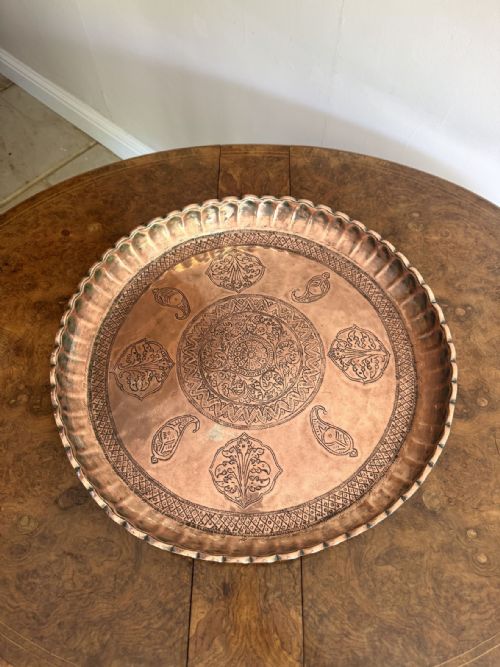
When you search for a copper and brass tray, you find an international mix of decorative dishes, wall chargers, and occasional tables from the Victorian era up to the 1930s. The common thread is the combination of warm metals, often formed as large circular chargers or inset table tops.
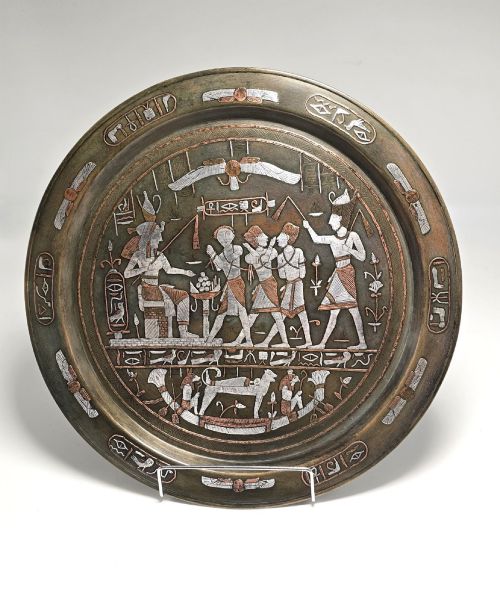
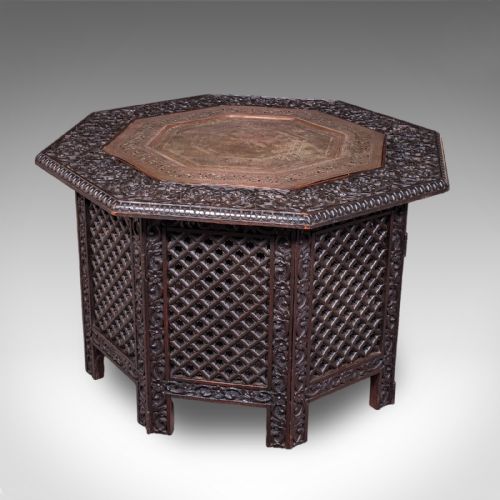
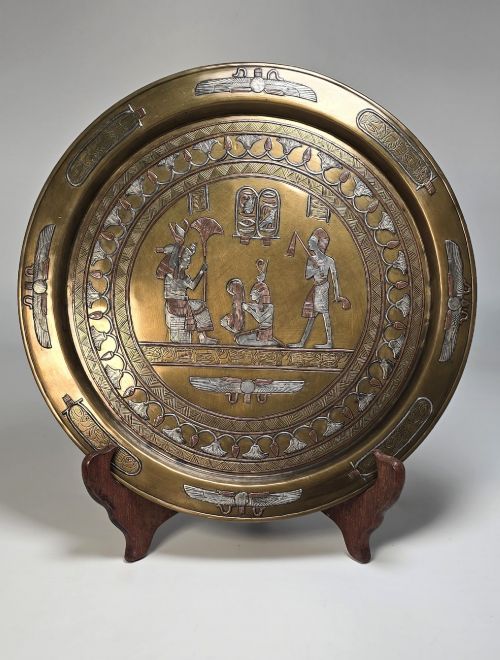
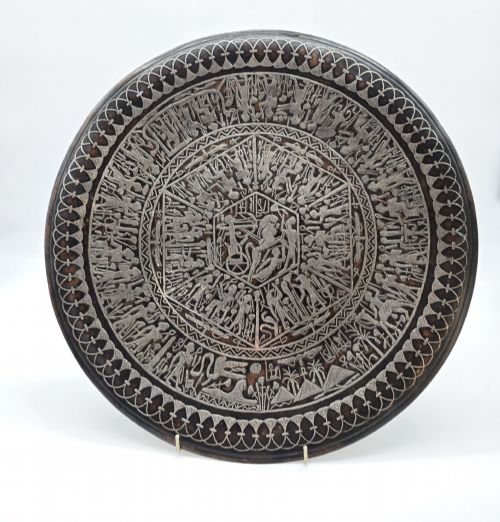
You are most likely to meet Middle Eastern and Egyptian Cairo Ware chargers alongside Anglo-Indian tables featuring hammered copper tops. These pieces frequently display intricate silver inlay, engraving, or mixed metal work rooted in traditional craftsmanship.
Alongside wall chargers, the selection includes Japanese Meiji period mixed-metal dishes and Italian Art Nouveau side tables with engraved copper trays. Each object serves either a functional serving purpose or a purely decorative display role.
Materials and Techniques
Maker workshops utilised copper, brass, and patinated bronze as the primary structural and visual foundations. These base metals were frequently enhanced with silver inlay, enamel, or mixed metal details to create high-contrast surface patterns.
Techniques range from hand-piercing and heavy engraving to hammering and cloisonne work. Artisans combined these methods across diverse cultural traditions, from Persian and Syrian metalwork to European Art Nouveau designs.
Copper and Brass Tray Retail Price Guide 2026
Typical asking prices for copper and brass tray among the pieces listed under this phrase on Sellingantiques today, from the lower quarter to the upper quarter. They describe what is for sale here now, not the wider market.
One unexpected item brings a touch of Scottish sporting heritage via a golf club stick stand.
Judging Quality
Quality rests in the crispness of the hand-chased details and the precision of the silver or mixed metal inlay work. Pieces with deep, deliberate engraving and balanced compositional layouts stand well above simpler, mass-produced items.
The choice of materials and the integrity of the patination heavily influence the overall character of a piece. Finer examples maintain rich, undisturbed surfaces that show the distinct hand of the maker without excessive modern intervention.
The Copper and Brass Tray Glossary
- Cairo Ware
- Late nineteenth-century decorative metalwork produced in Egypt, typically featuring brass or copper inlaid with silver and dark paste.
- Wall Charger
- A large decorative plate designed primarily for hanging on a wall rather than serving food.
- Cloisonne
- An ancient technique for decorating metalwork objects using enamel held within raised metal wire compartments.
- Patinated Copper
- Copper that has developed a deliberate surface coloration or sheen through age or chemical treatment.
- Anglo-Indian
- A style reflecting British influence on traditional Indian design and furniture construction during the colonial period.
Copper and Brass Tray: Frequently Asked Questions
How were these trays originally used?
Many of these pieces functioned as serving vessels or table tops placed on folding wooden stands for social gatherings. Others were made specifically as wall chargers to display intricate regional metalwork.
Over time, larger dishes transitioned into pure decorative objects, prized for their rich surface engraving and diverse cultural motifs.
How do I clean a copper and brass tray?
Cleaning requires a gentle approach to preserve the original patination and any delicate silver inlay. Avoid harsh abrasive polishes that strip away the aged character built up over decades.
A soft, dry cloth is usually sufficient for routine dust removal. Consult a specialist before applying any liquid cleaners to inlaid or patinated surfaces.
Are these trays suitable for everyday use?
While many pieces were built for functional serving or as table tops, antique metalware requires mindful handling to avoid scratches. Items with delicate silver inlay or soft patinated copper benefit more from display.
Using them as decorative accents or occasional serving pieces protects their historic surfaces from excessive wear and tear.
How do I tell different regional styles apart?
Middle Eastern and Egyptian pieces often feature dense silver calligraphy or geometric patterns set into dark patinated copper. Japanese examples display distinct motifs such as dragons and figures executed in the Komai style.
Anglo-Indian and Persian pieces frequently combine carved wooden folding bases with hand-pierced or engraved brass and copper tops.