




Coopered Oak Umbrella Barrel
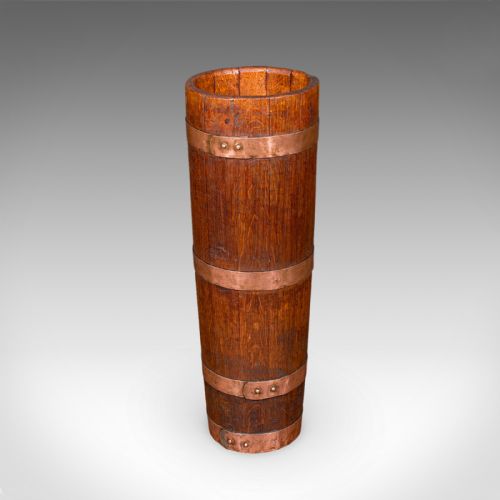
These coopered oak umbrella barrel pieces are practical country house vessels that bring robust timber texture to a hallway.
Coopered Oak Umbrella Barrel
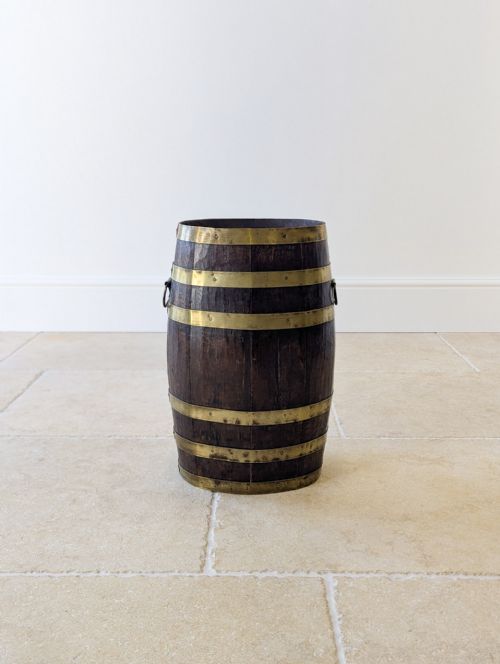
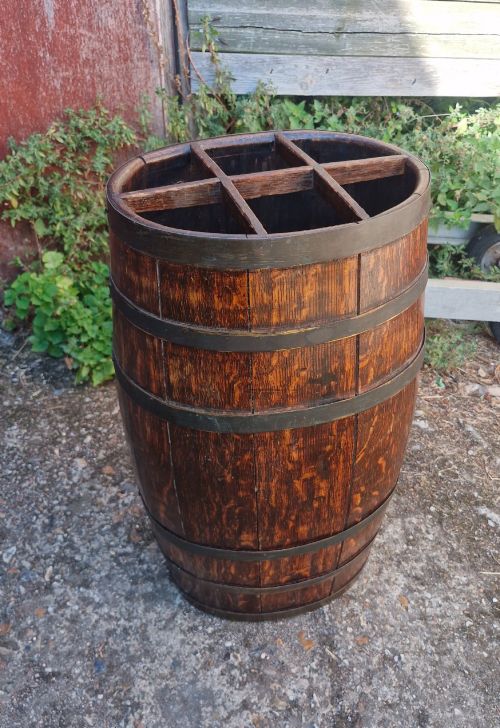
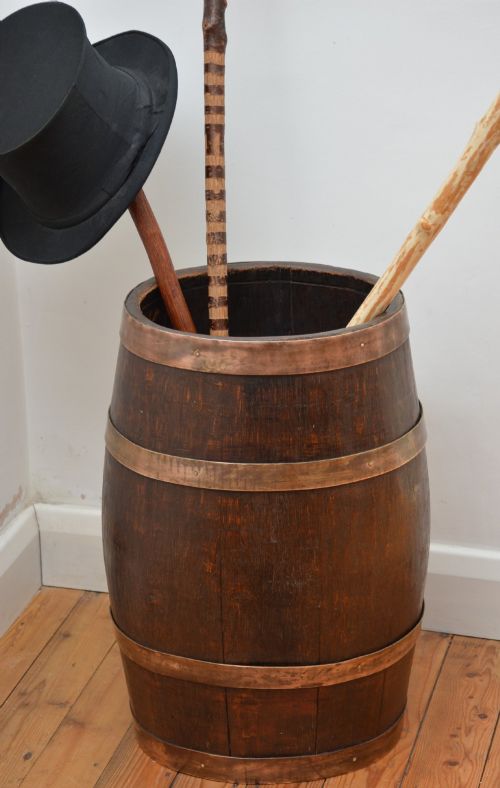
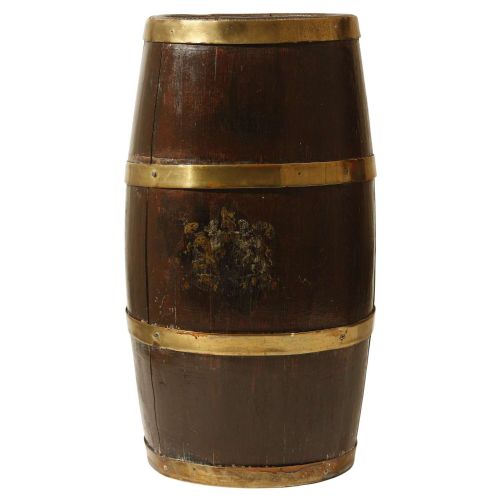
A coopered oak umbrella barrel is a cylindrical or oval vessel designed to hold walking sticks and wet umbrellas in an entrance hall. You meet these primarily as Victorian and Edwardian examples shaped like miniature casks with vertical wooden staves.
The form derives from utilitarian farm and brewery vessels adapted for domestic use in large country houses during the nineteenth and early twentieth centuries. Surviving pieces range from simple unadorned oak staves to tall barrels fitted with decorative metal brackets and handles.
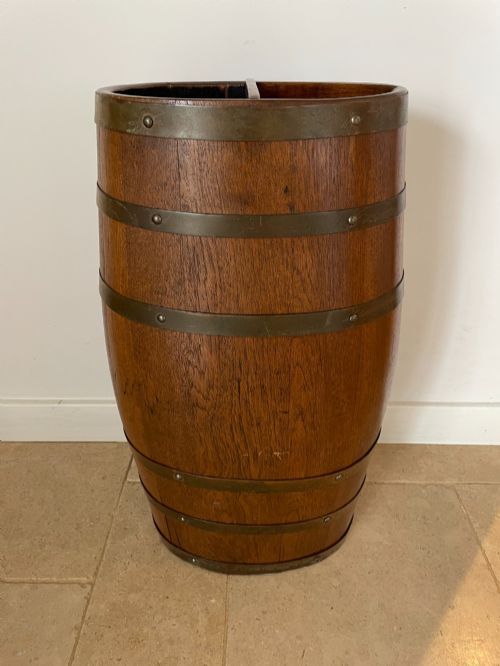
Makers produced round and oval versions, sometimes featuring metal armorial plaques or umbrella loops attached to the exterior. They stand directly on the floor, functioning as both storage and decorative furniture.
How They Were Made
Traditional coopers constructed these barrels from individual curved oak staves bound tightly together with metal hoops of brass, copper, or iron. The wood was selected for grain and stability, then shaped so the edges met precisely to hold the interior liquid or dampness.
Metal braces and bands were driven onto the timber tightly to secure the structure without relying on modern glues. Some pieces incorporate painted finishes or applied brass crests to elevate the industrial barrel form into a domestic furnishing.
Listings for coopered oak umbrella barrels span the Victorian and Edwardian eras, predominantly featuring oak paired with brass, copper, or iron metalwork.
What Varies in Quality
Quality rests in the precision of the stave joinery and the substantial weight of the timber used in the barrel walls. Finer examples display tight, uniform grain in the oak and heavier gauge metal bands that have aged with a rich patina.
The presence of original brass handles, structural loops, and maker details separates standard utility items from more refined country house furnishings. Lesser pieces show uneven shrinkage between the staves or replacement ironwork lacking the finish of the period.
R.A. Lister
The Coopered Oak Umbrella Barrel Glossary
- Coopered
- Made by a cooper using curved wooden staves bound together with hoops. This technique traditionally produced casks, buckets, and barrels.
- Stave
- One of the narrow vertical strips of oak that form the sides of a barrel. The edges are bevelled to fit tightly against adjacent pieces.
- Brass bound
- Fitted with exterior hoops or bands made of brass. This addition secured the wooden staves while providing decorative contrast against the dark oak.
- Umbrella loop
- A metal ring or bracket attached to the exterior of a stick stand to keep upright umbrellas separate. It prevents the items from leaning outward.
- Country house
- A large English residential estate associated with traditional interior furnishings. Pieces from these settings often display robust proportions and practical detailing.
Coopered Oak Umbrella Barrel: Frequently Asked Questions
How do I clean a coopered oak umbrella barrel?
Dust the exterior oak gently with a dry cloth and apply a traditional beeswax to maintain the timber lustre. Avoid using excessive water on the wood or metal bands.
Ensure the interior base remains dry to prevent moisture damage to the lowest staves. A metal liner or tray inside helps protect the original wood from damp umbrella tips.
Are these barrels waterproof inside?
Most of these vessels were designed for daily hallway use rather than holding standing water indefinitely. The traditional stave construction relies on tight joints which can expand or contract with humidity.
Many period pieces originally accommodated removable metal liners to catch rainwater. Check the interior base condition if you plan to store wet items directly inside.
How do I date a Victorian oak barrel?
Examine the type of metal used for the bands and the method used to shape the oak staves. Victorian examples often feature heavier brass or iron bracing and hand-finished timber edges.
Edwardian pieces from makers like R.A. Lister typically display standardised construction methods from the early twentieth century. Look for patination on the brass and wear patterns near the base.
Where should I place an umbrella barrel?
Position the barrel in an entrance hall or porch where walking sticks and umbrellas accumulate. The cylindrical form occupies minimal floor space while offering generous vertical storage.
Keep the piece away from direct heat sources such as radiators to prevent the oak staves from drying out and shrinking.