
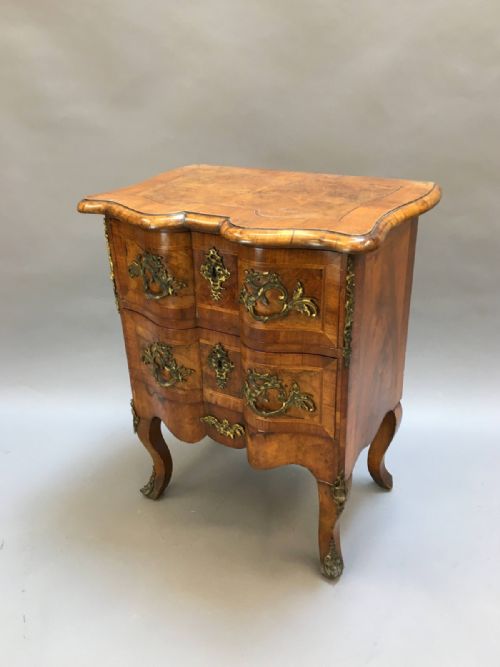



Continental Serpentine Drawers
Continental serpentine drawers bring sculptural curves and rich walnut surfaces into a room, offering grand storage rooted in eighteenth and nineteenth century craftsmanship.
Continental Serpentine Drawers
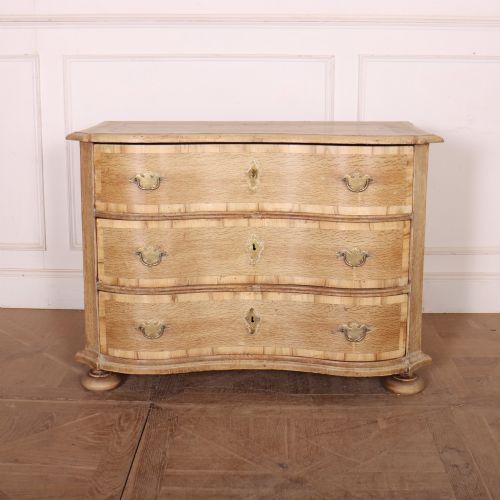
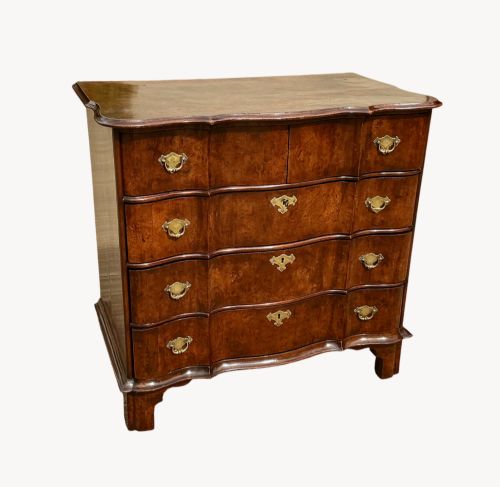
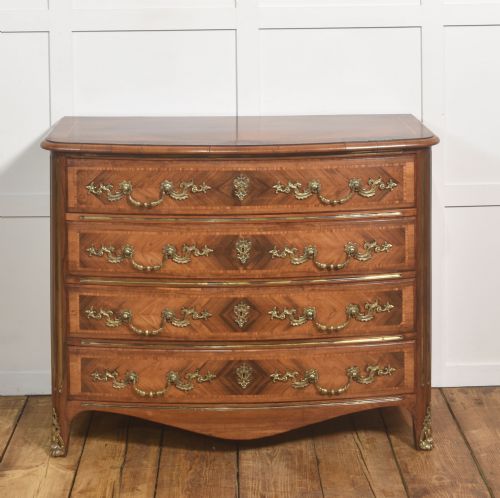
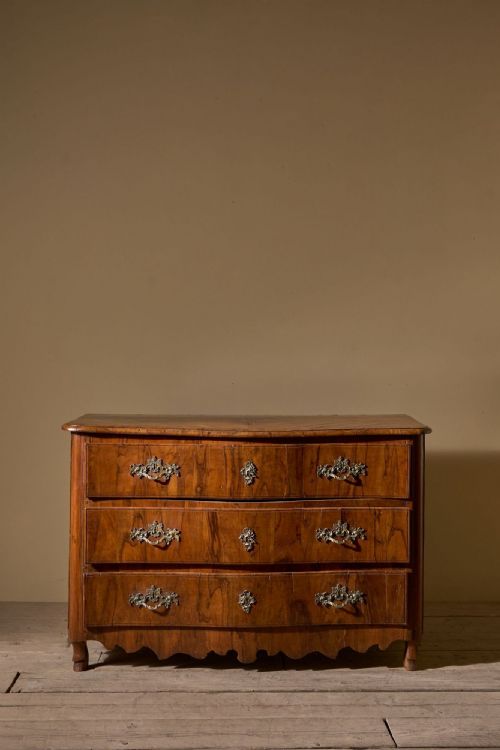
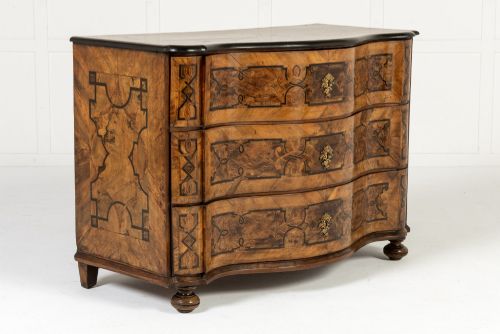
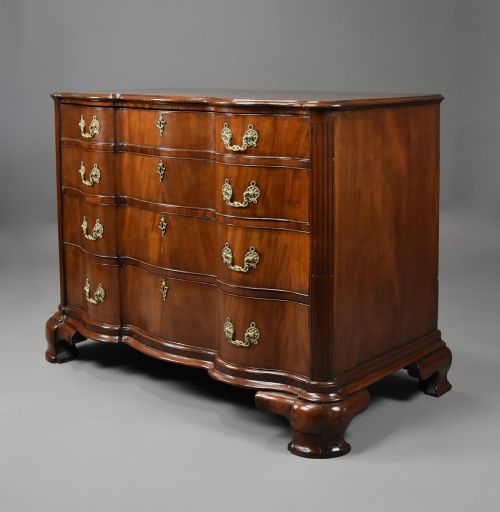
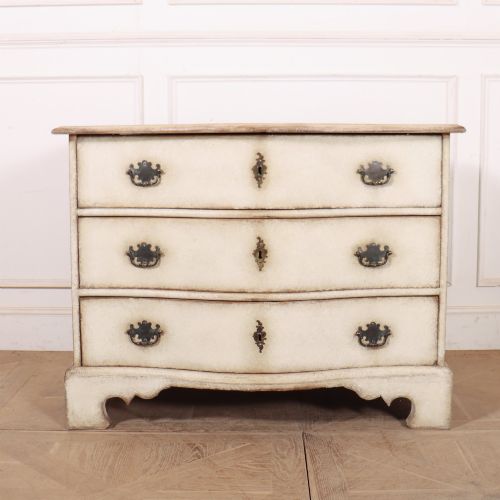
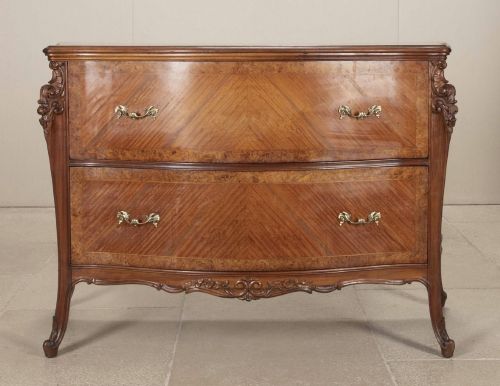
When you search for continental serpentine drawers, you encounter commodes, chests of drawers, and bureaus shaped with sweeping, undulating fronts. These pieces originate from workshops across Europe, including Germany, Italy, Austria, and the Netherlands, spanning the eighteenth and nineteenth centuries.
You are most likely to meet walnut and burr walnut commodes bearing distinct baroque and rococo influences. The selection also includes oak, fruitwood, and painted wood versions, often built with bombe profiles or oxbow outlines.
The regional variations are distinct, ranging from the dramatic bombé curves seen in Dutch pieces to the refined marquetry and satinwood of Italian and French-influenced examples. Each regional school applies its own decorative vocabulary to the characteristic serpentine line.
What varies in quality
The distinction between tiers of quality rests upon the choice of veneer, the crispness of the carved or shaped outline, and the integrity of the original construction. Superior examples exhibit tightly figured burr walnut and balanced marquetry that follow the complex contours without lifting.
Secondary wood selection and the depth of the carving on the drawer fronts and mouldings also separate workshop grades. Pieces retaining their original brass hardware and uncompromised structural alignment command greater respect among collectors.
Early continental cabinetmakers sometimes hid secret compartments behind curved drawer runners to guard small valuables.
The Continental Serpentine Drawers Glossary
- Serpentine
- A furniture front characterised by a wavy outline, curving outward in the centre and inward at the sides. This shape requires advanced joinery to execute successfully across multiple drawers.
- Bombé
- A swelling or bulging outward contour on the sides and front of a chest of drawers or commode. This profile is particularly prevalent in Dutch and German cabinetmaking.
- Marquetry
- Decorative patterns formed by fitting together small pieces of wood veneer of various colours and grains. Artisans apply these pictorial or geometric designs directly to the carcase.
- Commode
- A low chest of drawers or cabinet originating in France, widely adopted across continental Europe during the eighteenth century. These pieces usually stand on short legs and serve both decorative and practical functions.
- Burr walnut
- Wood taken from a growth or burl on a walnut tree, producing swirling, highly decorative grain patterns. Cabinetmakers sliced this timber into thin veneers for the most prominent exterior surfaces.
Continental Serpentine Drawers: Frequently Asked Questions
What is a serpentine commode?
A serpentine commode is a European chest of drawers featuring a front edge curved in a wave-like motion. They served primarily as refined storage furniture in principal rooms.
Cabinetmakers built them using solid woods and decorative veneers to follow the undulating contours.
How do I identify a bombé chest?
Bombé chests stand out through their prominent swelling sides and bulging drawer fronts. This swollen profile gives the furniture a heavy, sculptural silhouette.
They appear frequently in eighteenth-century Dutch and German inventories.
Where were these chests made?
These pieces originated in workshops across continental Europe, notably in Germany, Italy, the Netherlands, Austria, and France. Each region developed distinct stylistic traits.
Dutch makers favoured exaggerated bombé curves, while Italian and German makers focused on burr walnut and marquetry.
How should I clean walnut furniture?
Maintain walnut surfaces by dusting with a dry, soft cloth and avoiding silicone-based polishes. Wax can be applied sparingly to nourish the antique wood grain.
Keep the piece away from direct sunlight and steady heat sources to prevent veneer lifting.