


Continental Furniture Drawers
Continental furniture drawers bring striking regional craftsmanship and rich timber figuring into a room.
Continental Furniture Drawers
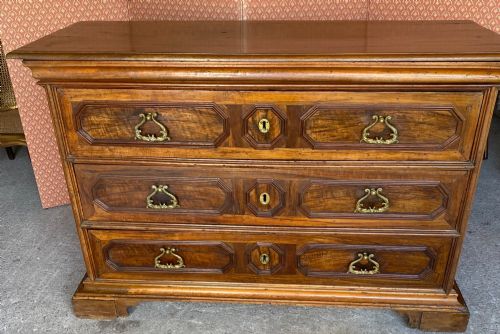
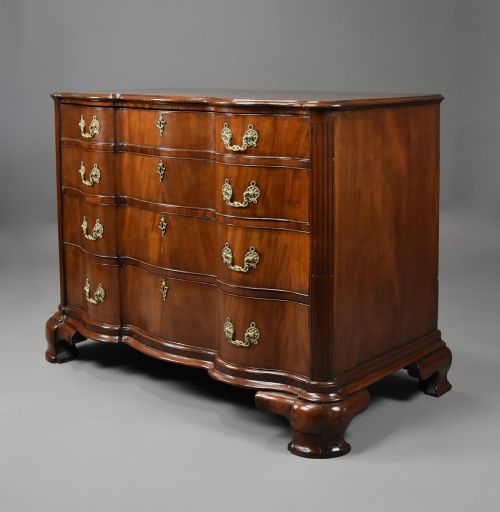
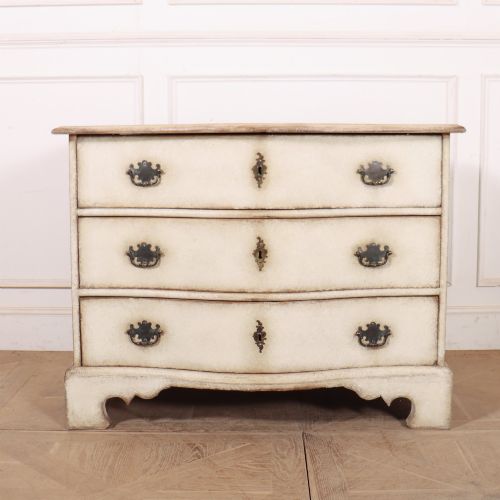
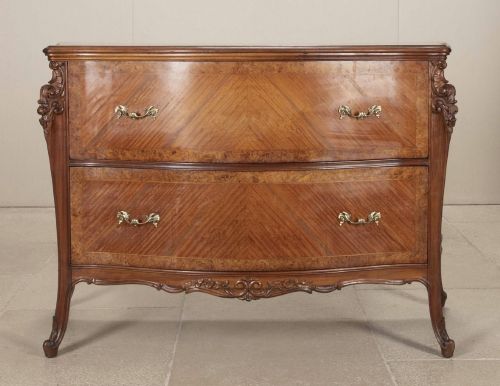
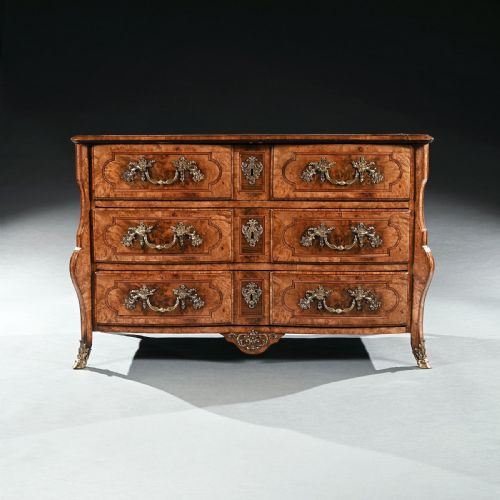
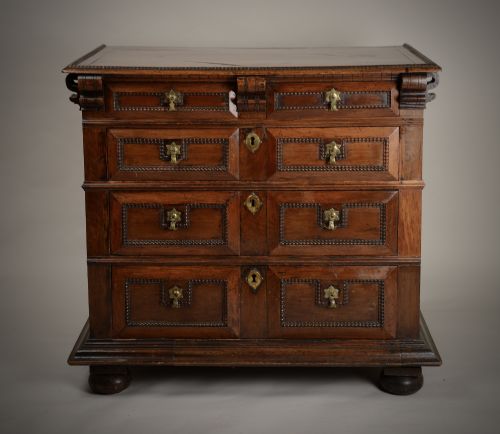
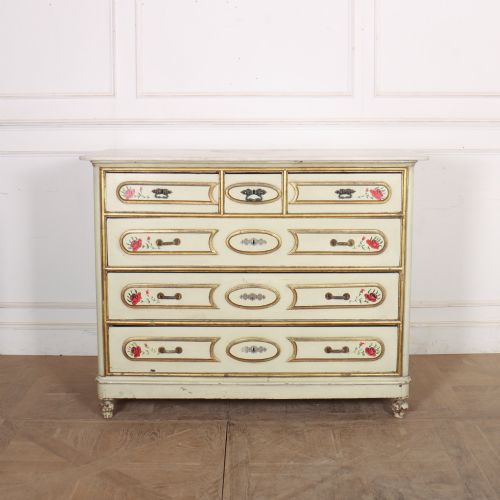
When hunting for continental furniture drawers, buyers encounter a diverse selection of storage pieces spanning multiple centuries and European regions. Commodes, writing bureaux, and tall chests form the core of this category, originating from workshops across Italy, Germany, France, the Netherlands, and Scandinavia.
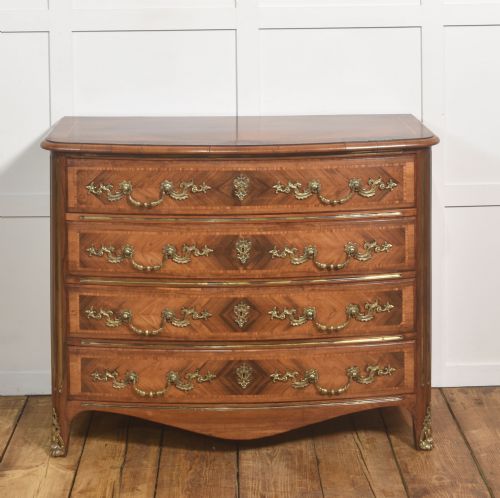
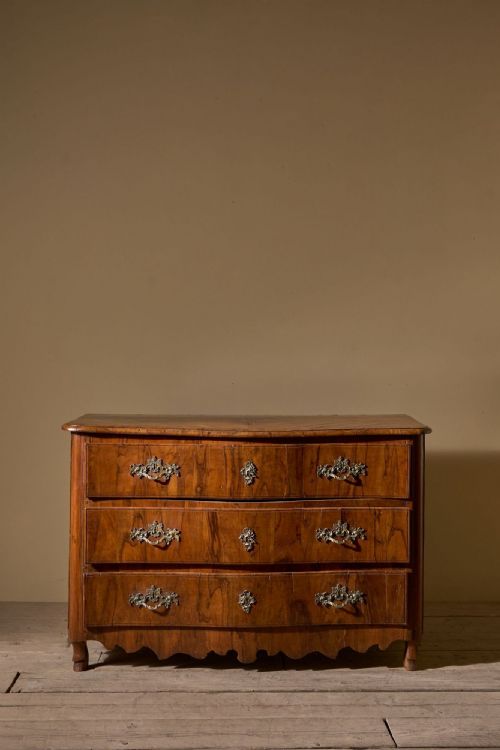
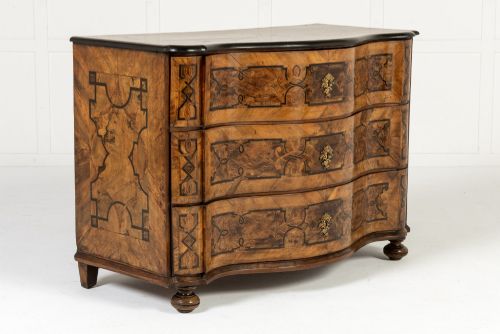
The pieces on this page lean heavily towards eighteenth-century walnut and nineteenth-century burr walnut commodes. Regional characteristics define these items clearly, from the swelling serpentine fronts of German and Italian examples to the bombastic profiles of Dutch commodes and the restrained blonde tones of Biedermeier cabinets.
How they were made
Cabinetmakers utilised robust structural timbers such as oak and pine, applying choice veneers over the carcase. Burr walnut, burr maple, satinwood, and fruitwood create elaborate patterned surfaces across the drawer fronts and tops.
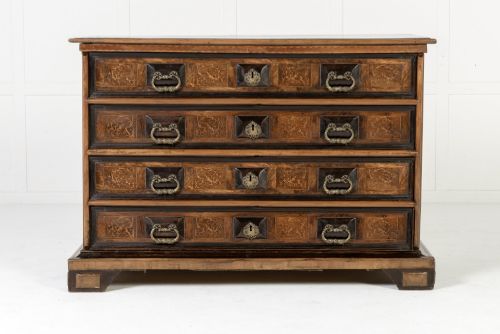
Marquetry inlay, painted finishes, and shaped brass hardware complete the construction. Timber selection dictates the visual weight, pairing dark native hardwoods with pale fruitwoods or decorative applied columns.
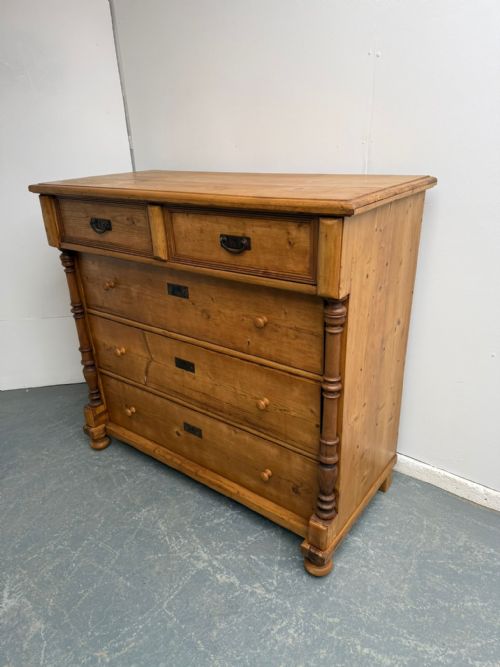
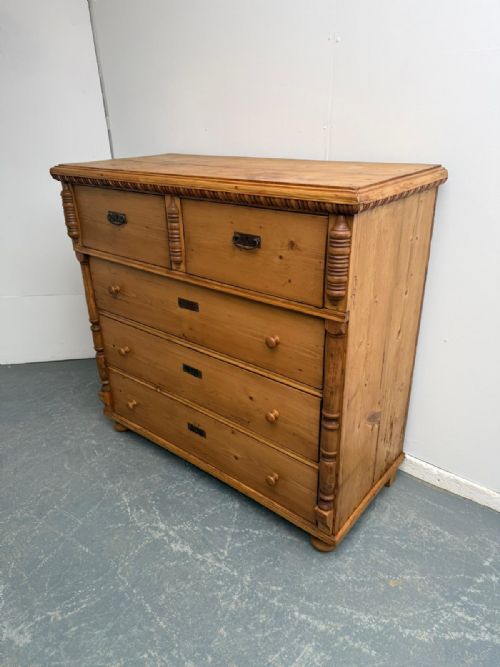
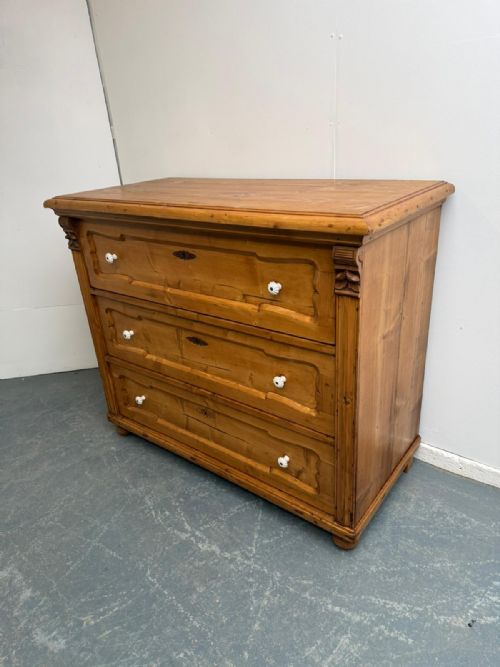
Hungarian pine chests arrive with columned corners ready to hold secrets.
What varies in quality
The sophistication of the timber veneer and the crispness of the serpentine or bombe shaping set the finer examples apart. Master cabinetmakers aligned grain patterns meticulously across multiple drawer tiers to create a cohesive optical flow.
Depth of carving and the integration of original brass mounts distinguish regional provincial work from high court commissions. Proportions remain crucial, as generous dimensions must balance successfully with complex bombé or oxbow silhouettes.
Thomas Hache of Grenoble
The Continental Furniture Drawers Glossary
- Commode
- A low chest of drawers, frequently featuring shaped fronts and decorative veneering. Originating in France, the form gained popularity across eighteenth-century Europe.
- Bombe
- A swelling, bulging chest profile with convex curves on the front and sides. This technique demands advanced joinery to achieve the complex volumetric shape.
- Serpentine
- A furniture front shaped with a concave central section flanked by two convex ends, resembling a gentle wave. Cabinetmakers applied this line to give movement to heavy timber carcases.
- Marquetry
- The art of applying small pieces of veneer to form decorative pictures or geometric patterns. Artisans used contrasting tinted woods and fruitwoods to achieve pictorial depth.
Continental Furniture Drawers: Frequently Asked Questions
What is a continental commode?
A continental commode is a low chest of drawers originating from European mainland workshops, typically featuring decorative veneers and shaped fronts.
These pieces served primarily as stylish bedroom or salon storage rather than utilitarian furniture.
How do I identify Biedermeier furniture?
Biedermeier furniture appears in clean, understated lines with blonde figured woods like birch and walnut, dating mainly from the nineteenth century.
Ornamentation remains minimal to highlight the natural grain patterns of the timber.
What woods were used in eighteenth-century pieces?
Eighteenth-century makers relied on walnut, oak, fruitwood, and pine, often enhancing the surfaces with burr walnut or olive wood veneers.
Solid structural timbers provided stability while decorative sliced veneers covered the visible exterior surfaces.
Where were serpentine chests made?
Serpentine chests were produced across numerous European centres, with notable examples originating from German, Italian, and Austrian workshops.
Regional cabinetmakers adapted the curved silhouette to local baroque and rococo aesthetic preferences.