


Compact Mahogany Dresser
A compact mahogany dresser offers neat storage in rich timber, bringing period character to smaller rooms.
Compact Mahogany Dresser
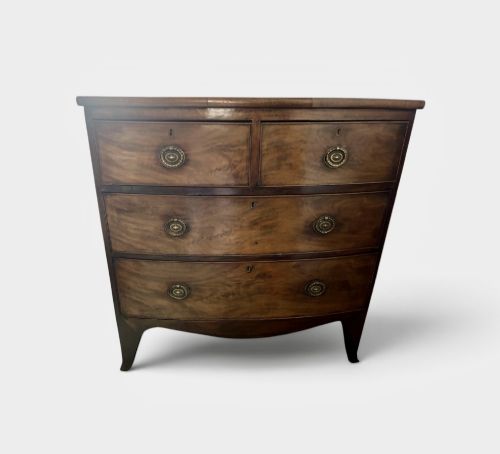
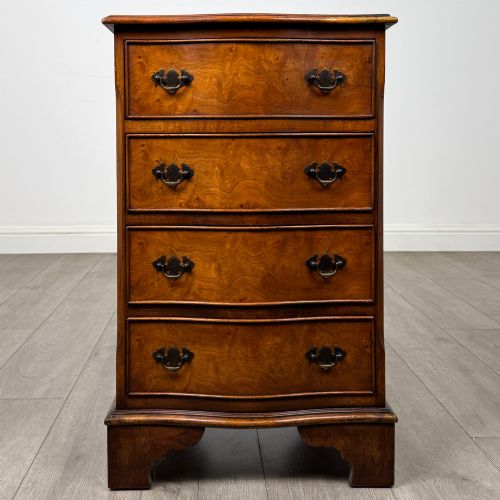
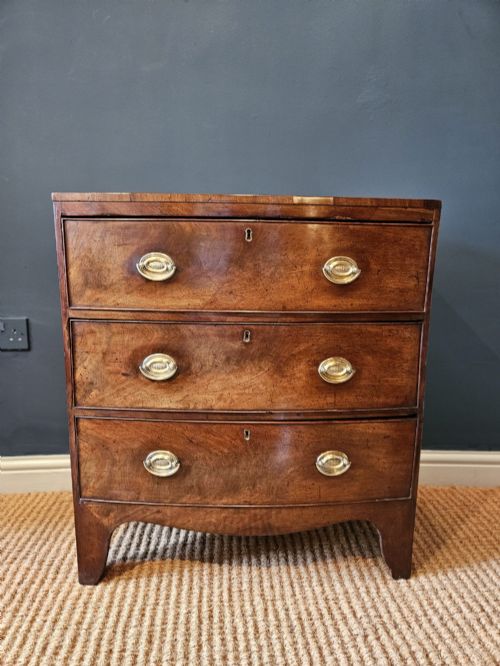
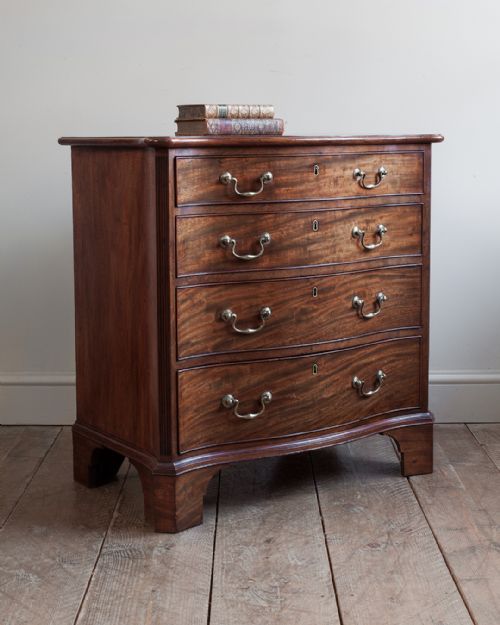
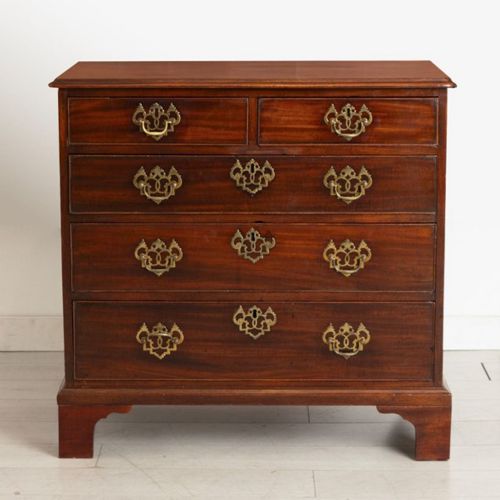
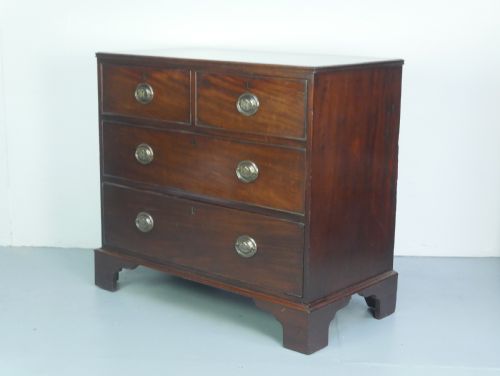
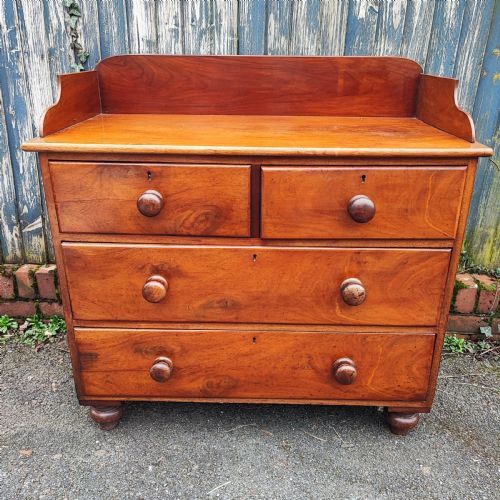
A compact mahogany dresser or small chest of drawers is a practical storage item designed for smaller spaces, frequently found in forms such as bow front, serpentine, and bachelors chests. These pieces span periods from the 18th century through the Georgian, Regency, and Victorian eras up to the 1920s.
You are most likely to encounter smaller Georgian, Regency, and Victorian examples on this page, often featuring bracket feet and narrow proportions suited to bedroom or hallway placement.
What varies in quality
The degree of refinement in the timber selection and figure sets superior examples apart, particularly where highly figured Cuban mahogany or burr walnut is employed. Superior craftsmanship shows in the crispness of boxwood inlay and the retention of original brass handles.
Proportions also dictate the calibre of the piece, with narrower or more challenging serpentine and bow front shapes commanding particular attention for their diminutive scale.
Period styles span Georgian, Regency, Victorian, and Edwardian eras, including 1920s Georgian Revival work.
The Compact Mahogany Dresser Glossary
- Bow front
- A convex curved cabinet front popular during the Regency and Victorian periods. This shape softens the profile of a small chest.
- Serpentine
- A gently undulating front with a central convex curve flanked by concave sweeps. It requires expert carpentry to execute on a small scale.
- Bachelor's chest
- A small chest of drawers featuring a fold-over top or brushing slide used for writing. These versatile pieces date largely from the Georgian era.
- Bracket foot
- A simple, sturdy foot shaped like a bracket, supporting the corners of a case piece. They are typical of 18th-century and Georgian cabinet work.
- Cuban mahogany
- A dense, richly figured tropical timber prized in high-end 18th-century furniture. Its deep colour darkens gracefully over time.
Compact Mahogany Dresser: Frequently Asked Questions
What is a compact mahogany dresser used for?
These pieces serve as practical storage chests for clothing, linens, or personal items while occupying minimal floor space. Their smaller proportions make them ideal for bedrooms, hallways, or sitting rooms.
Historically, specific variants like bachelor's chests included writing surfaces for correspondence. Today, they function as versatile accent furniture that combines display space on top with deep drawer capacity.
How do I identify a Georgian chest of drawers?
Georgian chests typically display restrained classical proportions, often featuring solid mahogany construction with hand-cut dovetails on the drawer sides. Look for traditional details such as bracket feet and period brass drop handles.
Many examples from this era favour clean architectural lines or subtle boxwood stringing rather than heavy ornamentation. The timber naturally exhibits a deep, warm patina developed over centuries of use.
What is the difference between Regency and Victorian pieces?
Regency furniture draws inspiration from classical antiquity, often showcasing figured mahogany veneers, bold grain patterns, and clean structural geometry. Proportions remain neat and purposeful.
Victorian pieces can be more varied, sometimes adopting earlier Georgian revival styles alongside distinct nineteenth-century forms like bow fronts and cupboard bases. The timber treatment and hardware styles help distinguish the manufacturing decades.
How should I care for antique mahogany furniture?
Keep mahogany pieces away from direct sunlight and heat sources to prevent the timber from drying out or fading. Dust regularly with a soft, dry cloth and avoid silicone-based polishes.
Applying a traditional beeswax occasionally helps nourish the wood and maintain its natural lustre. Maintaining stable room humidity protects both the solid mahogany and any delicate boxwood inlay.