

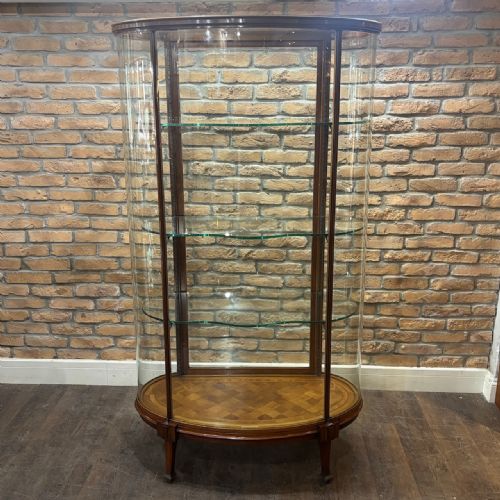




Commercial Showcase
These commercial showcase pieces are glass and timber shop fittings built to display goods, and you buy one to bring architectural presence into a room.
Commercial Showcase
A commercial showcase encompasses glazed display cabinets, shop counters, and haberdashery units designed for retail premises during the nineteenth and early twentieth centuries. These pieces emerge from periods spanning the Victorian era through the Edwardian years and into the 1920s and 1930s.
Mahogany and oak dominate the construction of these items, appearing alongside brass, bronze, and chrome frames in various regional workshops. Forms range from large floor-standing display cabinets and bow ends to countertop units and pentagonal serving counters.
Shop display cabinets and haberdashery counters are the primary configurations you encounter on this page, often bearing original brand advertising or hand sign-writing for confectionery and tobacco makers. Their original function was merchandising in high street shops, tea rooms, and sweet stores.
Materials and construction methods
Makers constructed these commercial showcase fixtures using solid timber frames of mahogany, oak, and hardwood, glazed extensively on multiple sides to maximise visibility. Interior elements frequently incorporate mirrored backs, fabric linings, and adjustable shelving supported by brass or metal hardware.
Metal framing gained prominence by the 1930s, introducing aluminium and chrome alongside traditional bronze shopfitting structures. Joinery techniques combined structural robustness with refined architectural mouldings suited to commercial environments.
Commercial Showcase Retail Price Guide 2026
Typical asking prices for commercial showcase among the pieces listed under this phrase on Sellingantiques today, from the lower quarter to the upper quarter. They describe what is for sale here now, not the wider market.
Listings feature periods from the nineteenth century through the 1930s, using mahogany, oak, glass, and brass.
Distinctions in quality
The degree of refinement in the timber framing and the sophistication of the glazing set superior examples apart from standard utility pieces. Generous proportions, curved bow ends, and integrated mirrored interiors elevate the architectural merit of a commercial showcase.
Original maker attribution, specialised hardware, and authentic period sign-writing contribute to the standing of a piece within its category. The integrity of the original glass and the quality of the cabinet-making dictate the overall calibre of the item.
F. Sage & Co·Dudley & Co·E. Pollard & Co. Ltd·Quincy Showcase Works
The Commercial Showcase Glossary
- Haberdashery counter
- A long shop fixture featuring multiple glazed drawers or compartments designed for small dry goods. These units provide extensive compartmentalised storage beneath a display surface.
- Bow end
- A curved glass or timber termination on a cabinet or counter. This curved profile softens the linear geometry of the shop interior.
- Shopfitting
- The trade and installation of fixtures and fittings for retail premises. These commercial elements reflect the bespoke interior architecture of period shops.
- Vitrine
- A glass-fronted display cabinet used for presenting precious items. The term denotes a refined display enclosure with extensive glazing.
- Sign-written
- Lettering applied by hand using traditional signwriting paints directly onto wood or glass surfaces. This technique displays period branding or retailer names.
Commercial Showcase: Frequently Asked Questions
How were commercial showcase counters used originally?
Merchants utilised these glazed units on shop floors to protect delicate wares while offering customers a clear view of confectionery, tobacco, and dry goods. Staff served customers across the timber tops while goods remained organised inside the display compartments.
In contemporary interiors, these counters function as kitchen islands, sideboards, or display furniture in living spaces, allowing collectors to exhibit ceramics or books behind glass.
How do I date a commercial showcase?
Dating relies on identifying the timber species, framing materials, and stylistic cues present in the construction. Victorian and Edwardian examples typically feature heavy mahogany frames, while 1930s pieces introduce chrome, aluminium, and Art Deco leg forms.
Maker plaques, patent stamps, and original hand sign-writing for period brands also help narrow down the decade of manufacture.
Can I use a shop display cabinet at home?
These cabinets integrate into domestic rooms as bookcases, drinks cabinets, or linen storage units due to their generous proportions and glazed panels. The mirrored interiors and glass shelving distribute light effectively within a domestic setting.
Placing them in hallways or dining rooms introduces period retail character and practical enclosed storage for personal collections.
What is the difference between a counter and a cabinet?
Display counters are low, horizontal fixtures designed for standing behind or serving across, featuring a flat top surface and customer-facing glass. Display cabinets are taller, vertical pieces built to stand against walls or act as architectural room dividers.
Cabinets generally offer multiple tiers of internal shelving, whereas counters prioritize top-surface access and internal drawer or compartment storage.