




Combination Wardrobe Drawers
Combination wardrobe drawers bring together hanging space and chest storage in a single piece.
Combination Wardrobe Drawers
Combination wardrobe drawers unite hanging compartments with integrated drawer storage, offering a complete bedroom furniture solution. When you search for combination wardrobe drawers, you encounter substantial pieces designed to keep garments pressed and folded in one footprint.
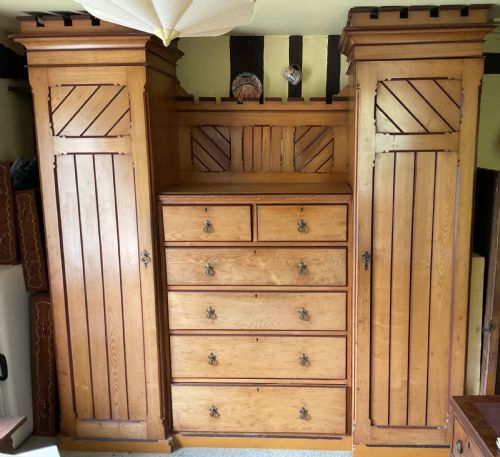
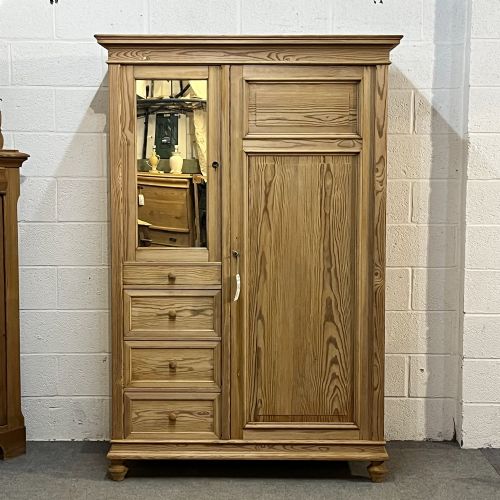
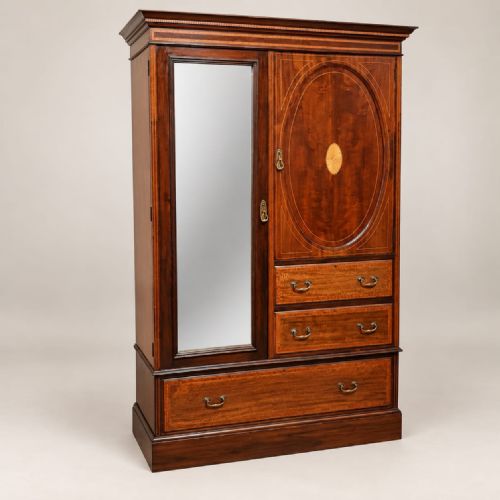
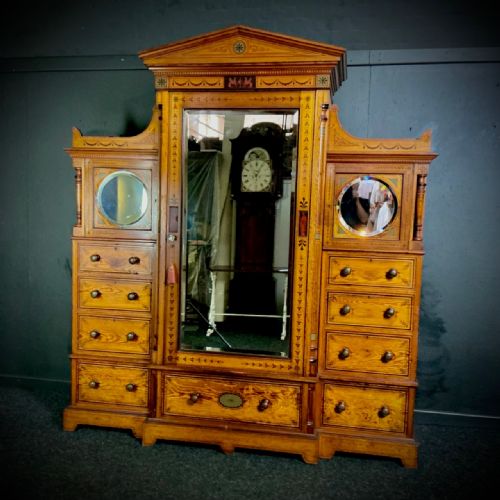
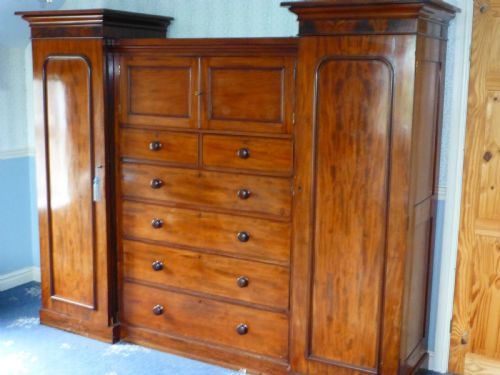
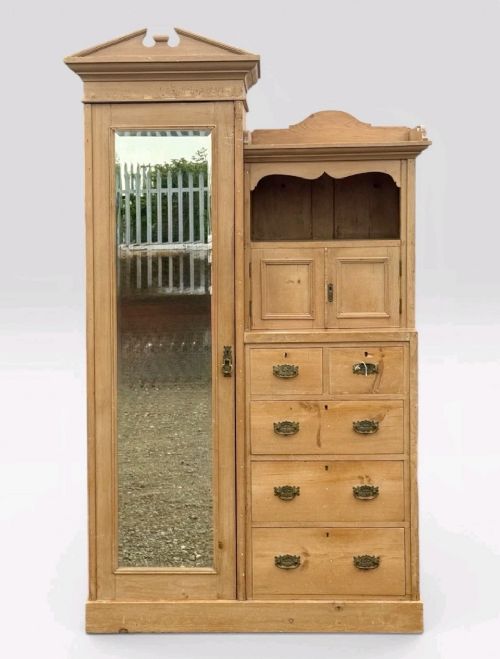
The pieces listed on this page span the Victorian and Edwardian eras through to the 1930s. You will find forms ranging from compactum units and gentleman's wardrobes to breakfront designs and sentry box cabinets.
How they were made
Cabinet makers constructed these large items using solid timbers like mahogany, pine, and ash, frequently enhanced with veneers of satin walnut or burr walnut. Brass hardware provided robust fixings for doors and internal drawers.
Many examples utilise knockdown construction methods, allowing the heavy frames to dismantle into manageable sections for transport and installation in nineteenth and early twentieth-century homes.
Combination Wardrobe Drawers Retail Price Guide 2026
Typical asking prices for combination wardrobe drawers among the pieces listed under this phrase on Sellingantiques today, from the lower quarter to the upper quarter. They describe what is for sale here now, not the wider market.
Recorded forms include sentry box cabinets, breakfront compactums, and gentleman's wardrobes equipped with original mirror glass and brass hardware.
What varies in quality
The standard of timber selection and cabinet joinery dictates the quality of each piece, from simple rustic pine storage to high-cabinet maker output. Drawer linings, dovetail joints, and the crispness of mouldings indicate the level of care invested in the construction.
Maker attribution and secondary woods also separate standard production items from workshop pieces. Original glass, intact brass fittings, and functional dismantling mechanisms preserve the integrity of the original design.
Gillows·Maple & Co.
The Combination Wardrobe Drawers Glossary
- Compactum
- A multi-purpose wardrobe that combines hanging space, shelving, and internal drawers within a single carcass. This form maximises storage efficiency in smaller bedrooms.
- Knockdown wardrobe
- A piece designed to be fully disassembled into panels, cornices, and base units using internal bolts or pegs. This ingenious method allowed large furniture to travel up narrow staircases.
- Gentleman's wardrobe
- A specialised storage unit traditionally configured with sliding trays or drawers on one side and a hanging section on the other. They often include smaller compartments for accessories.
- Breakfront
- A piece of furniture where the central section projects forward from the flanking wings. This architectural arrangement creates depth and visual balance across the front elevation.
Combination Wardrobe Drawers: Frequently Asked Questions
How do I dismantle a combination wardrobe?
Many period combination wardrobes use internal bolts or slot-together tongue-and-groove joints to connect the cornice, base, and side panels. You will need basic hand tools and an assistant to support the heavy timber sections while releasing the fixings.
Keep all original wooden pins and metal bolts together during transport to ensure the frame remains stable when reassembled in a new room.
What is the difference between a compactum and a standard wardrobe?
A standard wardrobe focuses primarily on vertical hanging space behind full-length doors. A compactum integrates multiple internal drawers and linen shelves directly alongside the hanging compartment.
This hybrid design eliminates the need for a separate chest of drawers in the bedroom by housing all primary garments in one unified carcass.
How should I care for antique pine and mahogany surfaces?
Maintain polished mahogany and waxed pine surfaces by applying a traditional beeswax polish sparingly with a soft cloth. Avoid placing these pieces in direct sunlight or near heat sources to prevent the timber from splitting.
Regular gentle dusting preserves the natural patina built up over generations of use.