
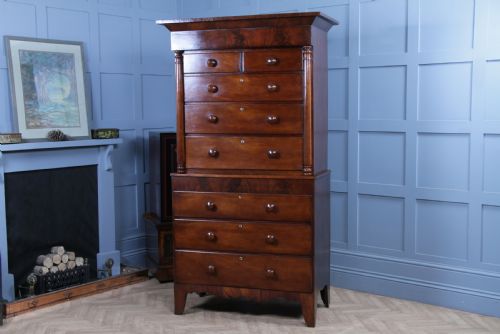
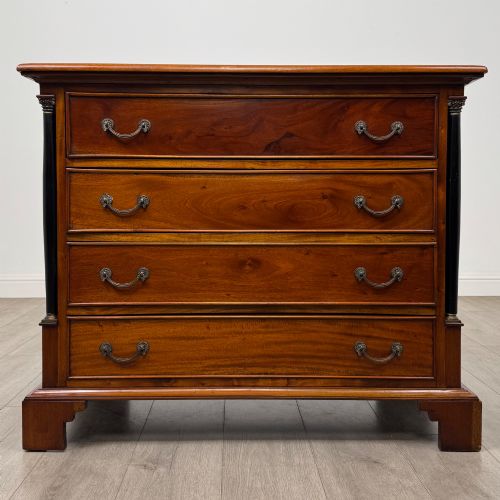
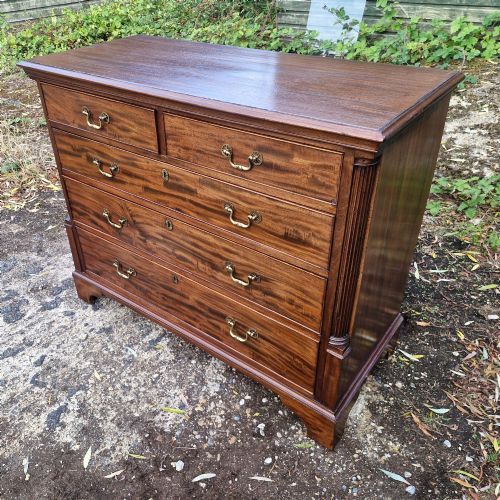
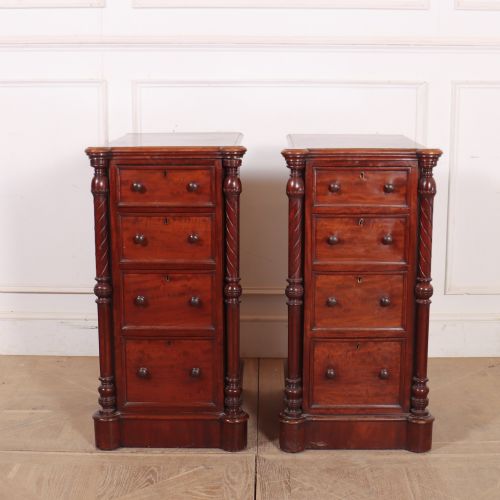

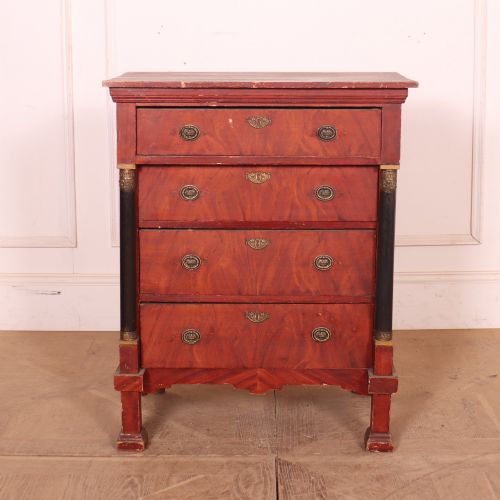
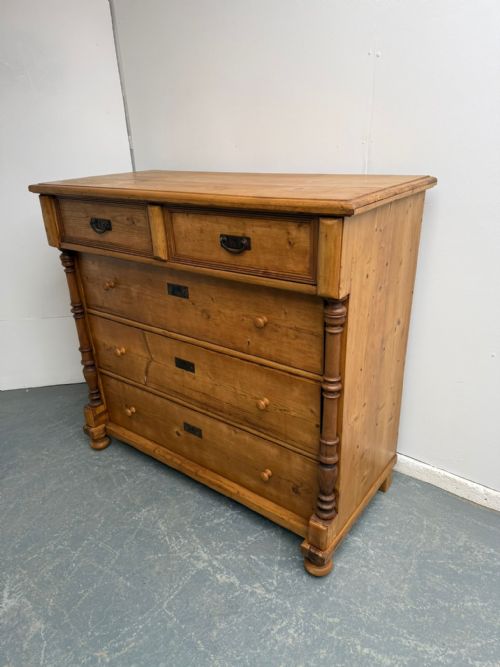
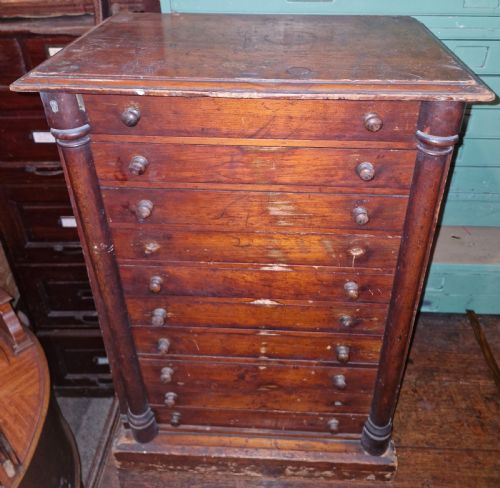
Column Chest of Drawers
When you search for a column chest of drawers, you are looking for a substantial case piece defined by architectural pilasters or turned supports.
Column Chest of Drawers
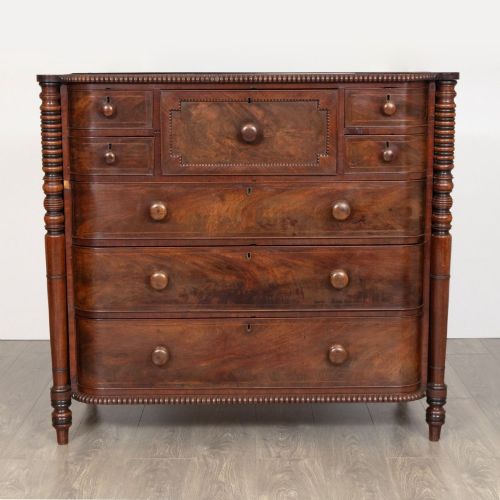
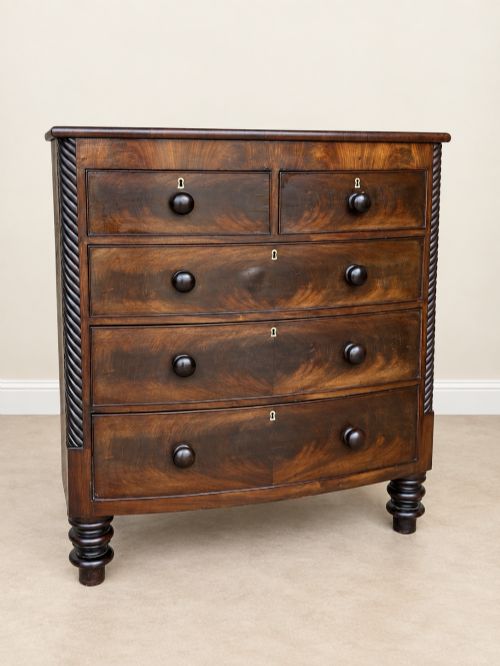
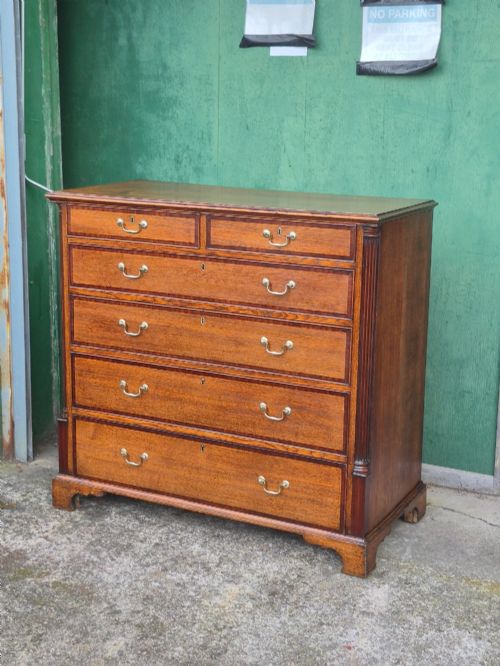
A column chest of drawers combines storage functionality with architectural presence, frequently incorporating structural columns or pilasters flanking the drawer banks. These pieces appear across multiple periods including Georgian, Regency, and Victorian eras, with particular representation in Scottish and pine regional variants.
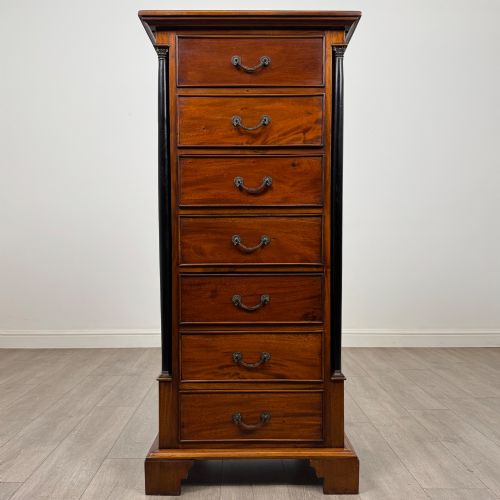
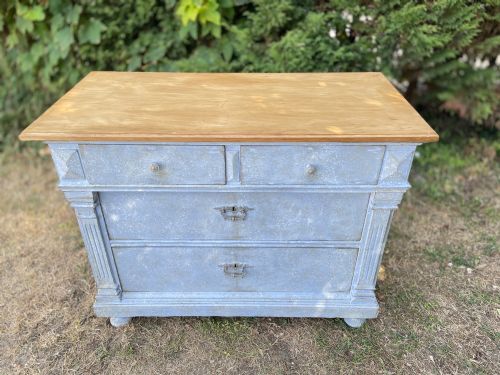
Buyers will encounter various forms ranging from large mahogany Scotch chests to pine examples and bedside tables. The architectural detailing often defines the style, drawing from French Empire, William IV, or Biedermeier influences.
How They Were Made
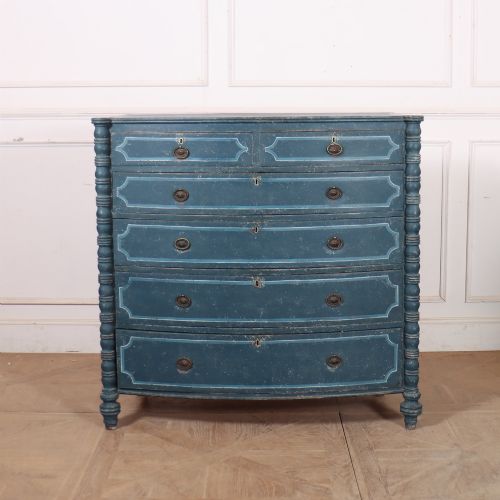
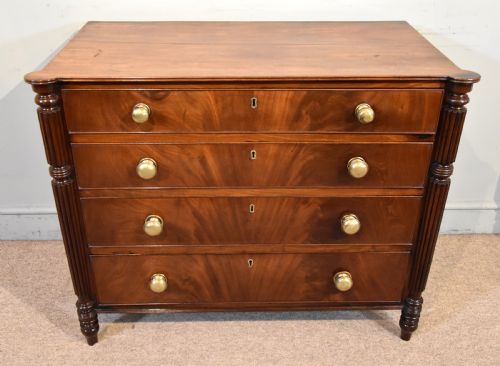
Cabinet makers utilised primary timbers such as mahogany, walnut, oak, and pine, frequently applying flame mahogany veneer, burr elm, or satin birch to primary surfaces. Structural columns were turned from solid woods, sometimes featuring barley twist designs or brass mounts.
Secondary woods like pine supported internal drawer construction, while hardware incorporated brass handles and escutcheons. Surface finishes ranged from French polish to waxed pine and painted treatments.
Secret drawers hidden within the upper mouldings offered a discreet spot for keeping valuables away from curious eyes.
What Varies in Quality
The sophistication of the timber selection dictates the visual impact, distinguishing plain surfaces from strongly figured flame mahogany, burr elm, or tiger birch veneers. Cabinetmaking skill shows in the integration of the columns and the precision of the drawer dovetailing.
Proportion and scale also separate standard regional pieces from grander architectural examples, particularly in Scottish and larger Georgian or Victorian productions.
The Column Chest of Drawers Glossary
- Column corners
- Vertical architectural supports or pilasters framing the front edges of a chest, frequently turned or reeded.
- Barley twist
- A type of turning shaped in a spiral resembling a twisted rope, often used for the columns on Regency and Victorian pieces.
- Scotch chest
- A large, often wide chest of drawers originating in Scotland, typically featuring a deep top drawer over multiple smaller and larger drawers.
- Wellington chest
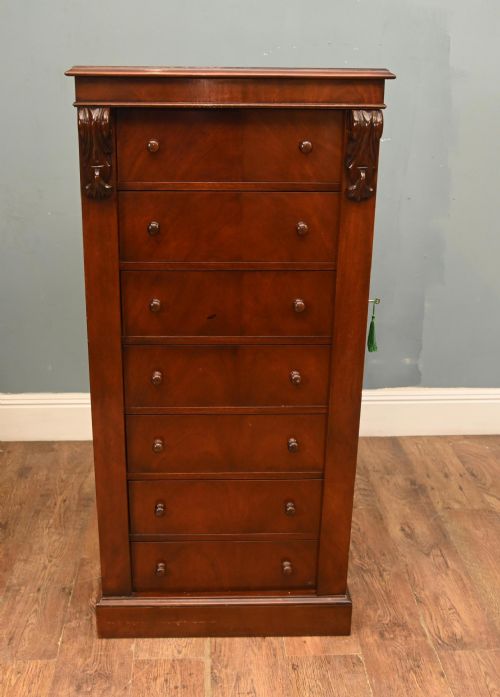
- A tall, narrow chest of drawers secured by a hinged locking side flap that is fastened with a key.
- Commode
- A low chest of drawers or cabinet, a term frequently applied to continental European pieces of the eighteenth and nineteenth centuries.
Column Chest of Drawers: Frequently Asked Questions
What is a column chest of drawers?
A column chest of drawers is a storage cabinet featuring structural pillars, pilasters, or turned columns integrated into the front corners or sides of the case.
These architectural elements draw inspiration from classical design and were popular during the Georgian, Regency, and Victorian periods.
How do I identify a Scottish column chest?
Scottish chests of this type are typically larger and broader than standard English examples, often incorporating a concealed top drawer above the main configuration.
They frequently showcase heavily figured mahogany or walnut timbers alongside prominent column corners.
Where were these chests placed in a home?
Historically, these substantial case pieces served as primary bedroom furniture for storing garments and linens.
Smaller variants, such as bedside tables or miniature chests, functioned in dressing rooms and smaller chambers.
What woods were used for these chests?
Cabinet makers predominantly used mahogany, walnut, and oak for formal pieces, alongside pine for regional and country furniture.
Decorative surfaces were often enhanced with veneers including flame mahogany, burr elm, satin birch, and tiger birch.