

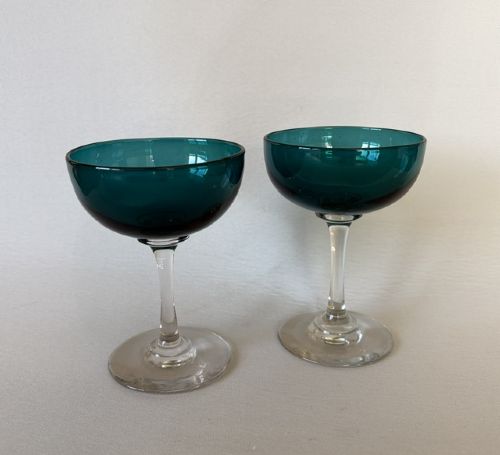
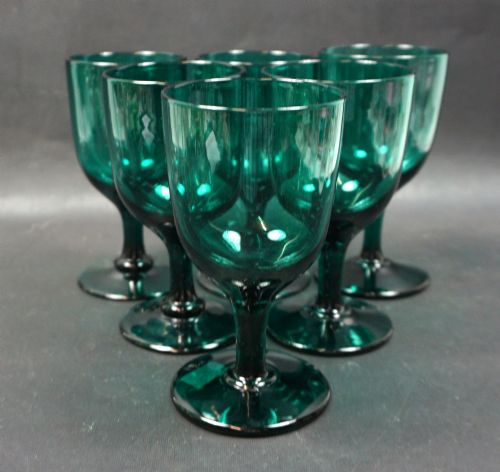


Coloured Stemware Set
A coloured stemware set brings vibrant character to the table, offering brilliant hues and sparkling crystal for modern dining.
Coloured Stemware Set
A coloured stemware set encompasses drinking vessels shaped for wine, champagne, and liquor, originating across the Georgian, Victorian, and Edwardian eras. These collections unite matching glasses that bring distinct hues to the table through vibrant glassmaking traditions.
The selections you encounter most frequently on this page feature rich cranberry glass and vivid green bowls, typically sold in matched sets of six or fifteen pieces. Forms range from tulip-shaped wine glasses to champagne coupes and liquor glasses produced in Bohemian and English workshops.
Materials and construction
Makers utilised lead glass and clear glass, alongside specialised coloured glass such as cranberry and emerald green, shaped through traditional blown glass techniques. Artisans also applied cut crystal methods to achieve geometric brilliance and faceted stems.
Hand-blown production leaves subtle variations within each set, marking them as products of nineteenth-century and early twentieth-century glasshouses.
Coloured Stemware Set Retail Price Guide 2026
Typical asking prices for coloured stemware set among the pieces listed under this phrase on Sellingantiques today, from the lower quarter to the upper quarter. They describe what is for sale here now, not the wider market.
Current listings feature blown glass, lead glass, and cut crystal across Georgian, Victorian, and Edwardian styles.
Assessing quality and finish
Quality rests in the depth and consistency of the coloured glass across every piece in the set, alongside the precision of the hand-blown forms and cut crystal facets. Finer sets maintain uniform bowl shapes and balanced stems that demonstrate superior glasshouse execution.
The crispness of the cutting and the clarity of the metal distinguish standard production from exceptional examples originating in English and Bohemian traditions.
The Coloured Stemware Set Glossary
- Cranberry glass
- A rich red-pink glass coloured with gold chloride during production. It is frequently seen in Victorian tableware and stemware sets.
- Lead glass
- Heavy glass containing lead oxide that increases brilliance and weight. This material allows for sharper cutting and greater light refraction.
- Champagne coupe
- A shallow-bowled glass designed for sparkling wines. These pieces appear in nineteenth-century collections alongside traditional wine glasses.
- Cut crystal
- Glass decorated with faceted patterns cut onto the surface by a wheel. This technique enhances the sparkle of coloured and clear vessels.
Coloured Stemware Set: Frequently Asked Questions
What periods do these sets come from?
The pieces span the Georgian, Victorian, and Edwardian eras, with dates ranging from around 1800 through to the early twentieth century.
Production methods and bowl shapes shift across these decades, reflecting changing dining fashions and glassmaking capabilities.
How were coloured stemware sets used?
They served wine, champagne, and liquor during formal nineteenth-century dining and social gatherings. Coloured bowls added visual drama to the table setting.
Different hues matched specific courses or simply displayed the host's refined taste during dinner parties.
Are these glasses safe to use today?
These antique and vintage vessels can be used carefully for special occasions, provided they are hand-washed gently.
Sudden temperature changes should be avoided to protect the historic glass from thermal shock.
How do I care for antique glass?
Wash each piece by hand in warm, soapy water without harsh abrasives or mechanical dishwashers. Dry them immediately with a lint-free cloth to maintain the sparkle.
Store the set securely where stems and bowls remain separated from sudden impacts.