
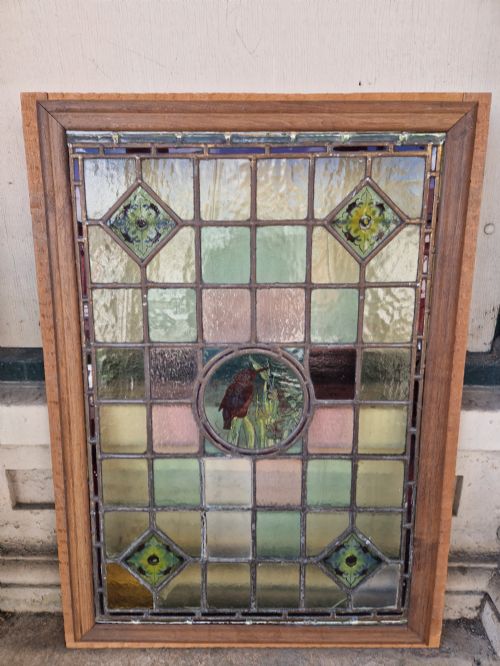


Coloured Stained Glass Window
A coloured stained glass window brings shifting daylight and rich pigment into a room, offering both privacy and enduring architectural character.
Coloured Stained Glass Window
When you search for a coloured stained glass window, you encounter architectural salvage and panels spanning from the Victorian era through the 1930s. The selection includes domestic window panels, arch top church windows, and large two-section Art Nouveau installations designed for interior or exterior placement.
You are most likely to meet pieces from around 1900 featuring hand-painted countryside scenes, alongside floral motifs, bird designs, and Dutch folk art subjects. Materials encompass lead, glass, timber frames in pine or general wood, and enamel details.
The aesthetic reaches across multiple stylistic movements, taking in Victorian and Edwardian conventions, Gothic Revival forms, Arts and Crafts ideals, and Tiffany style compositions. These panels function as focal points in period properties or as standalone decorative objects.
How they were made
Glass panels are constructed by holding individual pieces of coloured or hand-painted glass within a flexible network of lead cames. Artisans soldered the lead joints together to form stable geometric or figurative compositions.
Many examples incorporate hand-painted details subjected to firing, depicting countryside views, figures, or botanical scenes directly onto the glass surface. Supporting wooden frames, often fashioned from pine timber, provide structural rigidity for larger architectural windows.
Art Nouveau and Arts and Crafts styles appear alongside Gothic Revival and Dutch folk art motifs.
What varies in quality
The artistic ambition of the painted or leaded design dictates the standing of a panel, ranging from simple geometric arrangements to intricate narrative scenes depicting castles, lakes, or wildlife. The finesse of the brushwork and the depth of colour within the glass itself separate standard domestic glazing from exceptional artistic works.
Structural integrity relies on the rigidity of the lead matrix and the preservation of the timber surrounds. Panels that retain their original leading and undamaged hand-painted elements represent the upper tier of the surviving material.
Sir Edward Burne Jones
The Coloured Stained Glass Window Glossary
- Came
- A slender strip of cast lead with an H-shaped profile used to hold pieces of glass together in a window.
- Bullseye
- A small, circular piece of glass with a central thickening created during the traditional blowing process.
- Architectural salvage
- Building materials and decorative fixtures rescued from older structures for reuse in new contexts.
- Gothic Revival
- An architectural and decorative style drawing inspiration from medieval Gothic forms and pointed arch structures.
- Leaded glass
- Individual panes of glass joined by lead cames to form a decorative window or panel.
Coloured Stained Glass Window: Frequently Asked Questions
How do I hang a stained glass window?
These panels require secure mechanical support rather than standard picture hooks due to their substantial weight. Steel brackets or hanging chains fixed into the window frame distribute the load safely.
Positioning the panel in front of an existing light source or internal window ensures the coloured glass receives adequate illumination to reveal its painted details.
Can these windows be fitted into modern homes?
Many panels function effectively as interior room dividers, decorative wall hangings, or secondary glazing placed behind modern panes. Architectural salvage pieces can also be built into new exterior openings with appropriate weatherproofing.
Consulting a specialist glazier ensures the timber frames and lead structures remain supported within contemporary wall constructions.
How do I identify a Victorian panel?
Victorian examples frequently display Gothic Revival influences, rich heraldic designs, or structured geometric leadwork associated with nineteenth-century architecture. The weight of the timber framing and traditional hand-painting techniques offer further chronological indicators.
Comparing the stylistic motifs against documented pieces from the mid to late nineteenth century helps confirm the period.
What maintenance do old windows need?
Gentle cleaning with a soft cloth and mild soap preserves the delicate enamel and hand-painted surfaces without harming the glass. Avoid harsh chemical cleaners that might degrade the old paint or corrode the lead cames.
Regularly inspecting the lead matrix and timber surround prevents minor movement from developing into structural damage.