




Coloured Glass Set
A coloured glass set brings rich tones and gathered harmony to a table, combining utility with deep hues from the Georgian and Victorian eras.
Coloured Glass Set
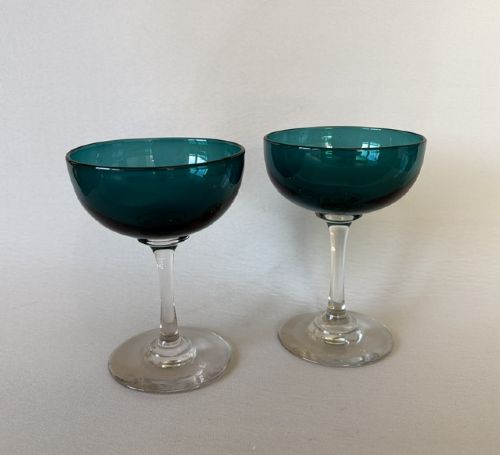
When you search for a coloured glass set, you encounter matching groups of drinking vessels and serving pieces created primarily across the Georgian, Victorian, and Edwardian periods. These gatherings most frequently comprise wine glasses, champagne coupes, and liquor glasses shaped in deep cranberry, emerald green, peacock blue, or amber tones.
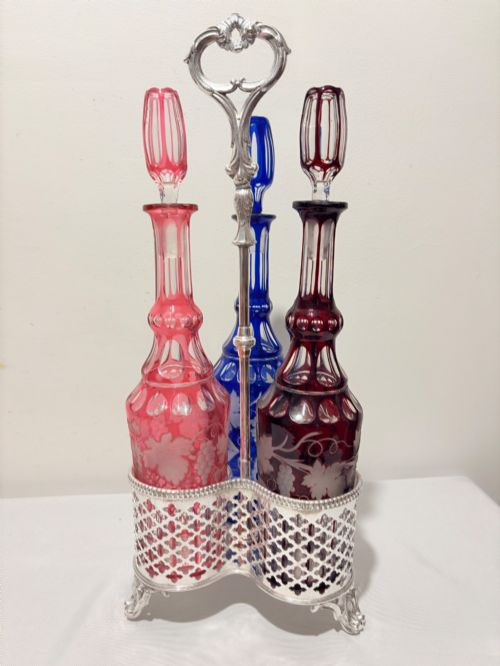
Sets range from pairs and quartets to larger gatherings of six, eight, or fifteen matching items. Alongside table stemware, the search reveals desk accessories containing intaglio seals and silver-plated decanter stands paired with tinted bottles.
How they were made
These pieces rely principally on lead glass and clear glass enriched with metallic oxides to achieve vibrant hues, or finished with layered overlay techniques where coloured glass coats a clear or contrasting core. Makers shaped the molten material by hand-blowing into moulds or free-blowing stemware, followed by wheel-cutting and polishing.
Certain items incorporate silver plate for stands and mounts, while desk sets combine glass seals with fitted wooden boxes.
Coloured Glass Set Retail Price Guide 2026
Typical asking prices for coloured glass set among the pieces listed under this phrase on Sellingantiques today, from the lower quarter to the upper quarter. They describe what is for sale here now, not the wider market.
A desk set includes ten intaglio glass seals, ready for stamping wax letters.
What varies in quality
Quality rests upon the depth and evenness of the colour within the glass, the precision of the hand-blown forms, and the crispness of any cut facets. Superior examples display balanced proportions across every piece in the set, with consistent wall thickness and unblemished surfaces.
The integration of materials, such as cleanly fitted silver-plated stands or finely engraved intaglio seals, distinguishes finer decorative sets from standard utility ware.
The Coloured Glass Set Glossary
- Cranberry Glass
- A rich red-pink glass produced by adding gold chloride to the molten batch. It became particularly popular during the Victorian era for stemware and jugs.
- Overlay Glass
- A technique where a layer of coloured glass is fused over a contrasting base layer, often clear glass. Subsequent cutting through the outer layer reveals the contrasting colour beneath.
- Lead Glass
- Heavy glass containing lead oxide, which increases brilliance and workability. It allows for deeper cutting and a clearer ring when struck.
- Intaglio
- A design carved into the surface so that the impression sits below the flat plane. In desk sets, glass seals utilised this method to stamp wax.
- Champagne Coupe
- A wide, shallow bowl on a stem designed for sparkling wines. Victorian examples often featured coloured bowls paired with clear stems.
Coloured Glass Set: Frequently Asked Questions
What is a coloured glass set used for?
These sets served dining and social functions, from serving wine and liquor at formal meals to holding correspondence tools on a writing desk.
Table stemware brought decorative colour to nineteenth-century dining, while boxed desk sets organised personal correspondence materials.
How do I clean antique coloured glass?
Wash pieces gently by hand in lukewarm water using a mild, non-abrasive detergent. Avoid sudden temperature changes to protect the material.
Dry them immediately with a soft, lint-free cloth to maintain the clarity of the surface and any cut facets.
Are all pieces in a set identical?
Hand-blown items from the Georgian and Victorian periods often show subtle variations in height, bowl shape, and colour depth. These individual differences reflect human craftsmanship rather than industrial uniformity.
Matching sets share the same core form, colour hue, and decorative treatment while retaining the charming traits of individual creation.
How can I tell the period of coloured glass?
Dating relies on observing manufacturing techniques, pontil marks on the base, stylistic traits, and the specific shades of colour used. Georgian pieces often display different bowl proportions compared to late Victorian or Edwardian stemware.
Examining the weight of the lead glass and the presence of associated items like silver-plated stands helps narrow down the era.