


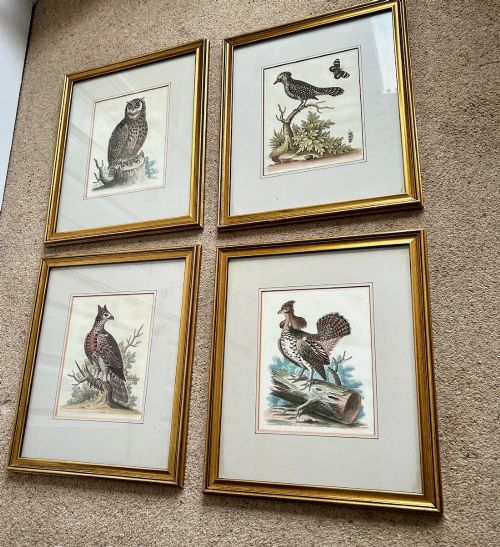


Colour Bird Art Print
A colour bird art print brings the precision of natural history illustration and delicate hand-colouring straight onto the wall.
Colour Bird Art Print
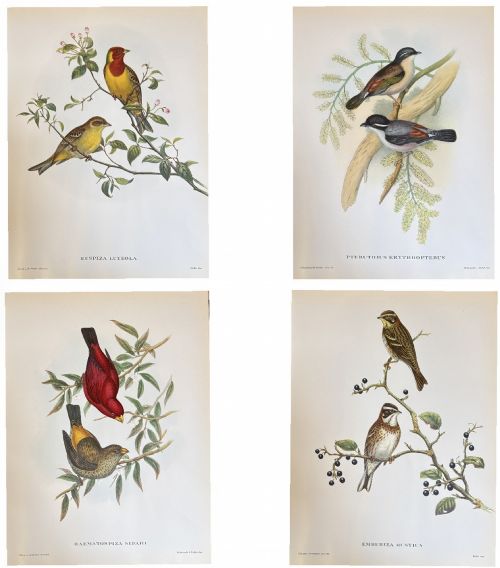
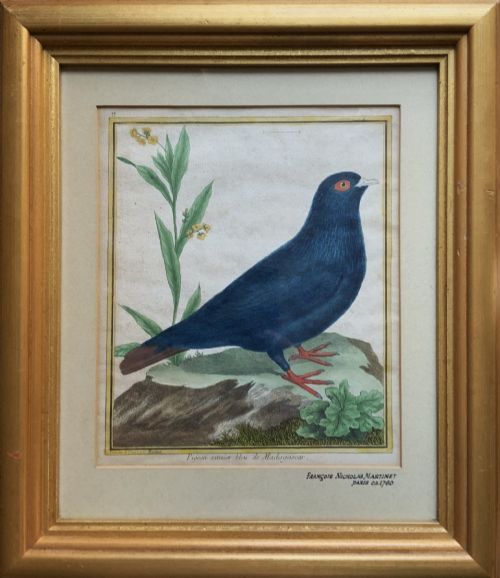
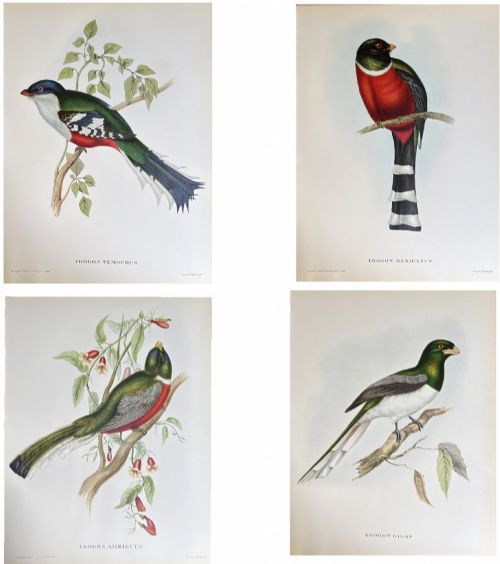
When you search for a colour bird art print, you encounter centuries of ornithological study captured through engraving, lithography, and watercolour on paper. These works range from mid-eighteenth-century plates by George Edwards and François-Nicolas Martinet to nineteenth-century lithographs and mid-twentieth-century tropical prints.
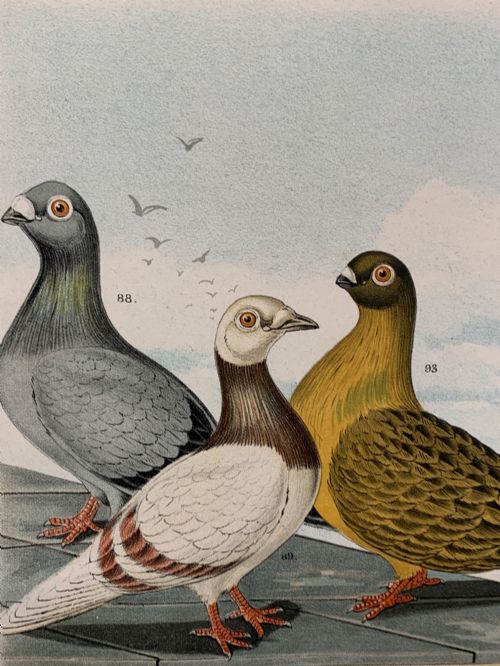
The subjects span pigeon breeds, ducks, parrots, and exotic tropical species, often presented in sets or framed pairs. Surviving examples reflect both scientific recording and decorative framing traditions spanning the Georgian, Regency, and Victorian eras.
How they were made
Printmakers relied on copper plate engraving and lithography on paper to render fine feather details and botanical backgrounds. Artisans then applied watercolour and ink by hand to bring individual plates to life.
Framed versions frequently employ wood, gilt wood, and gold leaf mouldings paired with glass to protect the delicate paper works from atmospheric damage.
Colour Bird Art Print Retail Price Guide 2026
Typical asking prices for colour bird art print among the pieces listed under this phrase on Sellingantiques today, from the lower quarter to the upper quarter. They describe what is for sale here now, not the wider market.
Listings feature paper, ink, and watercolour supported by wood, glass, and gold leaf across Georgian and Victorian periods.
What varies in quality
Quality rests in the crispness of the original plate impression and the subtlety of the hand-applied pigment. Plates with clean lines and stable, vibrant watercolours command greater attention than faded or overworked examples.
The integrity of the paper support and the appropriateness of the framing materials also shape the standing of each piece, distinguishing modest decorative prints from scholarly ornithological plates.
François Nicolas Martinet·George Edwards·William Swainson
The Colour Bird Art Print Glossary
- Engraving
- A printmaking technique where an artist cuts lines into a metal plate to hold ink. This method yields the fine, sharp feather details seen in early ornithological plates.
- Lithography
- A planographic printing process based on the repulsion of oil and water on a limestone surface. It allowed nineteenth-century workshops to produce rich, multi-coloured bird prints efficiently.
- Hand-coloured
- The practice of applying watercolours by hand to a monochrome printed base. This technique enhances the realism of avian plumage on antique paper.
- Gilt wood
- Wood coated with a thin layer of gold leaf or metallic paint. It frequently forms the traditional frames housing nineteenth-century natural history prints.
Colour Bird Art Print: Frequently Asked Questions
How do I care for antique bird prints?
Keep paper works out of direct sunlight to prevent the watercolour pigments from fading over time. Ensure they hang in rooms with stable humidity levels to protect both the paper and any historic wooden frames.
Avoid using chemical cleaners on the glass. A dry microfiber cloth is best for dusting the frame gently.
Are these prints from original publications?
Many examples originate from 18th and 19th-century ornithological volumes and natural history serials. Publishers issued these plates to document global bird species for scientific and collector markets.
Inspect the paper edges and watermark signs where visible to understand the historical context of each individual plate.
How should I display a set of prints?
Sets of four, six, or more prints look striking when hung in a uniform grid or a balanced linear row. Matching the frames creates a cohesive gallery wall effect.
Allow enough wall space between each print to let the individual bird subjects stand out clearly.
What is the difference between an engraving and a lithograph?
Engravings use incised metal lines that transfer sharp, precise outlines onto paper. Lithography relies on chemical processes on stone, allowing for softer tonal gradations and richer areas of colour.
Both techniques represent standard methods for producing natural history art across different centuries.