








Colored Glass Stemware
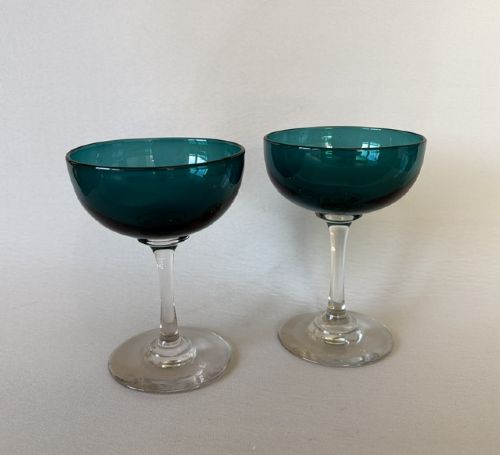
Coloured glass stemware brings brilliant hues to the table through Georgian, Victorian, and Edwardian drinking vessels.
Colored Glass Stemware
Coloured glass stemware comprises drinking vessels shaped for wine, champagne, ale, and spirits, finished in distinct hues rather than clear crystal. When searching for coloured glass stemware, buyers encounter pieces ranging from single Georgian dram glasses to large Victorian sets.
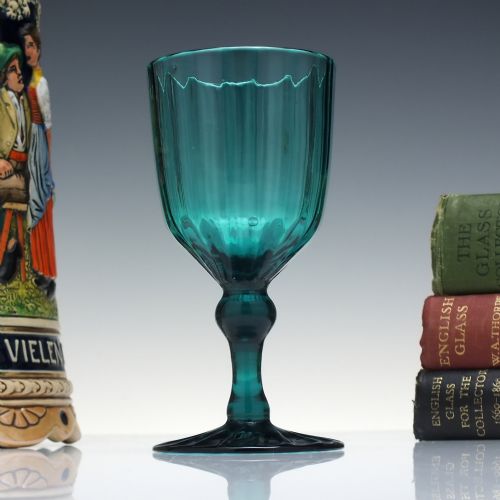
The selection on this page centres heavily on Victorian cranberry glass alongside Georgian green and turquoise vessels. Forms vary from tall Edwardian wine goblets and champagne coupes to tulip-shaped glasses and liquor glasses.
How they were made
These items rely on hand-blown glass and lead glass techniques, often utilising rib moulding or colour twist methods to shape the vessel. Artisans added metallic oxides to the molten batch to achieve distinct tones such as cranberry, emerald, and aqua.
Enamel decoration and hand-cutting further embellished the surfaces of specific Georgian and Victorian examples. The resulting pieces combine traditional blowing methods with distinct colouration across periods from the eighteenth century onwards.
Colored Glass Stemware Retail Price Guide 2026
Typical asking prices for colored glass stemware among the pieces listed under this phrase on Sellingantiques today, from the lower quarter to the upper quarter. They describe what is for sale here now, not the wider market.
Listings span the Georgian, Victorian, and Edwardian periods, featuring materials such as cranberry glass, lead glass, and hand-blown glass.
What varies in quality
Depth of colour and consistency across a matched set separate ordinary examples from finer specimens. Glass weight, clarity of the metal, and the precision of rib moulding or twist stems dictate the grade of each vessel.
The crispness of hand-applied enamel and the overall balance of the stem reveal the maker's skill. Full sets originating from the Georgian and Victorian eras command attention through uniform hue and refined proportions.
The Colored Glass Stemware Glossary
- Cranberry glass
- A rich pinkish-red glass produced by adding gold chloride to the molten batch. It appears frequently in Victorian table services.
- Colour twist
- A decorative stem featuring internal threads of coloured glass twisted within the clear metal. This technique is characteristic of eighteenth-century drinking vessels.
- Rib moulding
- A manufacturing method where glass is blown into a patterned mould to create raised vertical ribs along the bowl or stem. It adds texture and strength to the vessel.
- Dram glass
- A small historical drinking glass designed for serving a single measure of spirits. These compact vessels date predominantly to the Georgian period.
Colored Glass Stemware: Frequently Asked Questions
Are these glasses safe for daily use?
Most antique stemware handles careful use, though older pieces require gentle handling during toasts and washing. Many owners reserve them for special occasions.
Lead glass and hand-blown items from the Georgian and Victorian periods benefit from being hand-washed and stored securely away from edge hazards.
How can I tell Georgian from Victorian glass?
Georgian glass often exhibits deeper pontil marks, distinct weight, and specific stem formations like colour twists or simple drawn bowls. Victorian pieces frequently showcase vibrant cranberry tones and moulded patterns.
Examining the overall silhouette and manufacturing traits helps distinguish the eighteenth-century examples from nineteenth-century productions.
Can I mix different colours on the table?
Mixing hues such as cranberry, emerald green, and turquoise creates a vibrant, historically grounded table setting. Victorian dining traditions frequently embraced colourful variety.
Matching sets remain popular, but pairing single glasses or smaller pairs from similar eras offers an eclectic display.