



Colonial Trunk
A colonial trunk is a sturdy box built for travel and storage across distant empires, prized for dense tropical timbers and robust brass mounts.
Colonial Trunk
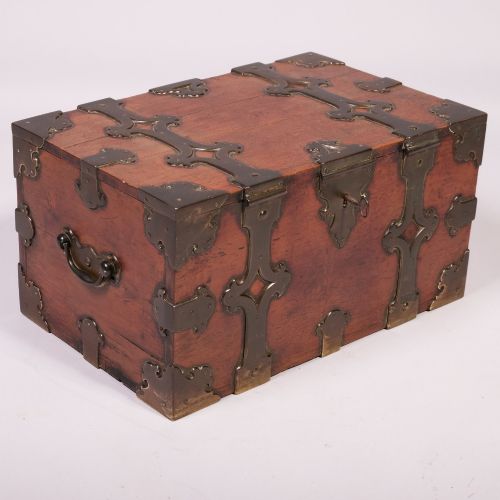
A colonial trunk represents a distinct category of travel and storage furniture produced across various global trade routes and British outposts from the seventeenth century onwards. These chests served officers, merchants, and administrators who required durable containers for personal belongings during long sea voyages and overland journeys.
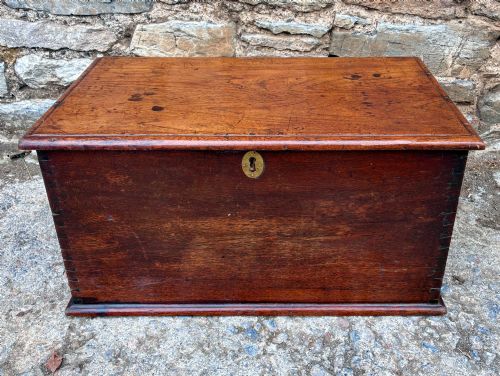
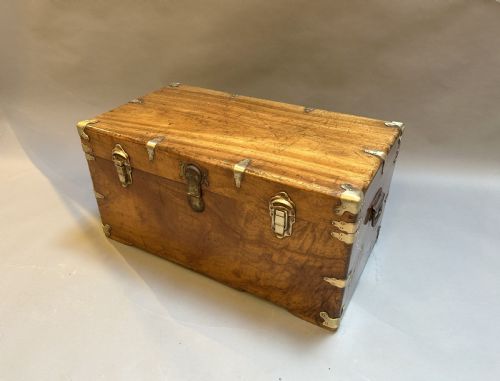
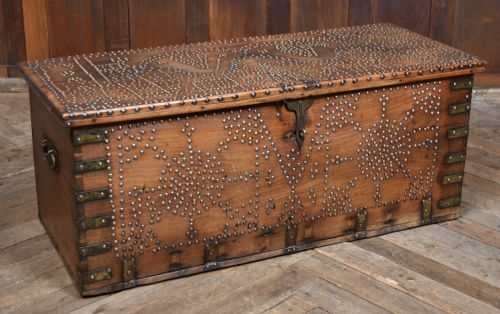
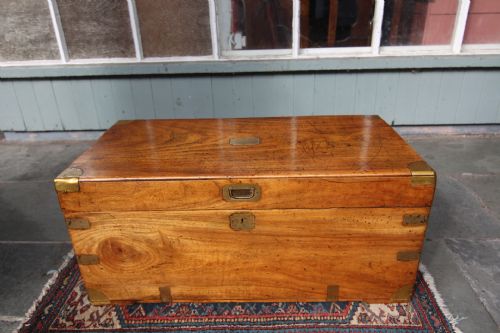
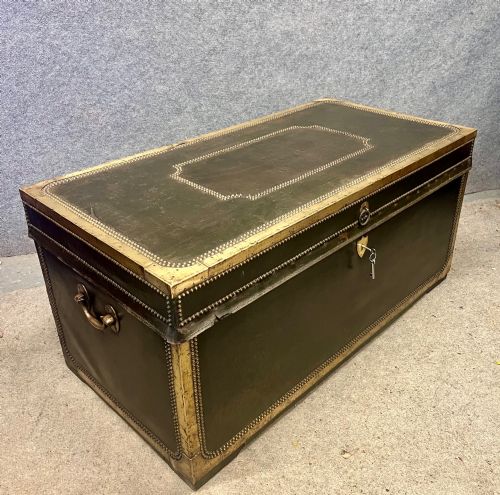
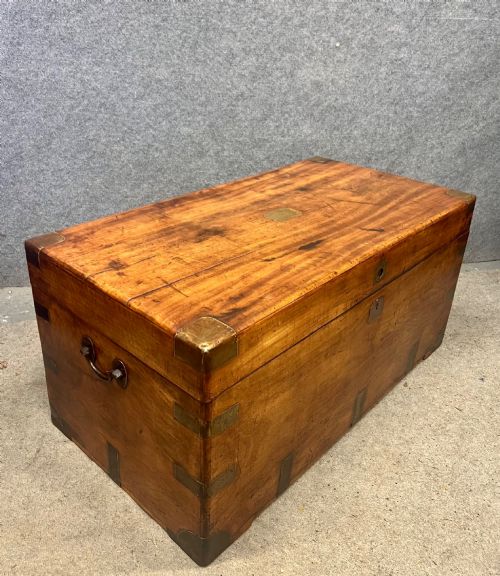
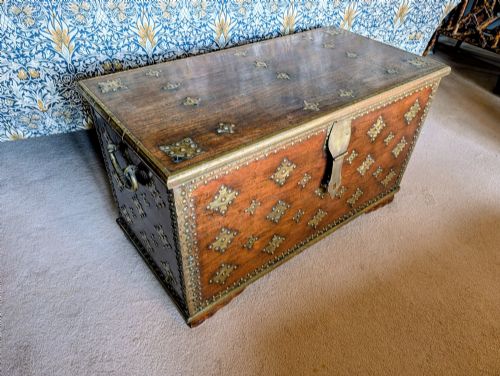
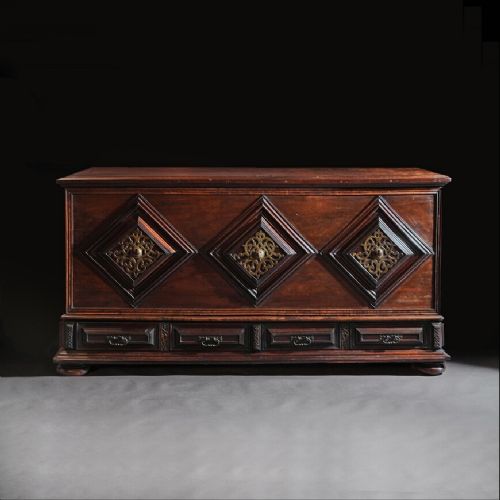
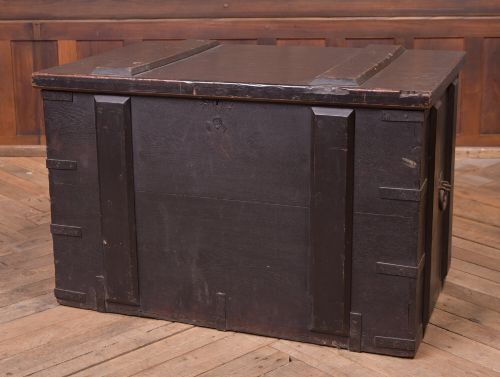
The versions most commonly met on this page include nineteenth-century camphor wood and teak chests, often featuring heavy brass binding and recessed carrying handles. Alongside standard rectangular blanket boxes and deed boxes, the selection encompasses specialised forms such as two-part military campaign chests, Zanzibar storage boxes, and Portuguese or Dutch colonial coffers.
How they were made
Cabinet makers utilised dense, durable tropical timbers including camphor wood, teak, padouk, and mahogany, which resisted humidity and insect damage during transit. These woods were frequently paired with contrasting ebony details and robust iron or brass mounts to reinforce corners and edges against the rigours of travel.
Construction techniques prioritised portability and strength, employing dovetailed joints, hinged lift-up tops, and secure locking mechanisms. Many examples incorporated iron or brass carrying handles mounted flush into the sides, while campaign variations were often built in two stacked sections for easier handling.
Colonial Trunk Retail Price Guide 2026
Typical asking prices for colonial trunk among the pieces listed under this phrase on Sellingantiques today, from the lower quarter to the upper quarter. They describe what is for sale here now, not the wider market.
The listings span from the seventeenth century through to the early twentieth century, featuring materials such as camphor wood, teak, padouk, and brass.
What varies in quality
Quality in these pieces rests primarily on the integrity of the timber selection and the substance of the metalwork. Superior examples display dense, well-figured woods coupled with heavy, hand-beaten or cast brass straps, corners, and escutcheons rather than thin plated alternatives.
The refinement of the joinery and the retention of original hardware significantly influence the character of a piece. Finer items exhibit precise dovetailing, smooth-working internal compartments, and original locking mechanisms that demonstrate the skill of the regional workshops where they were assembled.
The Colonial Trunk Glossary
- Campaign chest
- A portable set of drawers or a trunk designed to dismantle or travel easily, typically fitted with recessed brass handles and corner brackets.
- Camphor wood
- A fragrant tropical hardwood valued for its insect-repellent properties, frequently utilised for nineteenth-century storage trunks and blanket boxes.
- Zanzibar chest
- A heavily brass-studded storage box originating from or associated with the trade routes of the East African coast and western India, often constructed in teak or padouk.
- Brass bound
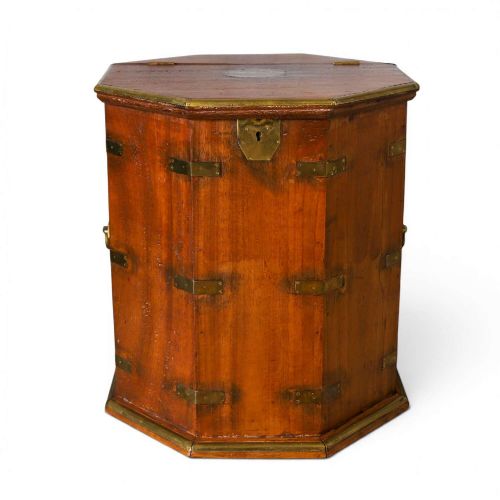
- A method of reinforcing the structural corners and edges of a wooden chest with metal strips and brackets to withstand heavy transit.
- Coffer
- A large, deep box with a hinged lid, traditionally used for storing valuables, textiles, or documents.
Colonial Trunk: Frequently Asked Questions
What is a colonial trunk?
A colonial trunk is a heavy storage box made in regions influenced by European trade and colonisation, built from dense hardwoods like teak and camphor.
These chests were designed to transport belongings securely across oceans and continents during long periods of travel.
How were these trunks used?
They served primarily as luggage and secure storage for military officers, merchants, and colonial administrators moving between outposts.
Inside the home, they doubled as blanket boxes, deed containers, or sturdy tables due to their flat, reinforced lids.
How do I care for camphor wood?
Camphor wood requires minimal maintenance beyond regular dusting and occasional treatment with suitable natural waxes to nourish the grain.
Keep these pieces away from direct heat sources and extreme humidity fluctuations to prevent the timber from splitting.
How can I tell the age of a trunk?
Age is determined by examining the construction methods, the type of timber, and the style of the brass hardware and locks.
Earlier seventeenth and eighteenth-century examples often feature heavier hand-forged iron or brass mounts and simpler joinery than later Victorian iterations.