
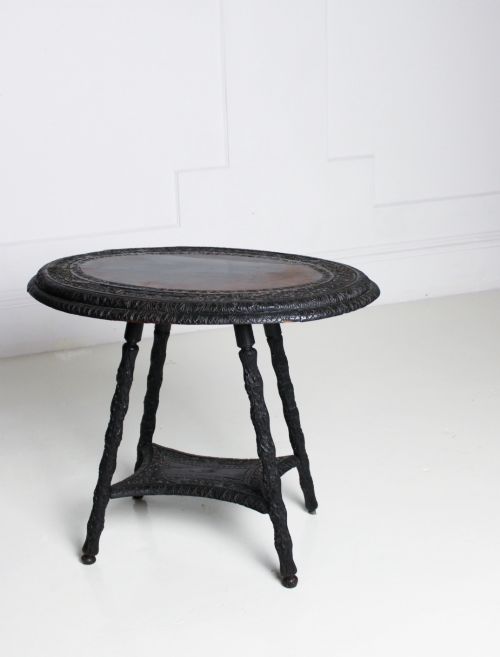


Colonial Teak Coffee Table
A colonial teak coffee table brings dense, richly carved timber and campaign metalwork straight from nineteenth-century workshops into modern sitting rooms.

Colonial Teak Coffee Table
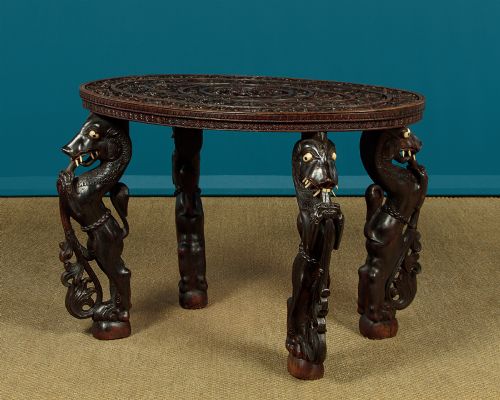
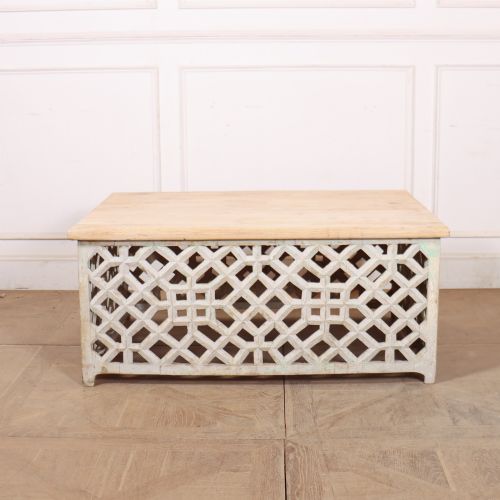
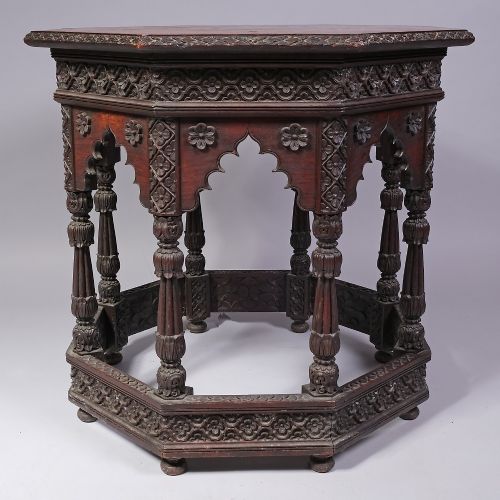
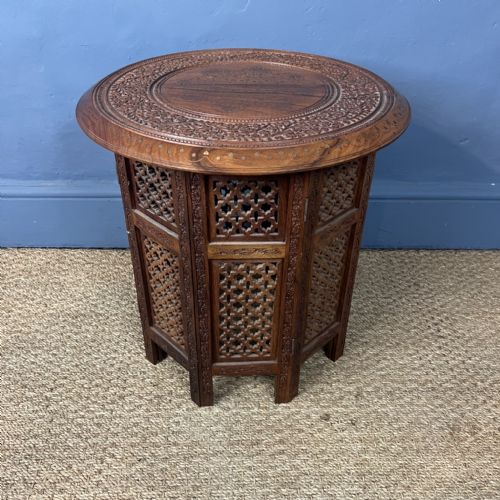
A colonial teak coffee table typically originates from nineteenth-century Anglo-Indian, Anglo-Burmese, and Victorian colonial contexts. These pieces often adapt traditional furniture forms, including low tables, occasional tables, and converted trunks, to suit modern surface heights. The selection ranges from heavily carved figural designs featuring elephants and camels to geometric brass-inlaid surfaces.
Makers utilised dense Asian hardwoods alongside imported materials, creating sturdy pieces designed for colonial administration and trade. Alongside dedicated coffee tables, buyers regularly encounter side tables, ottomans, and campaign chests functioning in contemporary spaces as low tables. The physical forms span circular, octagonal, shield-shaped, and folding formats produced across various decades from the Georgian era through the early twentieth century.
Materials and construction
Solid teak, rosewood, and general Indian hardwood form the structural foundation of these pieces, providing heavy weight and natural resistance to decay. Artisans shaped these dense timbers using hand-carving techniques, producing deep relief motifs of foliage and animals.
Metal elements such as brass inlay, iron studs, and campaign mountings integrate directly into the wooden surfaces. Bone and bone inlay appear alongside brass wire work to create intricate geometric patterns across tabletop panels.
Several tables stand entirely supported by carved wooden elephants and camels.
Evaluating the craftsmanship
Quality rests primarily on the depth and crispness of the hand-carving in the timber. Superior examples display sharply defined figures and foliage with minimal wear to high points, whereas simpler pieces show softer, shallower incision.
The integration of secondary materials dictates overall refinement. Tightly fitted brass inlay and secure bone sections indicate higher workshop standards, whereas loose mounts or missing inlay suggest lesser execution.
Hoshiarpur
The Colonial Teak Coffee Table Glossary
- Anglo-Indian
- Descriptive term for furniture made in India during the British period, often combining British furniture forms with local carving traditions. These pieces frequently employ native hardwoods like teak.
- Campaign table
- Portable furniture designed for military officers on the move, typically featuring folding bases or removable trays for easy transport. They utilise robust timbers and brass hardware to withstand travel.
- Hoshiarpur
- A North Indian city renowned for intricate wood carving and inlay work, particularly involving brass and bone. Pieces from this tradition display dense geometric and floral patterns.
- Zanzibar chest
- A heavy wooden storage trunk characterised by brass studding, straps, and figurative corner brackets reflecting trade routes between India and East Africa. They provide deep storage beneath sturdy lids.
Colonial Teak Coffee Table: Frequently Asked Questions
What defines a colonial coffee table?
These tables combine traditional British furniture dimensions with South or Southeast Asian materials and hand-carving techniques. They originate from periods of colonial trade and administration.
Most examples utilise dense timbers like teak or rosewood, often accented with brass inlay, figural supports, or folding mechanisms designed for portability.
How do I identify a Burmese piece?
Burmese items frequently feature distinct regional carving styles, including elephant leg supports and deep relief panels of local flora and fauna. Artisans in Burma worked primarily with native teak.
They share structural similarities with Anglo-Indian items but carry specific decorative motifs characteristic of nineteenth-century Burmese workshops.
Are these tables sturdy enough for daily use?
Built from dense hardwoods like solid teak and rosewood, these tables possess immense structural durability. Their original uses in colonial households and military campaigns demanded robust construction.
Routine living room placement suits their heavy frames well, provided the joints and inlaid elements receive proper care and stable indoor humidity.
How should I clean brass inlaid surfaces?
Dust inlaid surfaces gently with a dry, soft cloth to prevent abrasive particles from scratching the surrounding timber. Avoid harsh commercial metal polishes that might stain the aged teak or rosewood.
Preserving the natural patina requires minimal intervention, using only gentle, non-moisture methods to maintain both the metal wire and the carved wood.