
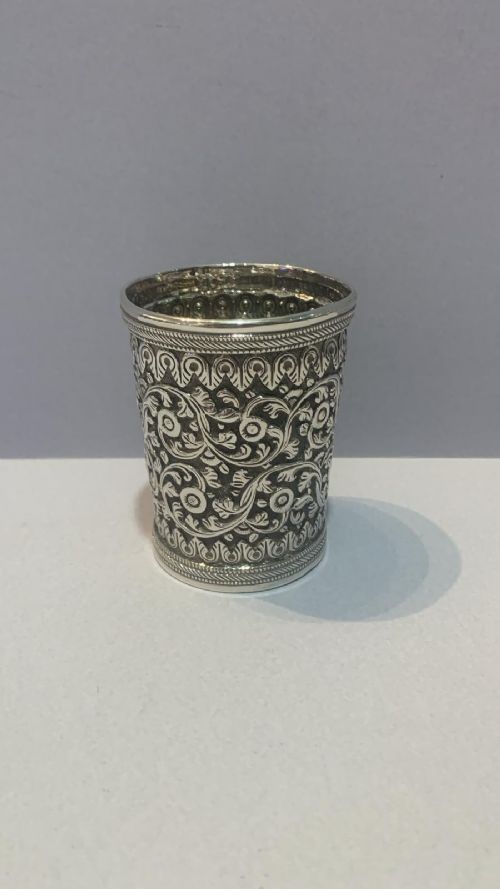


Colonial Silver Vessel
A colonial silver vessel brings together intricate non-Western craftsmanship and British colonial forms from the nineteenth century.
Colonial Silver Vessel
A colonial silver vessel represents the rich intersection of traditional local metalwork techniques and European forms during the nineteenth century. These items include drinking vessels, lidded containers, bowls, and decorative items produced across various British colonial territories and regions under British influence.
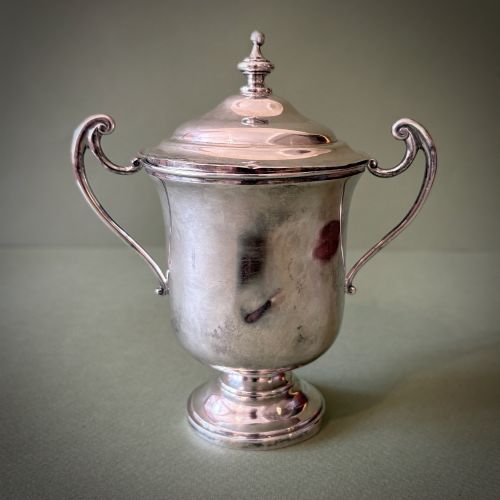
Buyers searching for a colonial silver vessel will most frequently encounter Anglo-Indian and Indian regional pieces dating from around eighteen-ninety to nineteen-hundred. Common forms appearing on this page range from heavy bowls and lidded jars to footed vases, beakers, and trinket boxes.
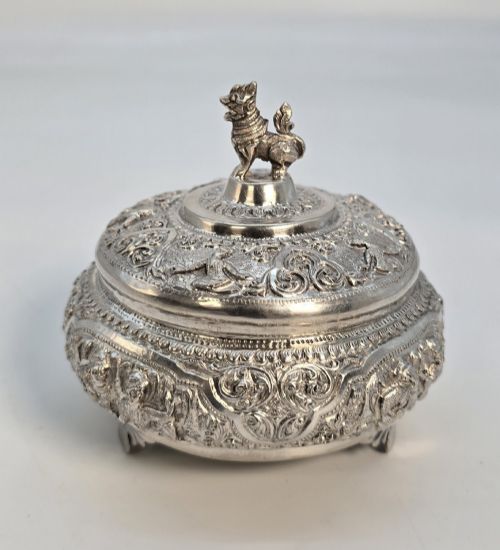
The regional diversity within these pieces is wide, spanning from Kutch and Gujarat to Burma, Ceylon, and early American production. Each region imparted distinct decorative vocabularies onto standard European vessel shapes, creating an eclectic aesthetic.
How they were made
The makers utilised solid silver, sterling silver, and gold plate, shaping heavy metal forms that could support deep, intricate surface work. Metal was hammered and raised into cups, baluster vases, and bowls before receiving ornamentation.
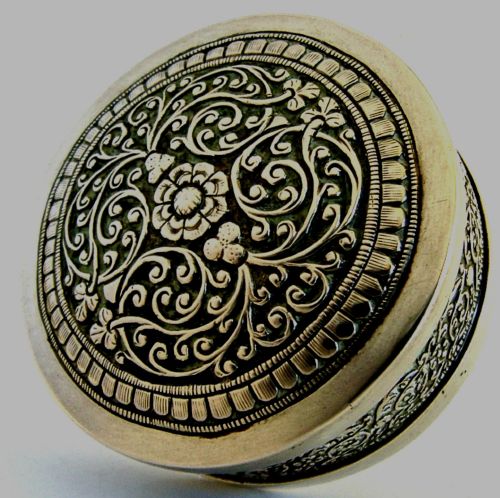
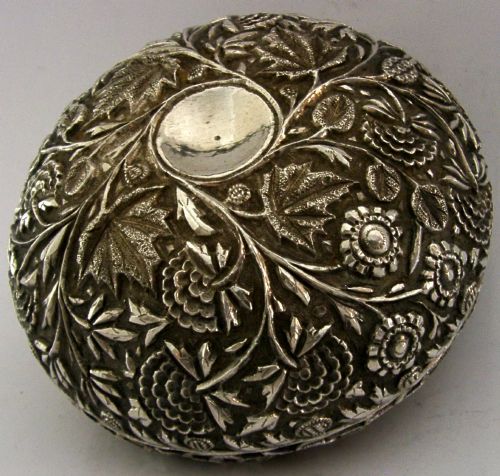
Decoration relied heavily on repoussé and embossing techniques to create high-relief folk motifs, dense foliage, and narrative scenes across the exterior of the vessel. Artisans worked the metal by hand, pushing and punching the silver from both sides to achieve deep textural contrast.
What varies in quality
Quality in a colonial silver vessel rests upon the crispness and depth of the hand-embossed decoration relative to the weight of the silver. Superior examples maintain structural thickness while displaying exceptionally fine, deeply chased details that retain their sharpness.
The execution of regional motifs distinguishes ordinary workshop output from masterwork production, particularly in specialised regional centres like Kutch. Well-balanced proportions on larger baluster forms and footed bowls also elevate the standing of a piece.
Hodsoll Collection
The Colonial Silver Vessel Glossary
- Repoussé
- A metalworking technique where the artisan hammers the design from the reverse side to create a raised pattern in relief. This method defines the surface texture of many nineteenth-century vessels.
- Baluster
- A vertical architectural form featuring a swelling lower portion tapering towards a narrow neck. This silhouette appears frequently in larger nineteenth-century vases.
- Beaker
- An open, cylindrical drinking vessel without handles or a stem. Examples in this category often feature dense regional ornamentation around the exterior wall.
- Betel Nut Container
- A lidded vessel specifically designed to hold aromatic nuts and leaves associated with traditional social customs. These containers often feature intricate folk embossing.
- Sterling Silver
- An alloy consisting of ninety-two point five percent silver and seven point five percent other metals, usually copper. It provides the necessary durability for functional vessels.
Colonial Silver Vessel: Frequently Asked Questions
What is a colonial silver vessel?
A colonial silver vessel is a decorative or functional metal object made during the nineteenth century within British colonies or influenced territories. These pieces combine traditional local craftsmanship with British or European forms.
Items range from large presentation bowls and baluster vases to small betel nut containers and christening mugs, reflecting the diverse cultural exchanges of the period.
How do I identify Kutch silver?
Kutch silver originates from the Kutch region in western India and is typically recognised by its densely packed, fine floral and foliate scrollwork. Artisans in this area mastered deep repoussé work.
Pieces from this tradition often cover the entire exterior surface in intricate botanical motifs, sometimes incorporating animal or architectural figures among the foliage.
How were these vessels used?
These pieces served both practical functions and decorative roles in colonial households, ranging from drinking vessels to storage containers for small valuables. Many acted as display items that showcased the wealth and social standing of the owner.
Specialist forms like christening mugs and betel nut containers fulfilled specific cultural and familial rituals unique to their region of origin.
How do I care for solid silver?
Solid silver requires gentle cleaning with a soft cloth to remove dust and prevent the buildup of tarnish in the deep recesses of embossed decoration. Avoid abrasive polishes that can wear away fine surface details.
Store these vessels in stable environments away from extreme humidity and direct sunlight to preserve the finish of the metal and any original gilding.