




Colonial Oil Painting
A colonial oil painting brings home centuries of global history through canvases executed across the British, Spanish and Latin American empires.
Colonial Oil Painting
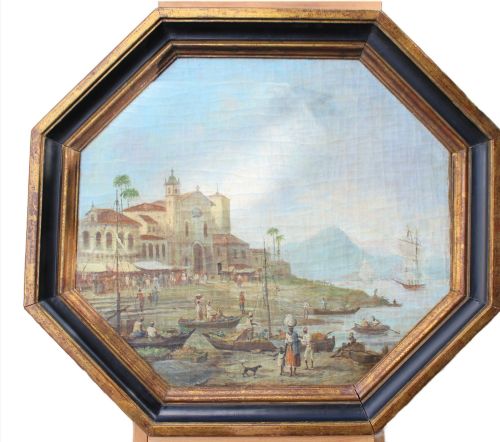
A colonial oil painting encompasses works originating from regions under foreign rule, particularly within Spanish colonial and British imperial territories from the seventeenth century onward. These artworks record distant landscapes, religious visions, and portraiture of colonial figures commissioned by officials, governors, and wealthy settlers.
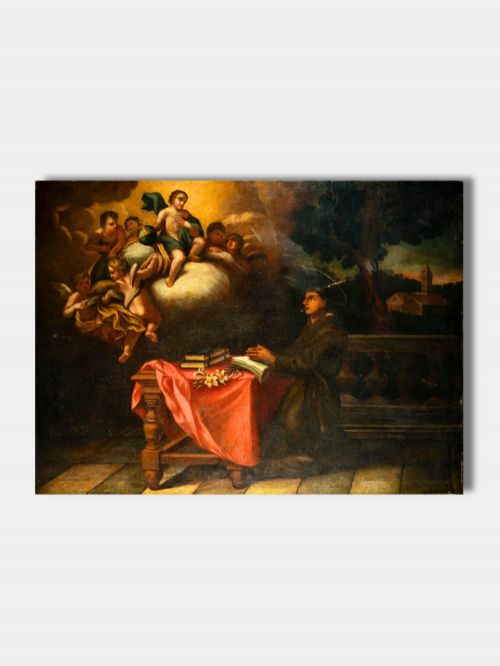
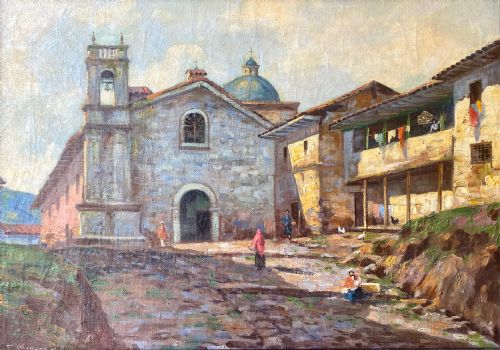
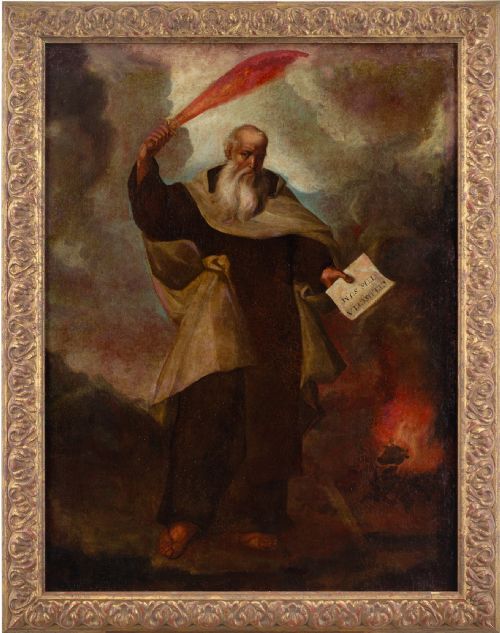
Buyers on this page most frequently encounter portraits, religious icons, and regional scenes spanning the seventeenth, eighteenth, and nineteenth centuries. Examples range from monumental Spanish colonial religious subjects to British Indian sporting portraits and Latin American street scenes.
Materials and construction
These works are executed primarily in oil paint upon linen or canvas stretched over wood frames, capturing the light and atmosphere of distant climates. Surviving pieces often retain period frames fashioned from giltwood or plain wood.
Regional materials and techniques reflect the interchange between European artistic traditions and local craftsmanship during the seventeenth, eighteenth, and nineteenth centuries. Pigments adhere directly to woven canvas supports, sometimes enhanced with gold leaf.
Colonial Oil Painting Retail Price Guide 2026
Typical asking prices for colonial oil painting among the pieces listed under this phrase on Sellingantiques today, from the lower quarter to the upper quarter. They describe what is for sale here now, not the wider market.
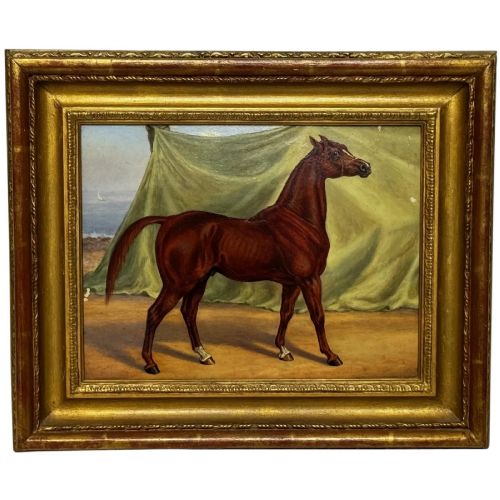
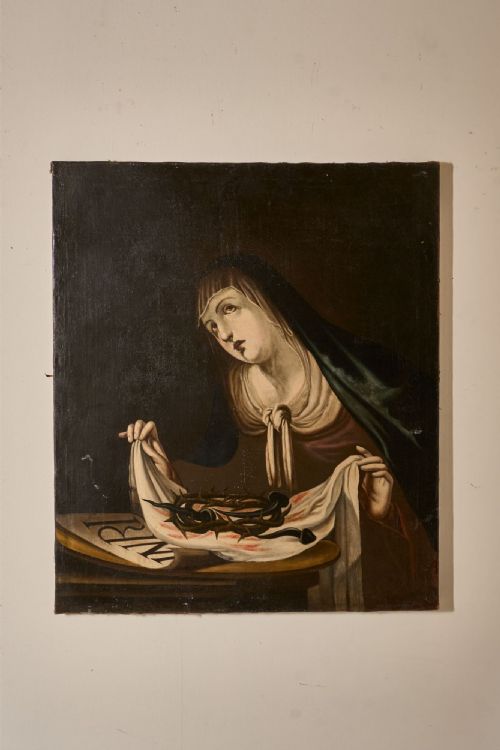
A purebred Arabian horse painted in Bombay stables rubs shoulders with a seventeenth-century depiction of Mary.
Assessing quality
Quality rests upon the subtlety of brushwork, the handling of light, and the accuracy of anatomical or architectural detail within the composition. Works associated with known regional schools or documented artists exhibit superior draughtsmanship.
The preservation of the original canvas and paint surface dictates the standing of a piece. Retaining untouched pigment layers without extensive later retouches elevates the historical and artistic merit of the painting.
Arthur William Devis·Juan Ruiz Soriano·Gaspar de Figueroa·John Douglas Perrett
The Colonial Oil Painting Glossary
- Oil on Canvas
- Pigment bound in a drying oil applied to a woven fabric support. This was the primary medium for easel paintings across European and colonial workshops.
- Spanish Colonial
- Art produced within the overseas territories of the Spanish Empire, heavily characterised by religious iconography and baroque influences.
- Giltwood
- Wood carved and prepared with a thin layer of gold leaf applied to the surface. It forms the decorative framing typical of seventeenth and eighteenth-century pictures.
- Impressionism
- A style of painting emphasising small, thin brush strokes and accurate depiction of light. It appears in later nineteenth and twentieth-century regional landscapes.
- Madrid School
- A regional grouping of painters active in the Spanish capital during the seventeenth century. Their output is known for dramatic chiaroscuro and religious devotion.
Colonial Oil Painting: Frequently Asked Questions
What is a colonial oil painting?
A colonial oil painting is a work of fine art produced in territories governed by European empires, spanning regions such as Latin America, India, and New Zealand. These canvases document the people, faith, and landscapes encountered during the era of expansion.
They serve as historical windows into colonial society, depicting governors, religious subjects, local street scenes, and sporting events from the seventeenth century onwards.
How do I date a colonial painting?
Dating relies upon stylistic markers, costume details, and written inscriptions or labels attached to the reverse of the canvas or frame. Portraits often record specific events, such as horse races or gubernatorial terms, which provide a precise timeframe.
Material analysis of the canvas weave and stretcher construction also helps confirm whether a painting dates to the seventeenth, eighteenth, or nineteenth century.
Where were these paintings produced?
These works were created in administrative centres and remote outposts across the British and Spanish empires. Production occurred in locations as varied as Madrid-influenced South American workshops, British colonial India, and nineteenth-century New Zealand.
Artists ranged from travelling European painters recording foreign vistas to local practitioners trained in European academic traditions.
How should I display an oil painting?
Displaying an antique canvas requires a stable environment away from direct sunlight and strong sources of heat. Maintaining moderate humidity prevents the canvas from slackening and protects the underlying wood stretcher.
Exposing the painting to steady indoor conditions ensures the oil pigments and any original giltwood framing remain preserved for years to come.