



Colonial Carved Seats
Colonial carved seats gather heavy woods, intricate relief work and deep regional histories into functional furniture that anchors a room.
Colonial Carved Seats
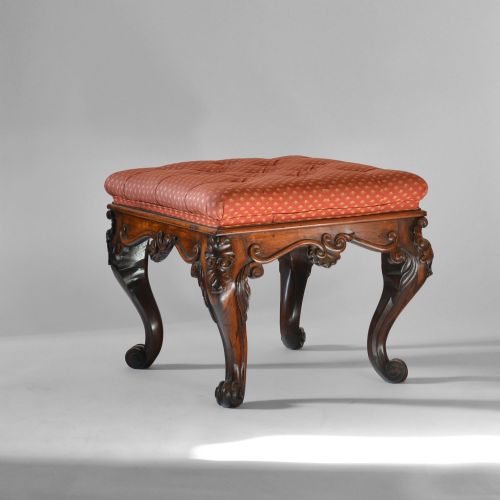
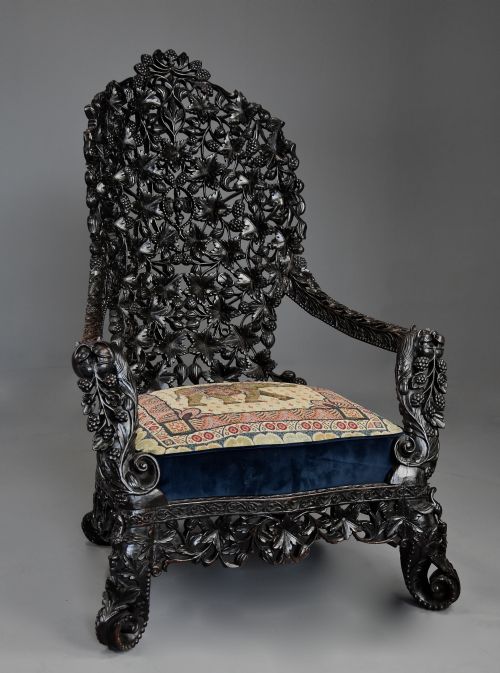
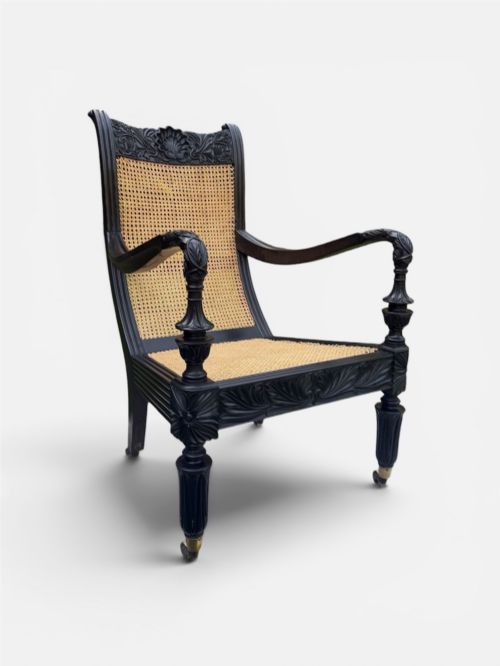
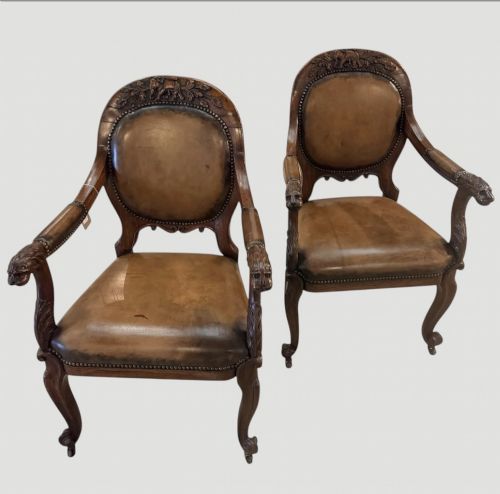
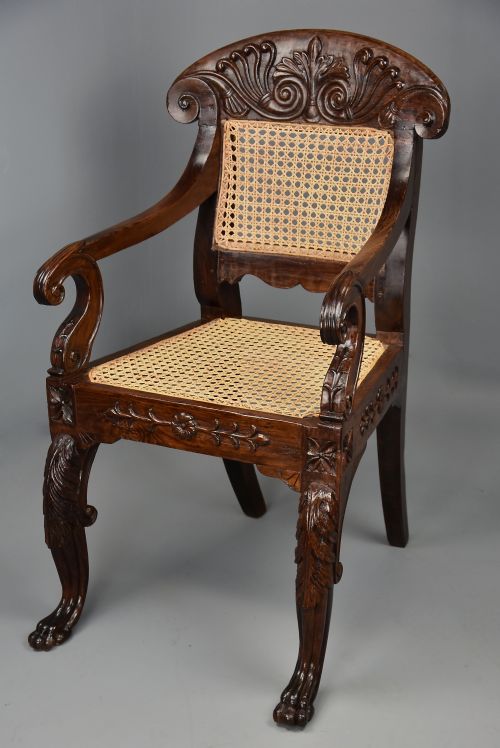
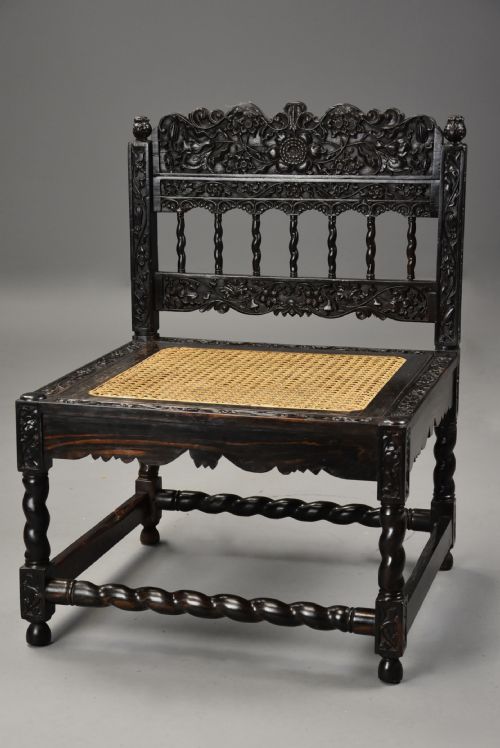
Colonial carved seats encompass armchairs, side chairs, dining chairs, benches, stools and day forms produced across various global territories under European influence. You will frequently encounter Anglo-Indian, Ceylonese, Burmese and Spanish Colonial examples that reflect the distinct aesthetic crossovers of their respective eras.
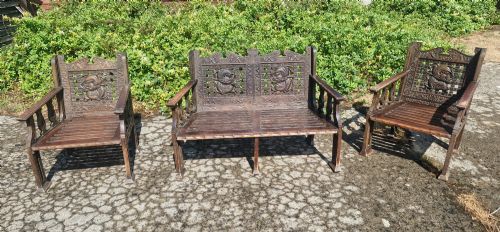
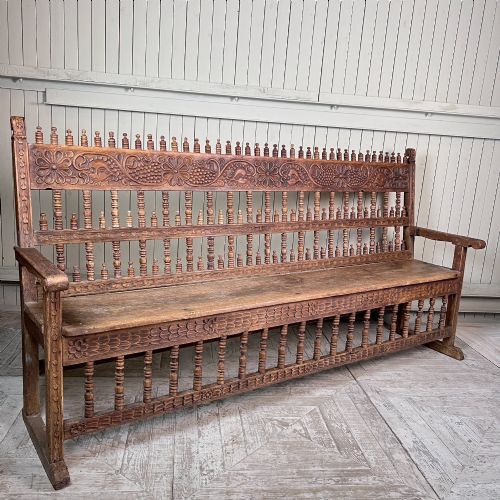
The selection ranges from compact stools and side chairs to grand library armchairs, conservatory suites and lengthy veranda benches. Dating spans from the seventeenth century through the Victorian period and into the early twentieth century, showing periods like Regency, Cape Dutch and Batavian baroque.
Makers utilised native timbers to construct forms suited to both tropical verandas and grand British estate rooms. These pieces combine indigenous carving traditions with European seating formats, creating heavy, durable furniture designed for climate and comfort.
Materials and construction
Craftsmen relied on dense tropical timbers including rosewood, teak, padouk, ebony, satinwood and assorted heavy hardwoods that resisted humidity and supported deep chisel work. These timbers were carved while green or seasoned carefully before receiving elaborate relief ornamentation depicting foliage, animals and geometric motifs.
Structural elements frequently incorporated woven cane, rattan or leather alongside solid wood panels and upholstered drop-in seats. Joinery techniques balanced traditional peg construction with European framing methods to ensure stability across expansive benches and heavy armchairs.
Several pieces feature hand-carved elephants discreetly stationed beneath armrests and along window seats.
Assessing craftsmanship and finish
Quality rests in the crispness and depth of the hand-carved detail, where superior examples exhibit sharp undercut foliage and expressive animal or human figures rather than shallow, mechanical scoring. The choice and figure of the timber also dictate merit, with dense rosewoods and solid ebonies holding greater presence.
Proportion and structural integrity separate fine seating from heavier, awkward utilitarian builds. The best pieces maintain balanced lines in their scroll backs, elbow supports and turned legs despite the immense weight of the dense hardwoods used.
The Colonial Carved Seats Glossary
- Anglo-Indian
- Furniture made in India by local craftsmen for British residents, combining European forms with Indian carving styles. These items often feature dense rosewood or teak.
- Padouk
- A heavy, durable tropical hardwood with a reddish hue used extensively in colonial cabinet making. It takes a fine carved finish.
- Cane
- Woven rattan strips used for seat panels and backs in tropical furniture to allow airflow. It requires careful tension during installation.
- Veranda bench
- A long seating form designed for shaded outdoor porches in colonial climates. They frequently feature deep seats and ornate backrests.
- Ceylonese
- Pertaining to Ceylon, now Sri Lanka, known for distinct carved ebony and satinwood seating. These pieces often display elaborate floral motifs.
Colonial Carved Seats: Frequently Asked Questions
How do I care for antique colonial seats?
Keep these heavy hardwood items away from direct heat sources and sudden humidity changes to prevent timber splitting. Feed the wood occasionally with appropriate wax and protect cane panels from sharp impacts.
Vacuum carved recesses gently with a soft brush attachment to remove dust without snagging brittle fibres. Lift chairs from the frame rather than the arms or decorative crest rails.
Were these seats made for export or local use?
Colonial seating served both expatriate European officials living abroad and export markets back in Britain and Europe. Many pieces furnished plantation houses, clubs and administrative offices.
Over time, returning officers brought these heavy hardwood suites home to country houses and town residences, establishing their popularity in British interiors.
How do I distinguish regional styles?
Ceylonese and Indian pieces typically showcase dense floral relief carving in ebony or rosewood, while Burmese examples often utilise thick teak with deep undercut figures. Spanish Colonial and Cape Dutch seating leans towards robust structural framing.
Examine the secondary woods, turning styles and fastener types to confirm the regional origin workshop traditions.
Can I use these chairs for everyday dining?
Many dining chairs, armchairs and side chairs remain sturdy enough for daily use if the joints and cane work are sound. Solid hardwood construction provides exceptional durability.
Ensure that seat heights and depths suit modern table standards before arranging a full suite for regular dining.