


Collectors Cabinet Box
A collectors cabinet box organises small treasures on a tabletop, offering fitted drawers or glass display spaces suited to specimens and keepsakes.
Collectors Cabinet Box
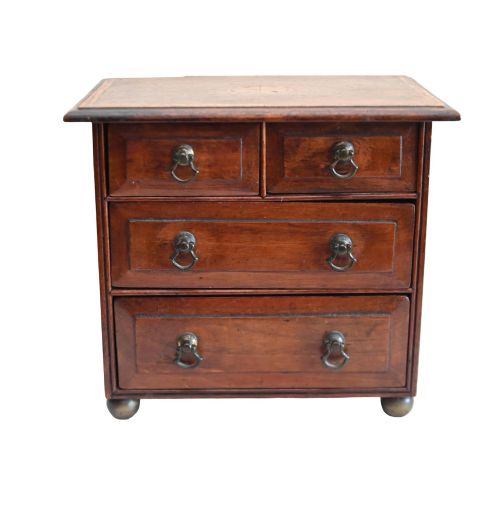
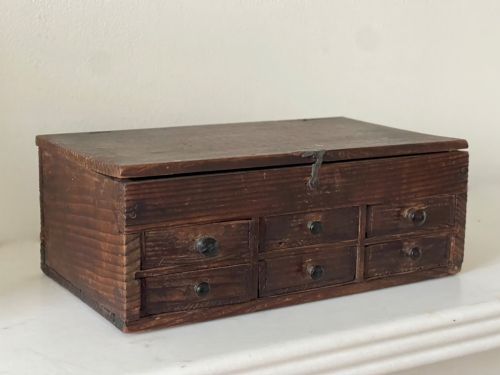
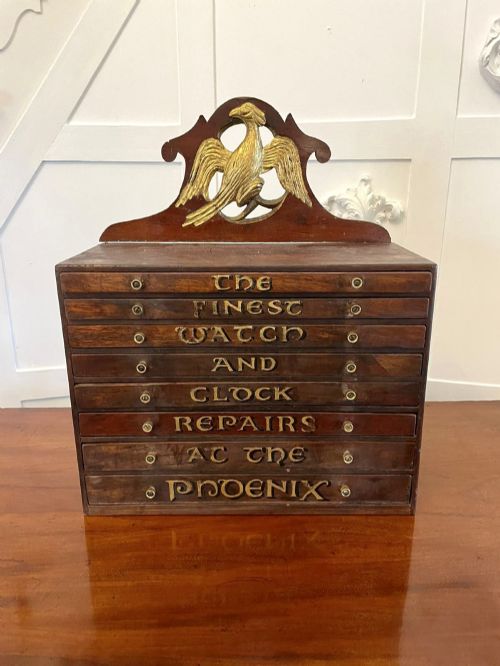
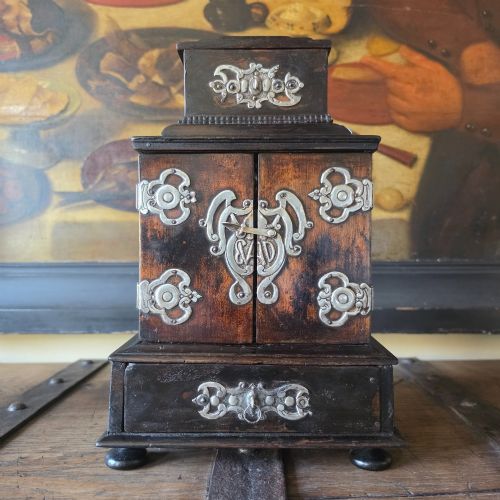
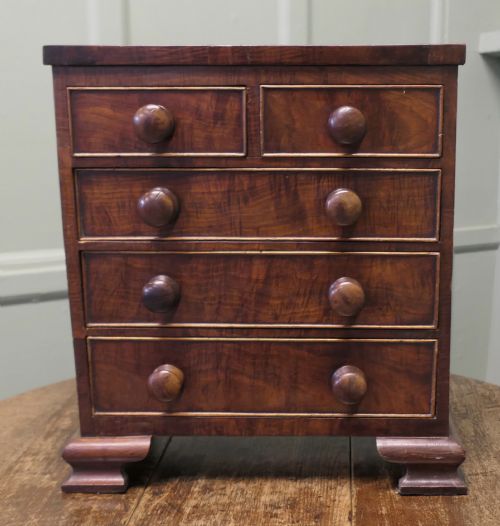
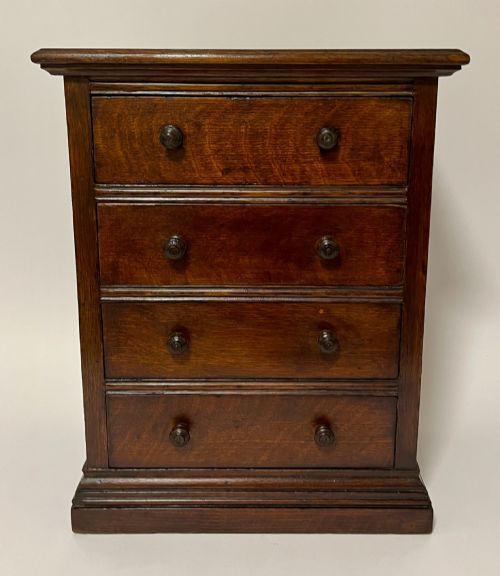
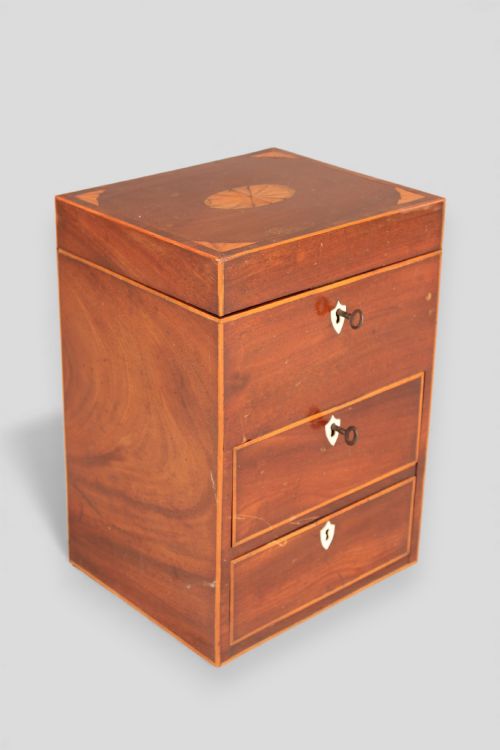
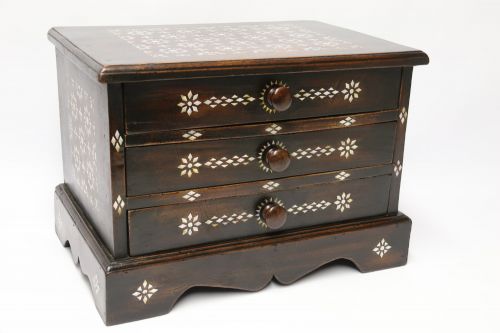
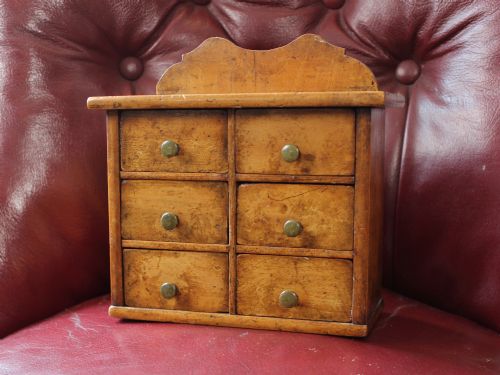
A collectors cabinet box spans miniature chests of drawers, spice cupboards, watchmaker chests, and tabletop display cases. These pieces appear across the eighteenth, nineteenth, and early twentieth centuries, reflecting the domestic and professional storage habits of their time.
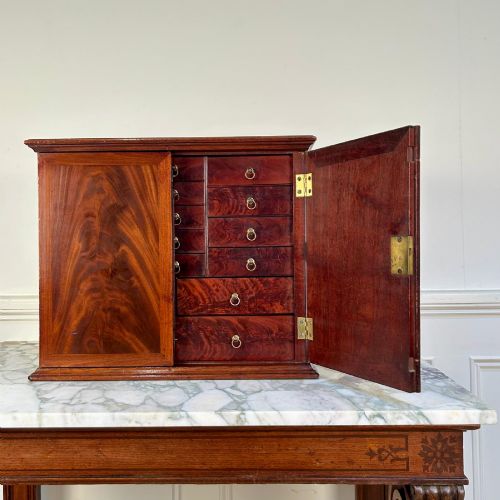
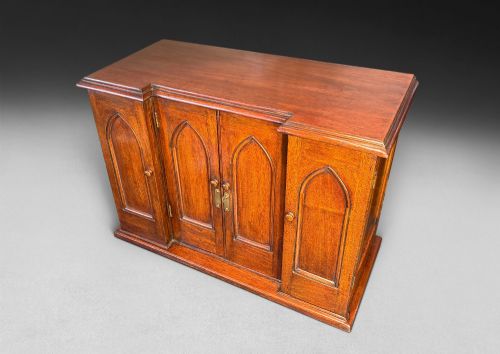
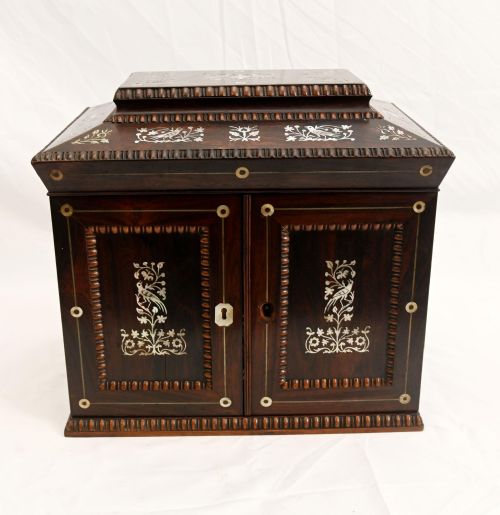
Mahogany, oak, walnut, and burr walnut dominate the structural woods, frequently accented with brass handles, glass panels, or mother of pearl inlay. Examples range from Georgian mahogany apothecary boxes and Regency chinoiserie table cabinets to Victorian burr walnut cigar humidors and Edwardian seed chests.
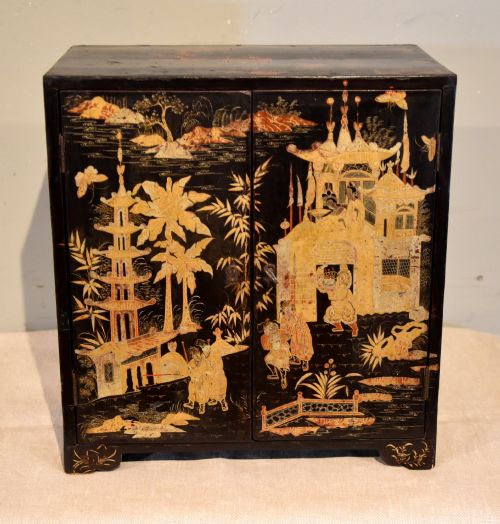
Miniature apprentice pieces and multi-drawer microscope slide cabinets sit alongside utilitarian shop counters and tabletop display units. Buyers encounter diverse regional expressions, including English hardwood iterations and Japanese black lacquered table cabinets.
Materials and construction
Cabinetmakers utilised solid timbers alongside fine veneers like burr walnut and mahogany, applying dovetail joinery to drawer construction for structural stability. Internal drawer layouts often incorporated secret compartments, baize linings, or specialised shelving configured for medical, scientific, or personal collections.
Brass fittings, escutcheons, and drop handles provided secure closures and functional grip, frequently paired with working locks and keys. Glass panels in display cases and table-top cabinets were rebated directly into wooden frames to protect contents while allowing full visibility.
Collectors Cabinet Box Retail Price Guide 2026
Typical asking prices for collectors cabinet box among the pieces listed under this phrase on Sellingantiques today, from the lower quarter to the upper quarter. They describe what is for sale here now, not the wider market.
Some nineteenth-century miniature chests conceal secret drawers behind the main framework, designed to hide the owner's most private keepsakes.
Standards of craftsmanship
The precision of dovetailing, timber selection, and internal partitioning distinguishes standard utility pieces from exceptional workshop creations. Superior examples feature book-matched veneers, perfectly fitted internal drawers that run smoothly, and intact original hardware.
The integrity of glazed doors, working locks with original keys, and untouched patination elevate the standing of a tabletop cabinet. Conversely, heavy alterations or mismatched replacement handles diminish the historic coherence of the piece.
Manoah Rhodes & Sons Ltd
The Collectors Cabinet Box Glossary
- Apprentice piece
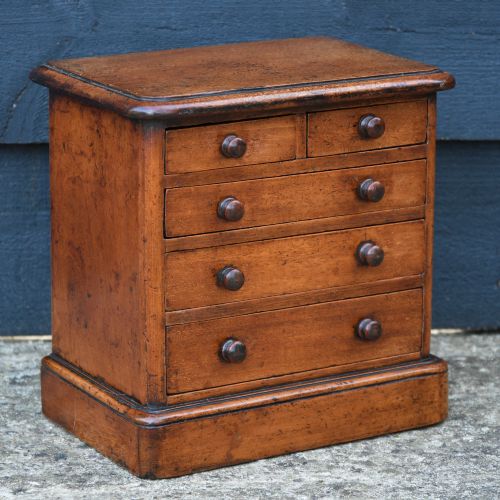
- A miniature item of furniture demonstrated a maker's skill to a guild or served as a travelling salesman's sample. These small chests replicate full-size Georgian and Victorian drawer configurations.
- Bijouterie table
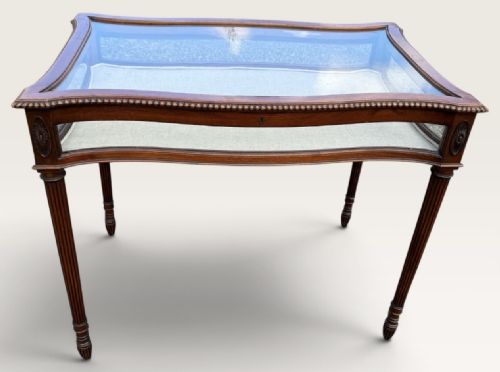
- A glass-topped display table designed to hold small valuable objects, medals, or jewellery. These pieces lift the display surface onto legs rather than resting on a tabletop.
- Escutcheon
- A protective plate surrounding a keyhole, usually fashioned from brass. It guards the surrounding wood from wear caused by repeated use of the key.
- Dovetail
- An interlocking joint formed by wedge-shaped fingers of wood. This technique provides exceptional tensile strength at the corners of drawers and cabinet carcases.
Collectors Cabinet Box: Frequently Asked Questions
What were collectors cabinet boxes used for originally?
These cabinets stored specialised objects such as microscope slides, watch parts, apothecary supplies, jewellery, and natural history specimens. Their multiple small drawers and compartments kept delicate items sorted and protected.
Professionals and hobbyists alike relied on them to organise working tools or display prized personal collections in studies and parlours.
How do I date an antique tabletop cabinet?
Dating relies on timber choices, construction techniques, and hardware styles. Eighteenth-century examples frequently feature solid mahogany or oak with hand-cut dovetails, while Victorian pieces often showcase burr walnut veneers and elaborate brass escutcheons.
Later Edwardian and 1920s iterations introduce utilitarian oak or specialised multi-drawer configurations designed for commercial or scientific storage.
Can I use a miniature chest of drawers for jewellery?
Miniature chests and apothecary boxes adapt readily to modern storage for rings, cufflinks, and small accessories. Their shallow drawers prevent items from piling on top of one another.
Many period boxes retain original fabric or paper linings, though some owners choose to insert modern conservation-grade felt to protect sensitive metals.
Are keys usually included with these cabinets?
Many surviving cabinets retain their original working locks and keys, particularly higher-quality Victorian and Edwardian examples. However, locks were frequently replaced or lost over centuries of use.
A working lock adds to the historic completeness of a piece, but absence of a key does not prevent normal daily use of the drawers.