
Collector Cabinet Chest
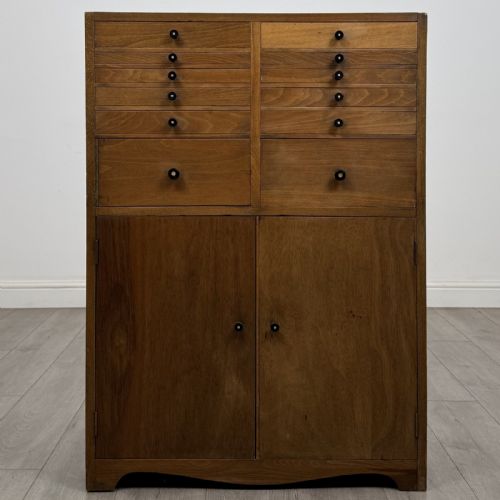
When you search for a collector cabinet chest, you are looking at multi-drawer storage built to hold specimens, small treasures or documents.
Collector Cabinet Chest
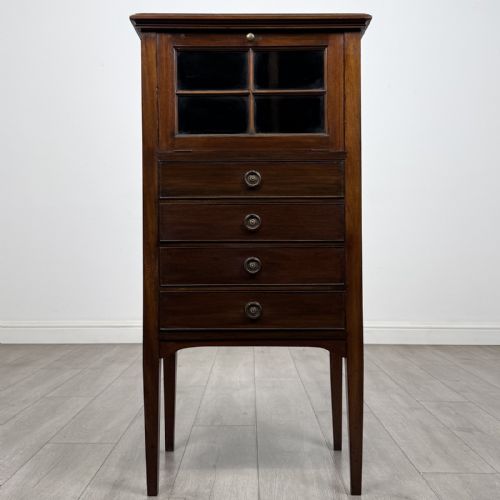
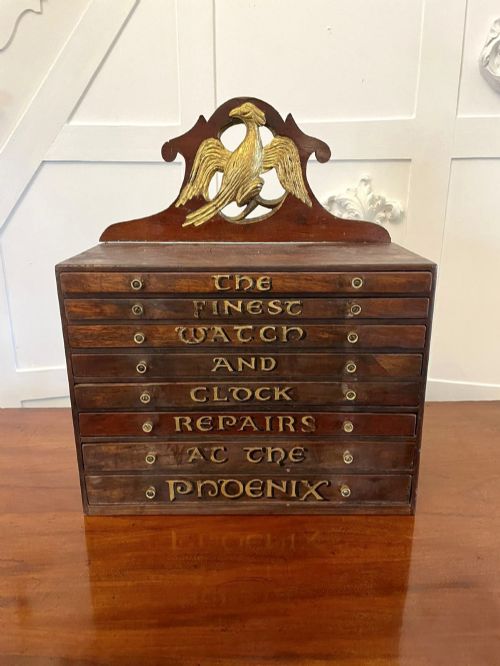
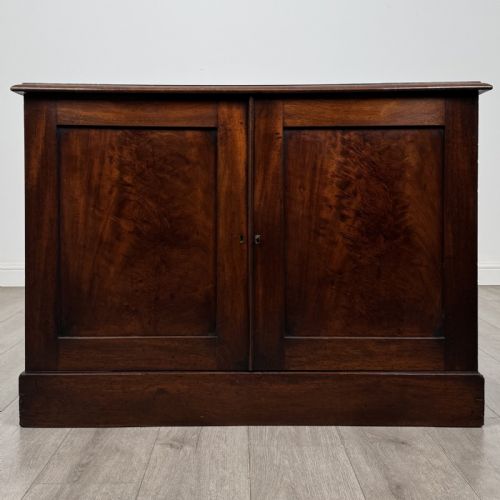
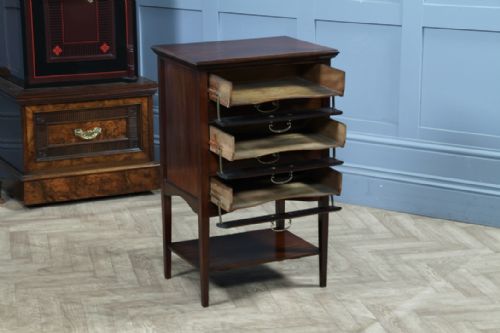
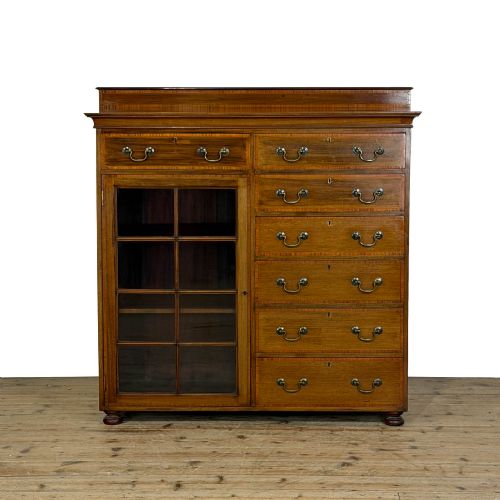
A collector cabinet chest encompasses a wide variety of multi-drawer forms designed for specialised storage, from table-top specimen cases to large office banks of drawers.
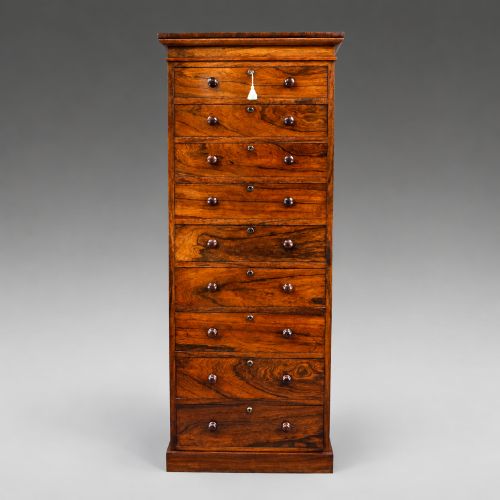
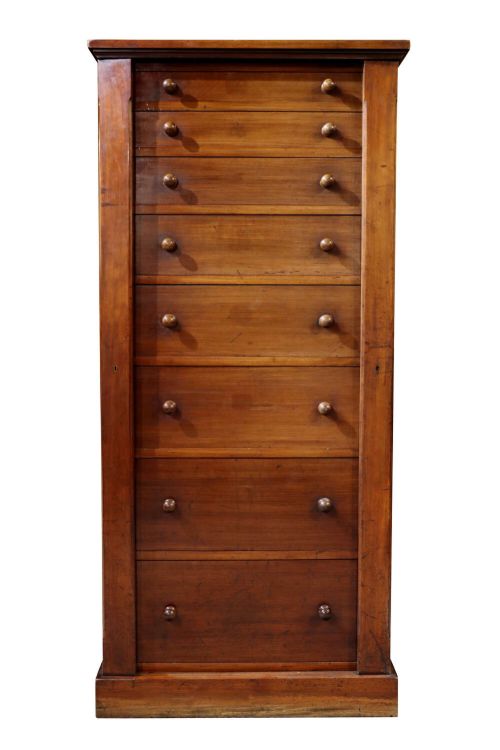
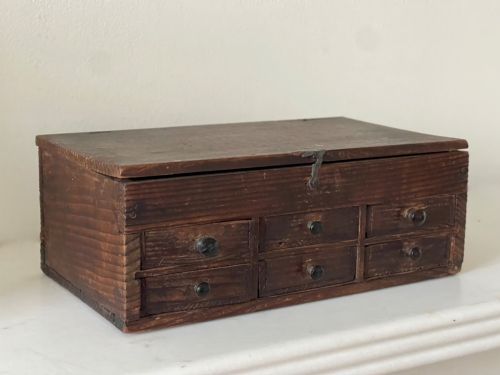
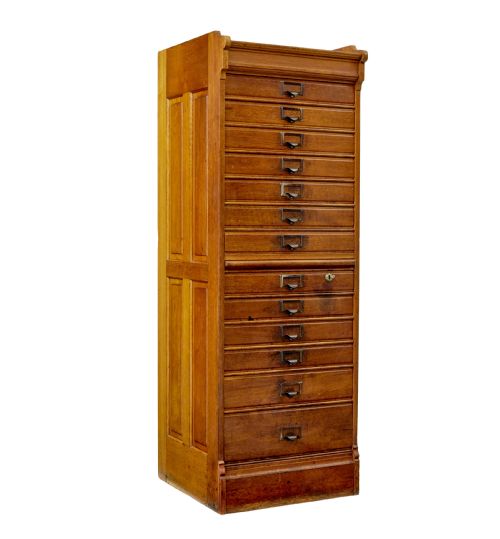
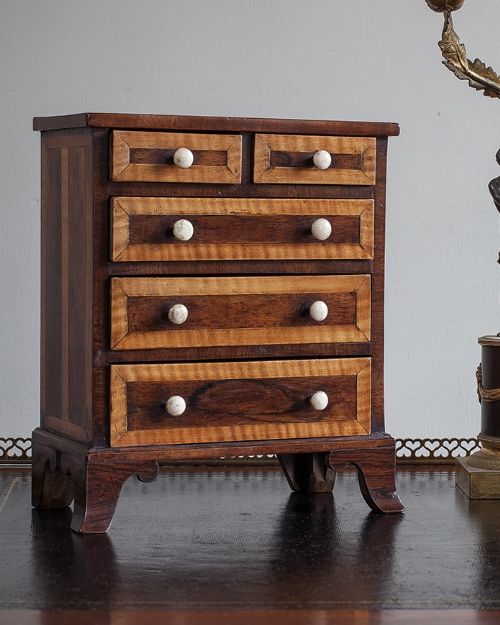
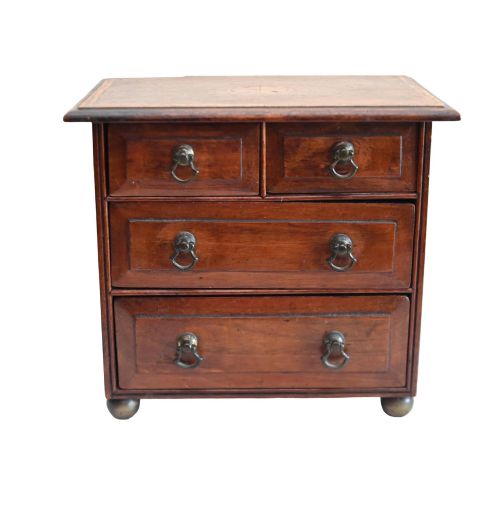
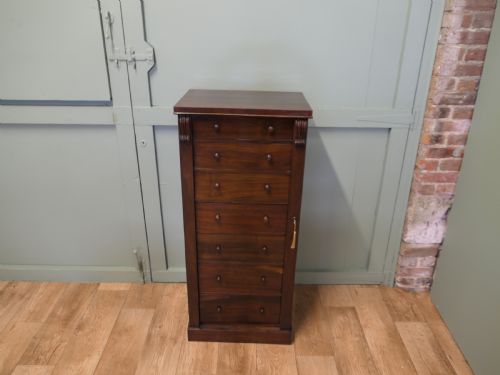
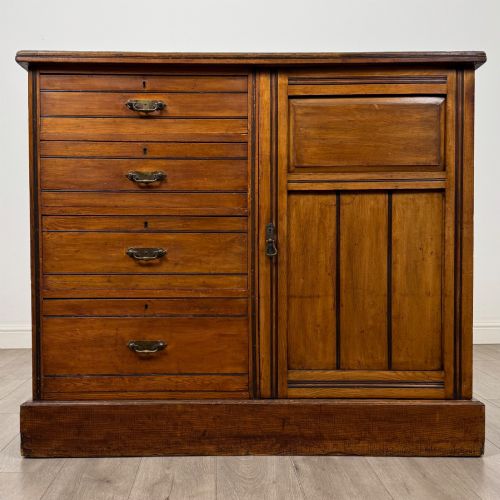
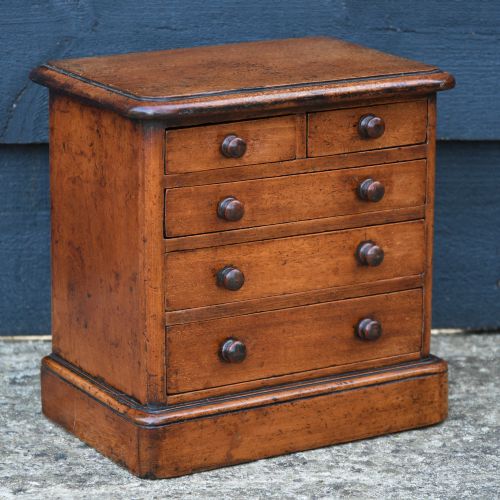
The versions most commonly met on this page include Victorian mahogany Wellington chests, oak filing cabinets, and miniature apprentice pieces.
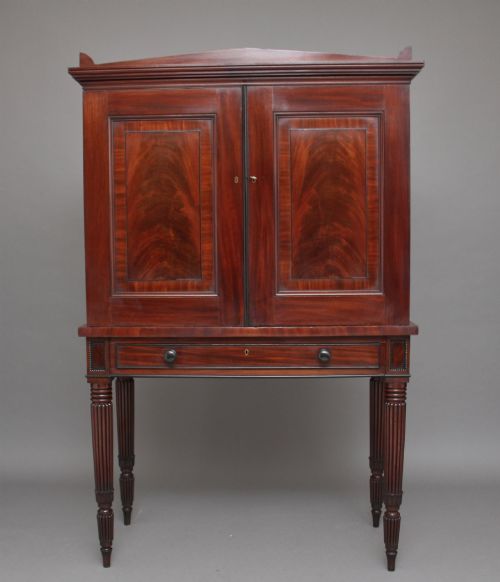
Makers historically produced these pieces in forms ranging from Gothic Revival table-top cabinets to large Dutch marquetry cabinets on stands and utilitarian apothecary storage.
Materials and Techniques
Carpenters utilised dense timber such as mahogany, walnut, oak, and rosewood alongside structural pine and deal to construct these sturdy multi-drawer carcasses.
Details often include brass hardware, shell pulls, bone accents, and intricate parquetry or marquetry inlay work executed during the Georgian, Victorian, and Edwardian periods.
Some nineteenth-century drawers still retain traces of insect pins and apothecary labels from past collectors.
Judging Quality
The standard of timber selection and the precision of the drawer construction largely determine the calibre of a piece.
Original hardware, sound locking mechanisms on Wellington chests, and intact internal linings for specimens separate everyday utilitarian items from finer examples.
Watkins And Doncaster
The Collector Cabinet Chest Glossary
- Wellington Chest
- A tall, slender chest of drawers featuring a hinged locking stile on one side that secures all drawers simultaneously.
- Apprentice Piece
- A small-scale model of furniture created by a craftsman to demonstrate skill for qualification.
- Marquetry
- Decorative veneer work forming pictorial patterns using various tinted woods and materials.
- Specimen Cabinet
- A specialised housing unit with numerous shallow drawers built for storing natural history collections like insects or minerals.
- Campaign Style
- Furniture designed for portability, typically featuring recessed brass handles and reinforced corners.
Collector Cabinet Chest: Frequently Asked Questions
What were collector cabinet chests originally used for?
These cabinets served primarily to house delicate items requiring organised, dust-free storage, such as butterfly collections, geological specimens, or medical supplies.
Craftsmen built them with many shallow drawers so owners could view contents without stacking them.
How do I identify a Wellington chest?
A Wellington chest stands out due to its tall, narrow proportions and a vertical locking arm that fastens over the edge of every drawer.
This design kept valuable specimens secure in nineteenth-century studies and bedrooms.
Are miniature chests the same as apprentice pieces?
Miniature chests and apprentice pieces both present scaled-down versions of larger furniture forms, though many served simply as high-end tabletop storage for jewellery.
They display the exact same dovetailing and timber choices as full-size pieces from the same era.
How do I live with a multi-drawer chest?
These pieces fit well into modern interiors as desktop organisers, hallway storage for small accessories, or focal display surfaces.
Their numerous small drawers make them practical for sorting household items while offering period character.