

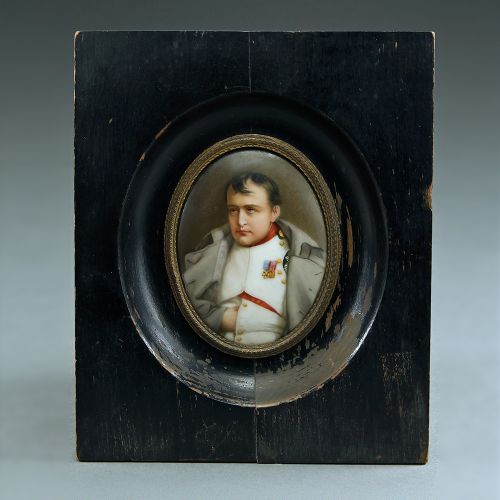


Collectable Miniature Art
Collectable miniature art brings small-scale history and craftsmanship into your hands through tiny paintings, carvings, and models.
Collectable Miniature Art
When you search for collectable miniature art, you are looking at small-scale objects created with fine detail across several centuries. The pieces on this page span portrait miniatures, tiny vessels, and carved forms made to be appreciated up close.
You are most likely to meet items originating from the eighteenth, nineteenth, and early twentieth centuries. These range from hand-painted portraits to maritime folk art and delicate glassware.
Forms vary widely, encompassing everything from bottle dioramas and wooden scale models to enamel presentation chairs and lustre bowls. Each piece represents a condensed version of larger artistic traditions.
How they were made
Makers utilised traditional materials such as wood, glass, brass, thread, enamel, and metal to construct these small objects. Many incorporate hand-painted elements or carved details that required steady precision.
Woodworking and carving appear frequently, seen in ebonised wood frames, carved cherry amber netsuke, and scratch-built locomotive models. Glass and enamel techniques provide colour and finish to miniature vases and silver presentation pieces.
Collectable Miniature Art Retail Price Guide 2026
Typical asking prices for collectable miniature art among the pieces listed under this phrase on Sellingantiques today, from the lower quarter to the upper quarter. They describe what is for sale here now, not the wider market.
Listings feature works from the 18th, 19th, and early 20th centuries, spanning Art Nouveau, Arts and Crafts, and Folk Art styles.
What varies in quality
Quality depends upon the precision of the handwork and the fidelity of the scale. Pieces that maintain intricate detail despite their diminutive size stand apart from simpler utilitarian items.
The preservation of delicate components, such as rigging within a bottle diorama or fine brushwork on a portrait miniature, defines the better examples. Materials like sterling silver, enamel, and carved cherry amber also elevate the standing of a piece.
Daum Frères·Daisy Makeig-Jones Wedgwood
The Collectable Miniature Art Glossary
- Portrait Miniature
- A small, detailed painting of a person, often executed on ivory, vellum, or card during the eighteenth and nineteenth centuries.
- Diorama
- A three-dimensional scene built inside a container, such as a bottle, depicting ships or maritime subjects.
- Netsuke
- A small Japanese carved toggle, traditionally used to fasten a pouch or basket to a kimono sash.
- Treen
- Small handmade wooden domestic objects, valued for their material and vernacular craftsmanship.
- Lustre
- A type of ceramic glaze that imparts an iridescent metallic sheen to pottery and bowls.
Collectable Miniature Art: Frequently Asked Questions
How were miniature ship models displayed?
Many miniature sailing ships and dioramas were constructed to fit inside glass bottles or mounted securely on wooden plinths.
This method protected the delicate rigging and thread work from dust and damage while allowing the piece to sit on a desk or shelf.
What materials are common?
Makers relied on wood, metal, glass, enamel, and paint to achieve fine details on a small scale.
Organic materials like cherry amber and ebonised wood also appear, alongside precious metals like sterling silver used in presentation items.
How do I identify a period?
Periods can be identified through stylistic cues, such as the flowing lines of Art Nouveau glass or the formal attire in eighteenth-century portrait miniatures.
Materials and construction techniques, like scratch-built metal locomotives from the nineteen-twenties, also point directly to their era of origin.