
Coffer Storage Bench
A coffer storage bench marries the utility of a trunk with the seating of a settle, offering a dual purpose that anchors an entrance hall or living space.
Coffer Storage Bench
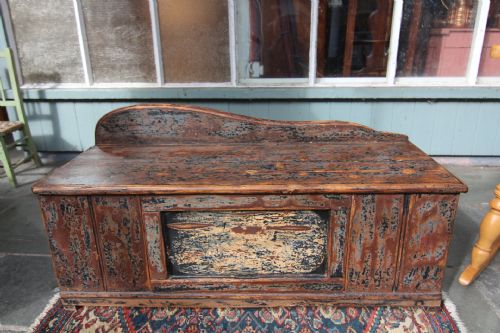
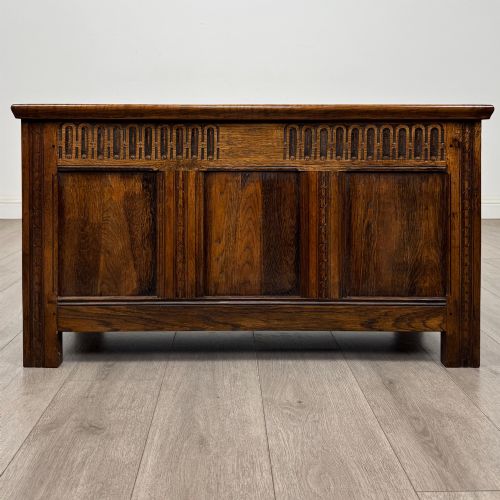
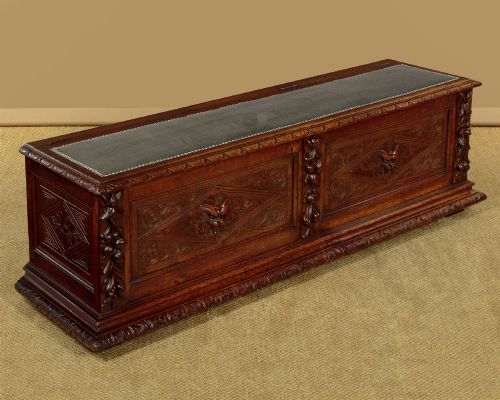
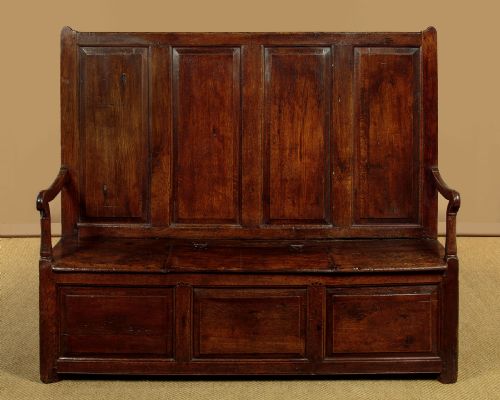
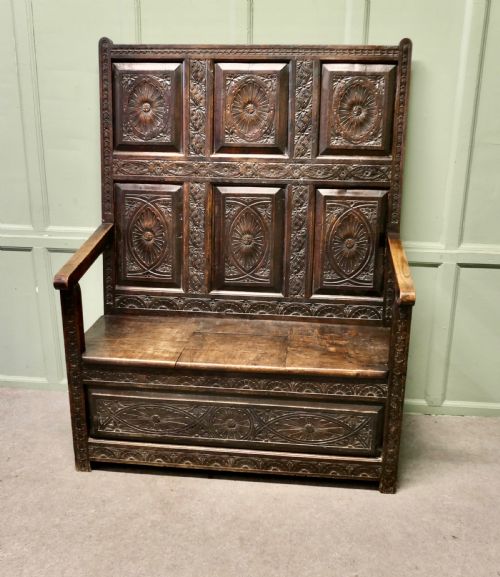
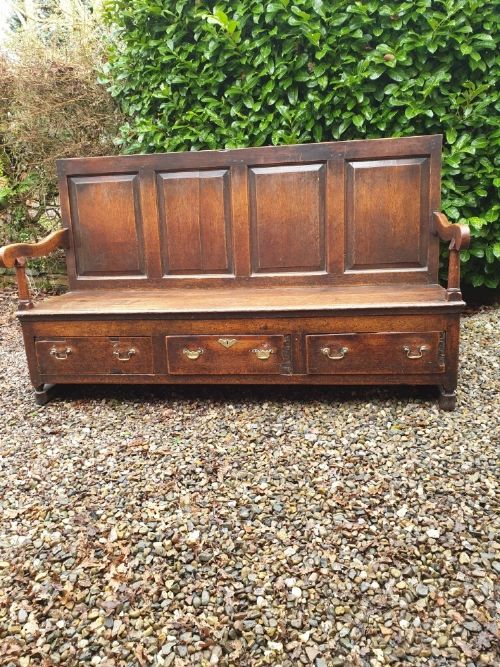
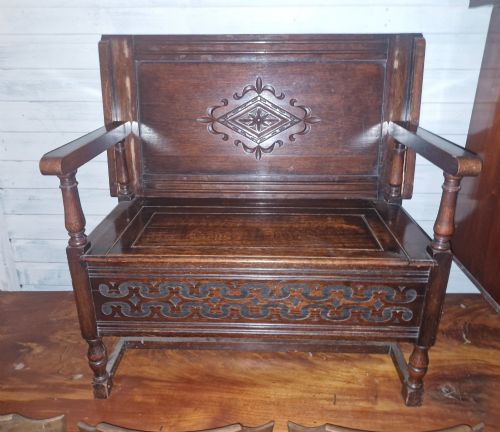
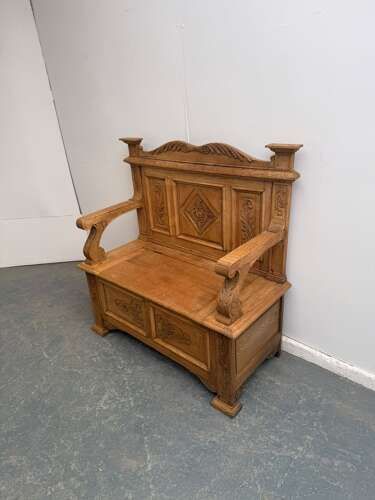
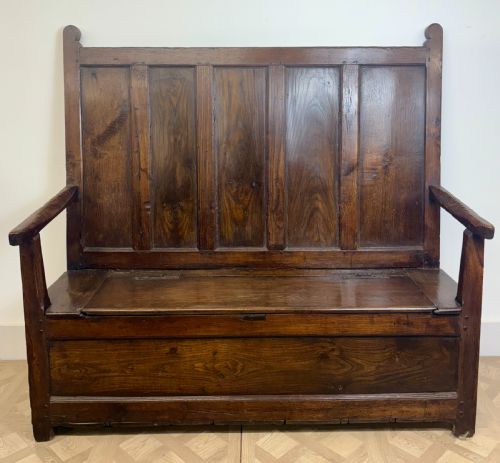
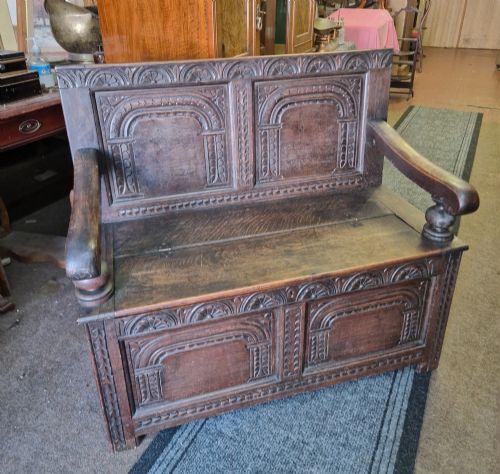
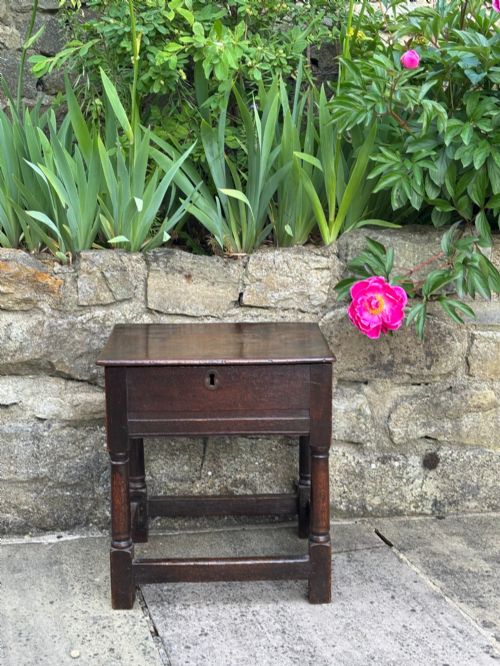
When you search for a coffer storage bench, you encounter forms that merge enclosed box storage with a seat, frequently catalogued as settles, hall benches, or blanket boxes. These pieces emerge predominantly in robust oak and softer pine, spanning centuries from the seventeenth through the Victorian era and into the early twentieth century. The version you are most likely to meet on this page is the oak box settle or hall bench, often fitted with a hinged lid revealing a storage compartment beneath.
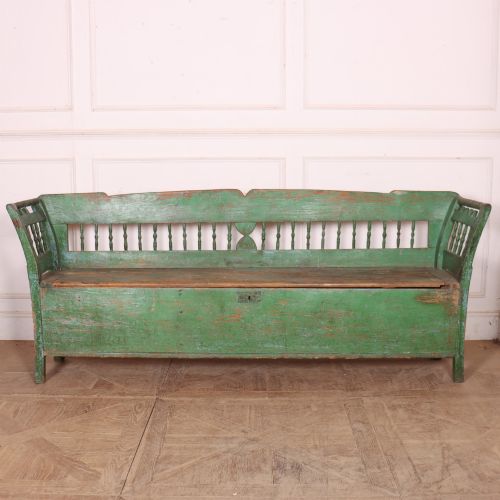
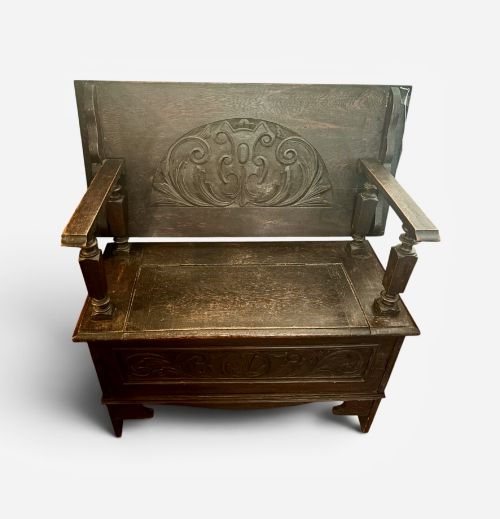
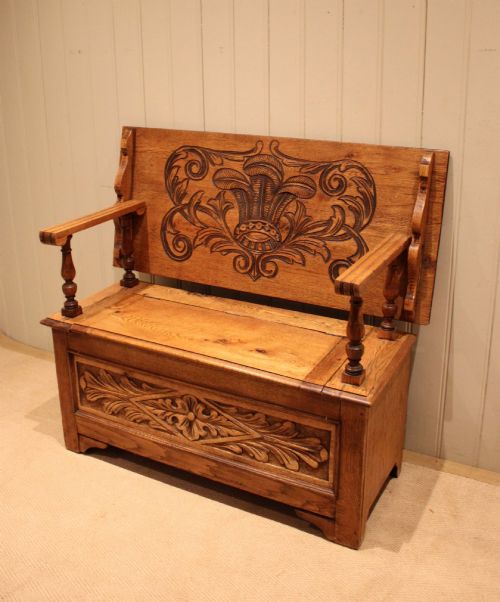
Regional variations shape the selection, bringing in Hungarian pine benches alongside Welsh and English country examples in oak and ash. Some pieces adopt the monk's bench configuration, featuring a fold-over top that converts the backrest into a table surface. Others present high panelled backs, carved ornamentation, or simpler vernacular lines shaped by local traditions.
Materials and Construction
Carpenters relied principally on solid oak and pine for these seating chests, frequently joining panels with traditional framing techniques to accommodate timber movement over time. Iron hinges, brass fittings, and occasional leather or fabric elements provide the hardware and upholstery seen across the selections.
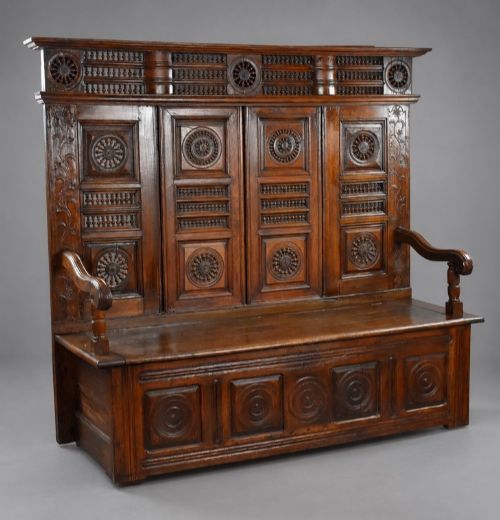
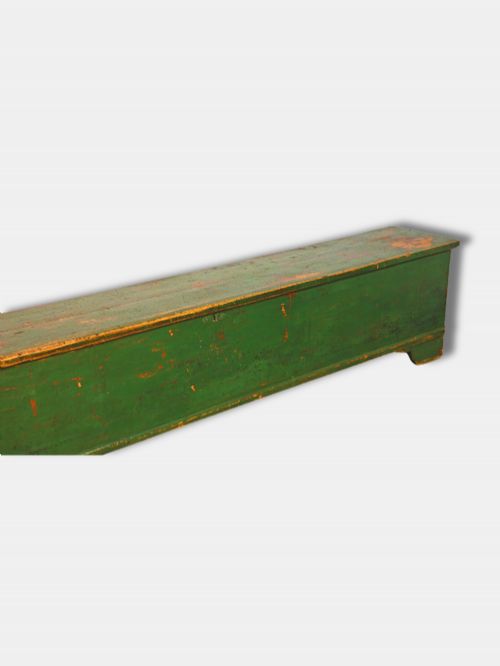
Surface treatments vary from waxed finishes that highlight the grain of the wood to historic layers of blue, green, black, or red paint. Carved detailing appears on many oak examples, utilising chip carving, relief panels, and Renaissance Revival motifs executed directly into the solid timber.
The listings show oak and pine as the dominant materials used across seventeenth-century to twentieth-century examples.
Distinctions in Quality
The degree of hand-carved articulation and the architectural ambition of the backrest elevate certain examples above simpler vernacular boxes. Pieces retaining their original hinges, uncompromised timber thickness, and early surface finishes command greater regard from collectors.
Proportion and structural integrity also dictate the standing of a piece, separating straightforward utilitarian items from more sophisticated country house furniture designed with shaped arms and panelled construction.
The Coffer Storage Bench Glossary
- Settle
- A wooden bench with high back, solid arms, and a box seat that lifts to reveal storage. This form kept drafts at bay in older interiors.
- Coffer
- A large chest traditionally used for storing valuables, linens, or documents, which forms the base compartment of many storage benches.
- Monk's bench
- A multi-functional seat featuring a hinged back that folds down flat over the arms to create a table top.
- Vernacular
- Furniture built by local tradesmen using regional materials and traditional styles rather than adhering to high London fashions.
- Patination
- The surface alteration of wood, metal, or paint developed through age, handling, and regular waxing over many decades.
Coffer Storage Bench: Frequently Asked Questions
What is a coffer storage bench used for?
These pieces serve simultaneously as seating and enclosed storage, making them practical for stowing blankets, shoes, or household items.
Placed in hallways, mudrooms, or living areas, they provide a sturdy seat while keeping clutter out of sight inside the integrated box base.
How do I date an oak storage bench?
Dating relies on examining construction methods, tool marks, joinery, and the style of any carved ornamentation present on the panels.
Earlier pieces from the seventeenth and eighteenth centuries often display hand-split timbers, pegged mortise and tenon joints, and distinct regional vernacular characteristics.
Are painted pine benches authentic?
Many continental and country pieces, particularly Hungarian examples, were finished with layers of coloured paint that developed rich patination over time.
Original painted surfaces show natural wear and craquelure that distinguish historic finishes from later decorative applications.
How do I care for a waxed antique bench?
Maintain the timber by applying a quality beeswax sparingly and buffing it with a soft cloth to preserve the finish.
Keep the wood away from direct heat sources and strong sunlight to prevent the timber from drying out or splitting.